Cleaning, Sanitizing, and Disinfecting Supplies for Commercial Kitchens
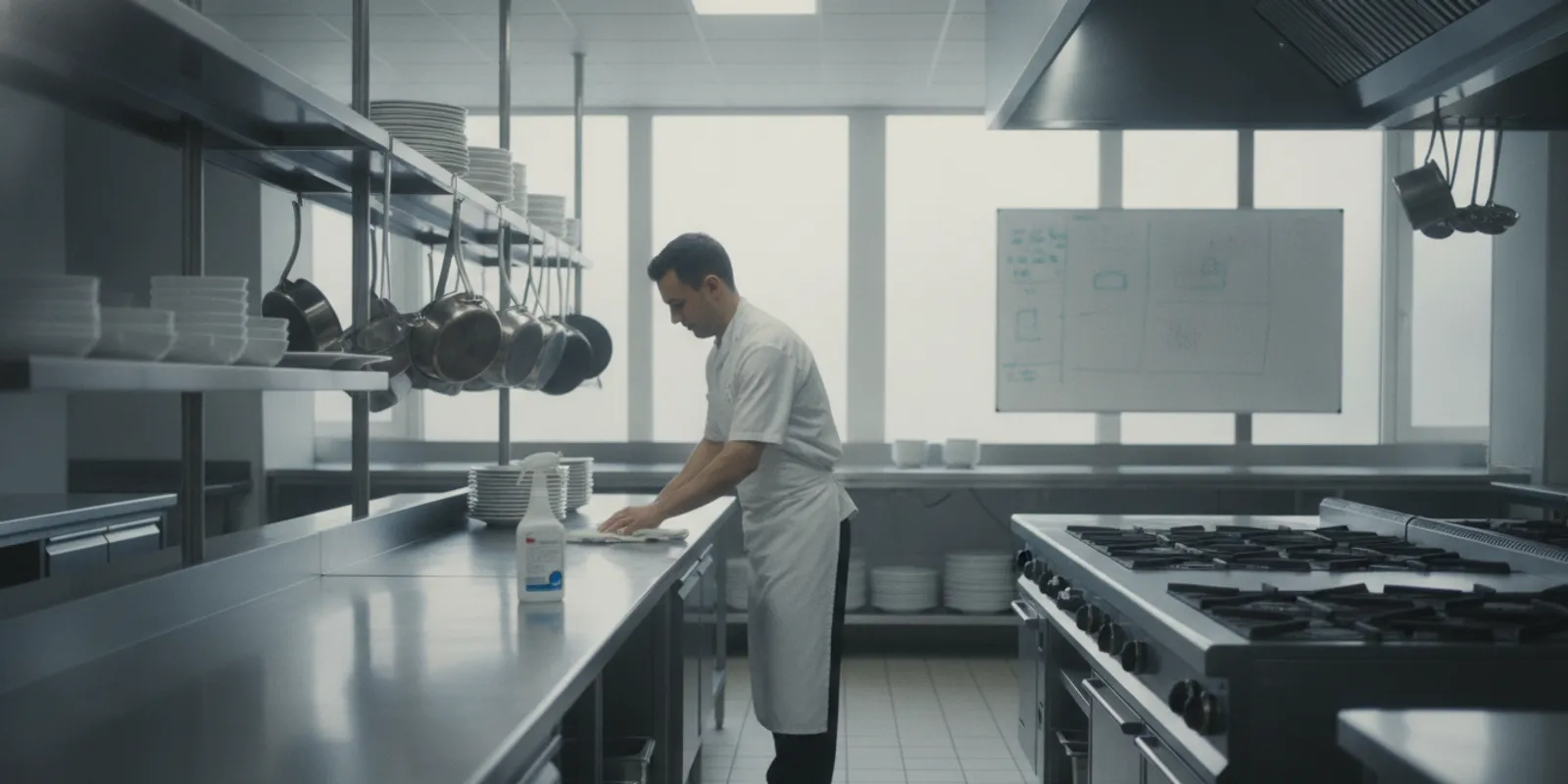
Choosing cleaning, sanitizing and disinfecting supplies for commercial kitchens starts with one question: what surface are you treating, and what needs to happen to it? A food-prep counter, a greasy hood exterior, and a restroom fixture do not all call for the same chemical or process. Match the product to the surface, the soil, and the job, then follow its label and your local food-safety requirements.
Ask the HRS team about cleaning and sanitizing supplies
How to choose cleaning, sanitizing, and disinfecting supplies for commercial kitchens
Cleaning, sanitizing, and disinfecting are related but different steps. Cleaning removes food, grease, and other visible soil. Sanitizing is used on food-contact surfaces to reduce microorganisms to levels permitted by the applicable standard. Disinfecting targets germs on appropriate non-food-contact surfaces, according to the product label. A disinfectant is not automatically a food-contact sanitizer, and spraying a surface is not a substitute for cleaning it first.
For a typical food-contact surface, the sequence is: remove or scrape away food debris, wash with the appropriate cleaner, rinse if the product directions require it, apply an approved food-contact sanitizer at the label directions, and allow the surface to air-dry or take any other label-directed final step. Your written procedures and local requirements determine when the surface must be treated, such as between tasks or when contamination occurs.
Start with the surface and the soil
List the areas your team actually cleans: prep tables, cutting boards, sinks, floors, handles, equipment exteriors, and restrooms. Note what builds up on each one. Grease near a cooking line, dried batter in a bakery area, and ordinary dust need different cleaning approaches. Check the label for compatible surfaces and use directions. A product that works well on one material may be unsuitable for another.
Separate food-contact surfaces from non-food-contact surfaces in your plan. Counters and food-preparation tools need products and procedures intended for food-contact use. Floors, drains, and restroom fixtures need cleaning products suited to those locations. Keep chemicals away from food and food-contact tools, and store them in their designated area.
Compare the job each product is meant to do
| Supply or product type | Best-fit task | What to check before use |
|---|---|---|
| Cleaner or degreaser | Loosens and removes soil, grease, and food residue | Surface compatibility, dilution directions, rinsing instructions, and safe handling |
| Food-contact sanitizer | Sanitizes a cleaned food-contact surface | Food-contact directions, required concentration, contact time, and whether rinsing is directed |
| Disinfectant | Disinfects specified non-food-contact surfaces | EPA registration and label directions, approved surface, contact time, and any required precautions |
| Cleaning tools and supplies | Apply products and remove soil without spreading it from one area to another | Use, storage, replacement, and separation between tasks or areas |
This comparison is a starting point, not permission to use products outside their labeled purpose. Read the container label before purchase and use. The EPA explains that pesticide labels contain legally required directions for use; consult the EPA pesticide label guidance and the specific product label rather than relying on a broad product description.
What should operators check on a product label?
Before adding a product to the supply shelf, check the label for the intended use, surface type, dilution method, application directions, contact time, and any rinsing requirement. Confirm how it should be stored and what protective measures are required. If the instructions are unclear, do not guess. Ask the supplier or the product manufacturer to clarify before putting it into your routine.
- Food-contact use: Confirm that the product is intended for food-contact sanitizing and follow its directions for use.
- Dilution and strength: Use the specified method and measure accurately. Do not estimate by eye or combine products.
- Contact time: Keep the surface wet for the time stated on the label. Wiping it dry too soon can prevent the product from doing its intended job.
- Rinsing and air-drying: Follow the product directions; do not assume that all products have the same final step.
- Safety and storage: Keep products in their original, labeled containers when possible, and make directions available to employees who use them.
For food-service operations, use the applicable food code and local health department requirements when setting procedures. The FDA Food Code is a model used by jurisdictions as a basis for their own rules; it is not a substitute for confirming which requirements apply to your location. Review your procedures with the person responsible for food safety and update them when products or processes change.
How can a kitchen make the routine workable across shifts?
A good supply choice is only useful if the team can use it consistently. Keep the routine short, visible, and specific to your kitchen. Identify who handles each task, which product is used, and how the team knows the required step is complete. Use a written schedule that reflects actual operations instead of relying on a vague instruction to “clean as needed.”
- Map tasks to stations. Record the surface or area, the type of soil, the product, and the frequency your food-safety plan or local requirements call for.
- Set up the supplies. Keep the correct cleaner, sanitizer, cloths, and other needed tools available at the point of use. Store chemicals safely and separate supplies used in different areas.
- Show the process. Train staff on product directions, measuring or dilution, contact time, rinsing, and safe storage. Demonstrate the steps rather than assuming a new employee knows them.
- Check and restock. Assign someone to inspect supplies, replace empty containers, and make sure labels and instructions remain readable. If the product changes, retrain the team.
For example, a closing checklist might assign a team member to remove food debris from a prep table, wash and rinse it as directed, apply the selected food-contact sanitizer at the label directions, and leave it to air-dry if required. A separate task can address floor cleaning with a product appropriate to the floor. Keeping those instructions distinct helps prevent a floor cleaner or disinfectant from being used on a food-contact surface by mistake.
When replenishing, consider whether a product will work with your current process and storage space, not just its container size. Make sure staff can dispense and measure it correctly. If you are reviewing your broader inventory of janitorial and sanitizing supplies, compare needs by task and area. HRS also offers a wider range of restaurant supplies, so operators can review related needs alongside cleaning products. For questions about products and retail purchases, see the HRS retail help page or review retail location information before visiting.
Common mistakes to prevent
- Using one product for every job. Different surfaces and purposes call for different products. Match the label to the use.
- Skipping the cleaning step. Soil can interfere with sanitizing or disinfecting. Clean first when the product directions and procedure require it.
- Mixing chemicals. Never mix cleaning products unless the label explicitly directs a specific method. Mixing can create serious hazards or make a product ineffective.
- Ignoring contact time. Follow the full label direction; quick spraying and wiping may not meet it.
- Transferring product into an unlabeled bottle. Staff need to know what they are handling and how to use it safely. Follow applicable labeling and workplace safety rules.
- Assuming a generic routine meets local rules. Check requirements with the relevant health authority and maintain procedures for your own operation.
If you are unsure which supply fits a surface or process, gather the product label, the surface details, and the task your staff need to complete before asking for help. That makes it easier to compare options without guessing about approved use or directions.
Contact HRS for help reviewing your kitchen supply needs
Frequently asked questions
Can I use a disinfectant on a food-prep counter?
Only if the product label specifically permits the intended food-contact use and you follow its directions, including any rinsing requirement. Many disinfectants are intended for non-food-contact surfaces, so do not assume they are interchangeable with food-contact sanitizers.
Does sanitizing replace cleaning?
No. Cleaning removes soil. Sanitizing is a separate step used on an appropriately cleaned surface, following the product directions and applicable food-safety procedures.
How do I know how long a surface must stay wet?
Check the product label for its contact time and apply the product as directed. Do not use a general rule from another product; directions can differ.
Which rules should a commercial kitchen follow?
Follow the requirements that apply to your jurisdiction and operation. The FDA Food Code is a model code; contact your local or state health department for the rules and guidance that govern your facility.
Choose supplies by task, follow each label, and train every shift on the same clear process so your kitchen can clean and sanitize consistently.