Starting a Home Baking Business in New York: Step-by-Step Setup
Before you sell a single cookie, check whether your recipes fit New York's home-baking rules. Then confirm where you can sell, check local approvals, prepare labels, price each item, and choose tools and supplies that help you repeat the same result. This sequence gives Rochester and Upstate New York home bakers a clear path from hobby orders to a manageable business.
Start with the recipe and process, not the logo or a large menu. Use the steps below to confirm requirements, set up a practical workflow, and choose supplies as orders grow. HRS's baking supplies can support that planning.
Ask the HRS retail team for help choosing baking tools and supplies.
Start a Home Baking Business in New York: The Practical Steps
1. Check whether your products fit New York's home-processing rules
New York may allow certain baked goods to be made in a home kitchen and sold within the state. The plain-language question is: does each product, recipe, preparation method, and sales plan fit the state's approved home-processing path?
New York calls this the Home Processor Exemption. It can remove the need for an Article 20-C license for qualifying home-processed foods. Article 20-C is the state licensing path used for certain food manufacturers, processing plants, and wholesale bakeries. The exemption does not automatically cover every home bakery.
- List every product. Write down ingredients, fillings, toppings, preparation steps, storage needs, packaging, and sales channel.
- Check the approved-food list. Start with products that fit New York's approved non-potentially hazardous categories. Do not assume a recipe qualifies because it is baked.
- Ask before expanding. A new filling, topping, process, or product that needs temperature control may change the licensing question.
Read New York's home-processing guidance and review food-business licensing before accepting paid orders. The state guidance is the current source for eligibility and registration details.
2. Confirm where you can sell and what local approval you need
Qualifying products must be sold within New York State. The state guidance allows sales through channels such as farmers markets, farm stands, craft fairs, home delivery, and the internet, but an online order still needs to stay within New York.
Products must be pre-packaged in the home and properly labeled. You cannot wait until a market or event to package the food. Plan the package and label together before your first sale.
- Check zoning first. Ask your local zoning office whether your address and planned activity are allowed before starting.
- Confirm county questions. Rochester-area bakers can use Monroe County Food Protection as a local starting point for food-safety questions.
- Document your sales area. Keep a simple record showing that home delivery and online orders are fulfilled within New York.
3. Register and build a label that answers the customer's questions
If your products fit the exemption, submit the New York Home Processor Registration Request before selling. Registration is tied to the location. If you move, you need to reapply, and adding products requires an updated registration request.
If your home uses a private well, include certified-lab potability results showing negative or absent Total Coliform and E. coli results with the registration request. Check the current state instructions for the exact submission requirements.
Create one label template for each product before you print anything. New York's guidance calls for:
- The product's common or usual name.
- An ingredient list in descending order by weight.
- Net quantity of contents.
- Your name and full address as the processor.
- Clear identification of applicable allergens, including milk, eggs, wheat, soy, peanuts, tree nuts, fish, shellfish, and sesame.
- A home-kitchen statement such as "Made in a Home Kitchen," using the size specified by the state guidance.
Use the same recipe name, ingredient order, and product description on your order page and label. That makes questions easier to answer and reduces last-minute corrections.
4. Choose a small menu and a repeatable workflow
Start with a short menu you can make consistently. A smaller list also makes ingredient purchasing, prep time, labeling, and pricing easier to track.
Write the process as a short checklist: weigh ingredients, mix, bake, cool, decorate if needed, package, label, and record the order. Use a separate order sheet for pickup or delivery details. If you change a recipe, update the cost and label before selling it again.
5. Add baking tools and supplies that solve a real bottleneck
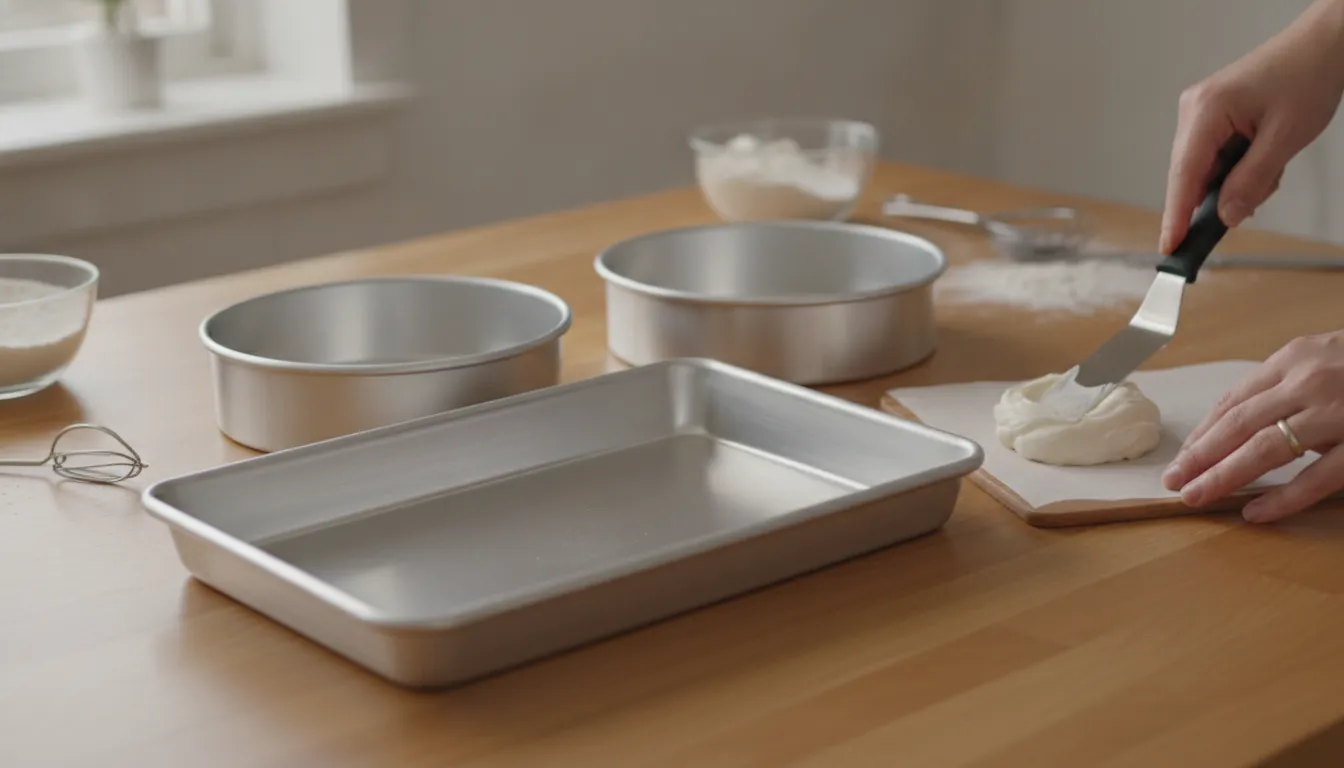
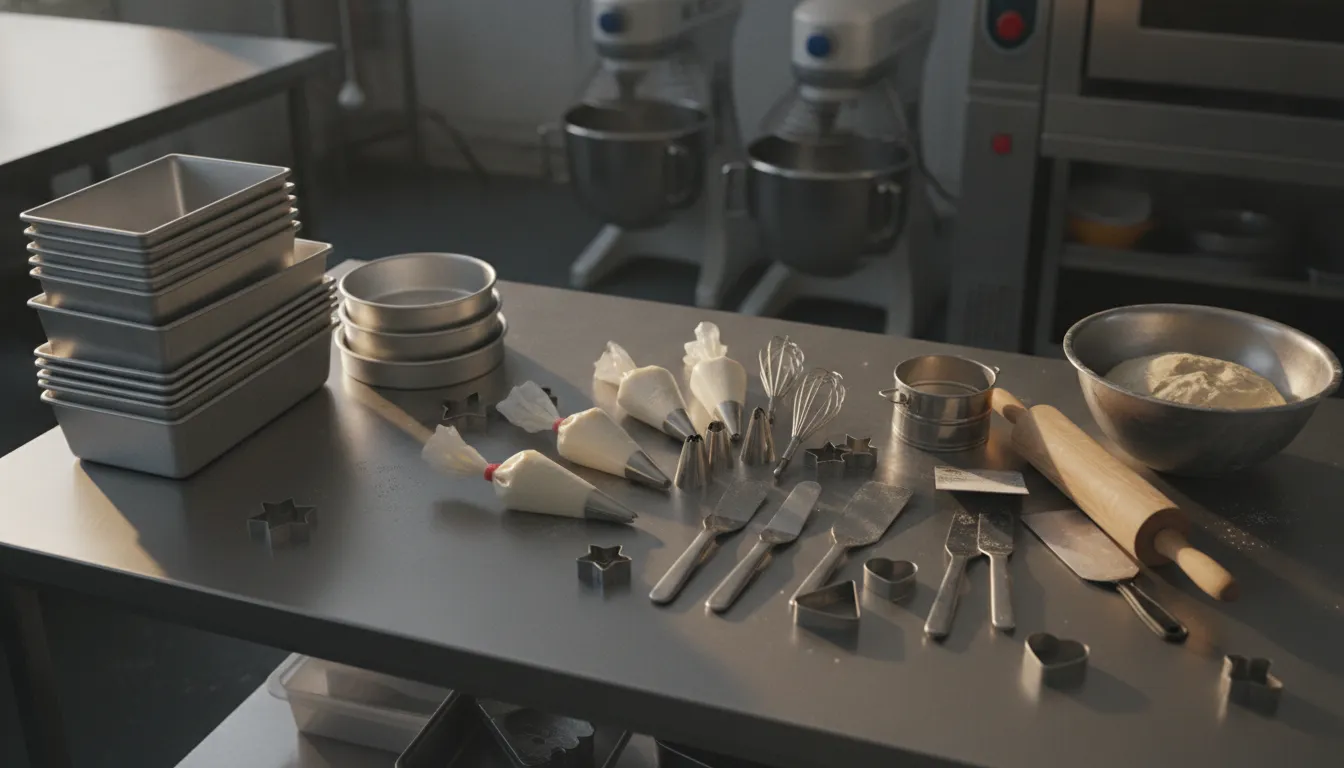
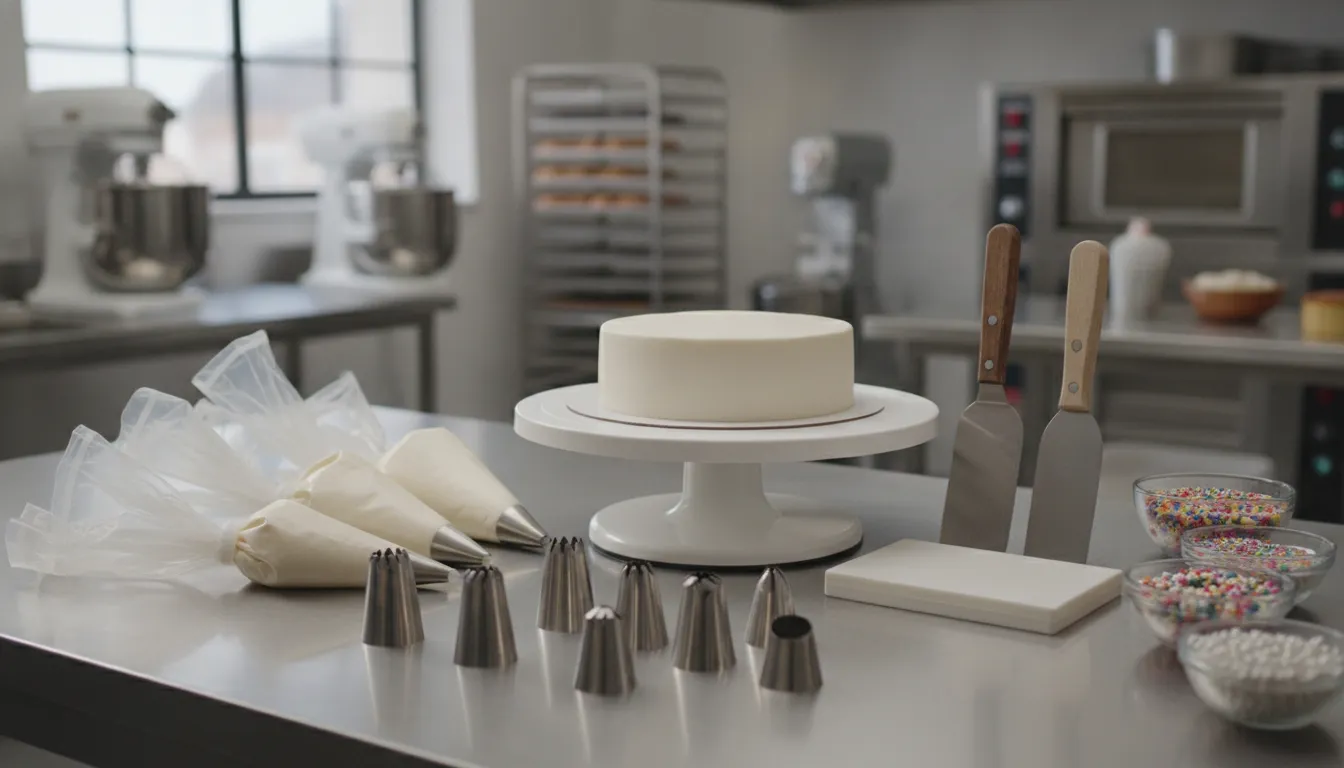
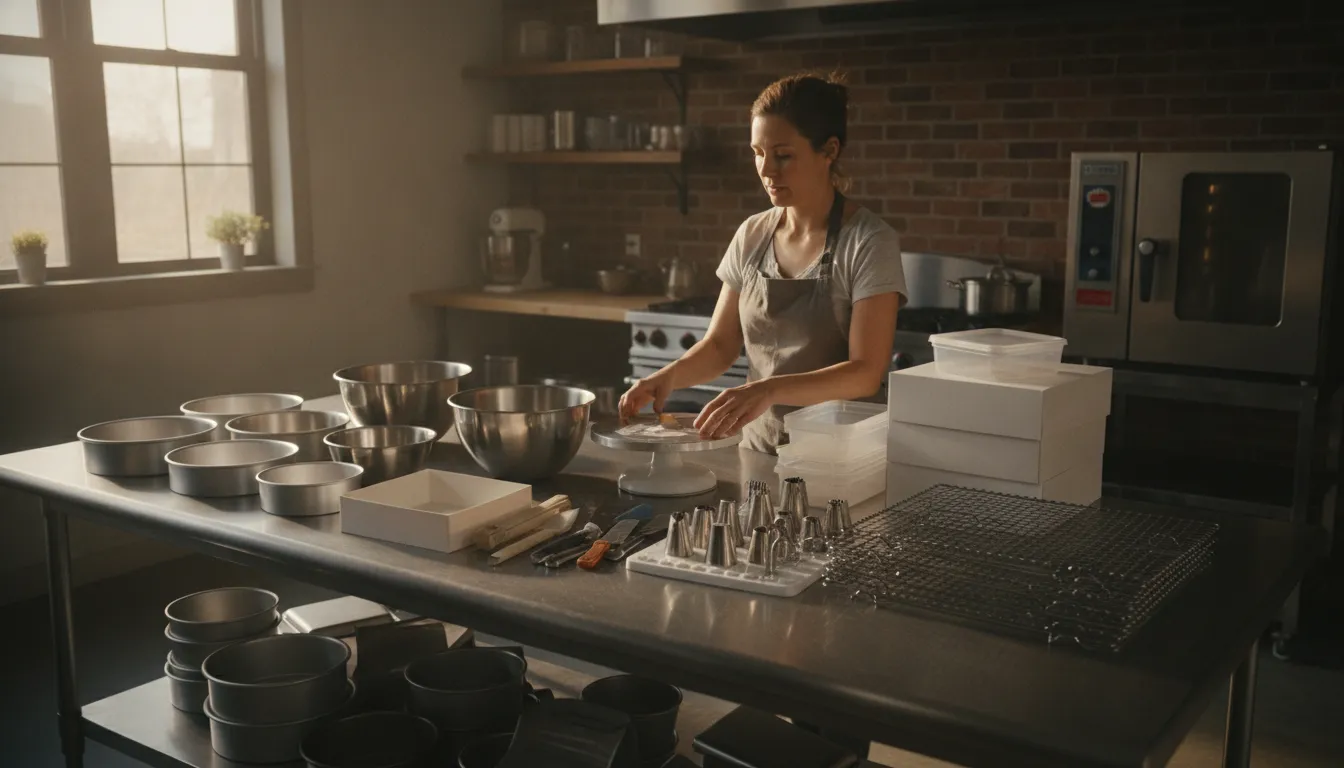
Buy tools that improve accuracy, speed, or consistency. Useful starting points may include dependable measuring tools, mixing bowls, sheet pans, cake pans, cooling racks, decorating tools, and storage supplies that fit your workspace.
Choose the size and quantity that match your actual order rhythm. A home setup should feel safe and manageable. If you are unsure which baking tools fit your recipes and available space, contact the HRS retail team to compare options in person or online.
6. Price each order from the full cost
Do not price from ingredient cost alone. Add ingredients, packaging, labels, payment fees, delivery or pickup time, and your hands-on labor. Include a reasonable share of recurring supplies and tool replacement so the price reflects the work required to produce each order.
Track the actual time and cost for your first few orders. If an item takes longer than expected, adjust the recipe, portion, price, or menu before adding more volume.
Contact HRS for practical help selecting retail baking tools and supplies.
Frequently Asked Questions
Can I sell baked goods from home in New York?
Some baked goods may qualify for New York's Home Processor Exemption. Confirm that the product and process fit the approved categories, complete the registration steps, follow the packaging and labeling rules, and sell only within New York State.
Do I need a permit to run a home bakery in Rochester?
It depends on your products and process. Check the state home-processing and food-business licensing guidance, then confirm local zoning requirements for your address. Do not assume state eligibility answers the local zoning question.
What should be on a home-baked product label?
Plan for the product name, ingredients by weight, net quantity, processor name and full address, applicable allergens, and the required home-kitchen statement. Verify the current wording and formatting in New York's official guidance before printing labels.
Where can Rochester home bakers get help choosing supplies?
Visit the HRS Rochester retail store to compare baking tools and supplies, or contact the retail team with questions before you buy.