How to Open a Restaurant in Rochester NY: A Startup Guide
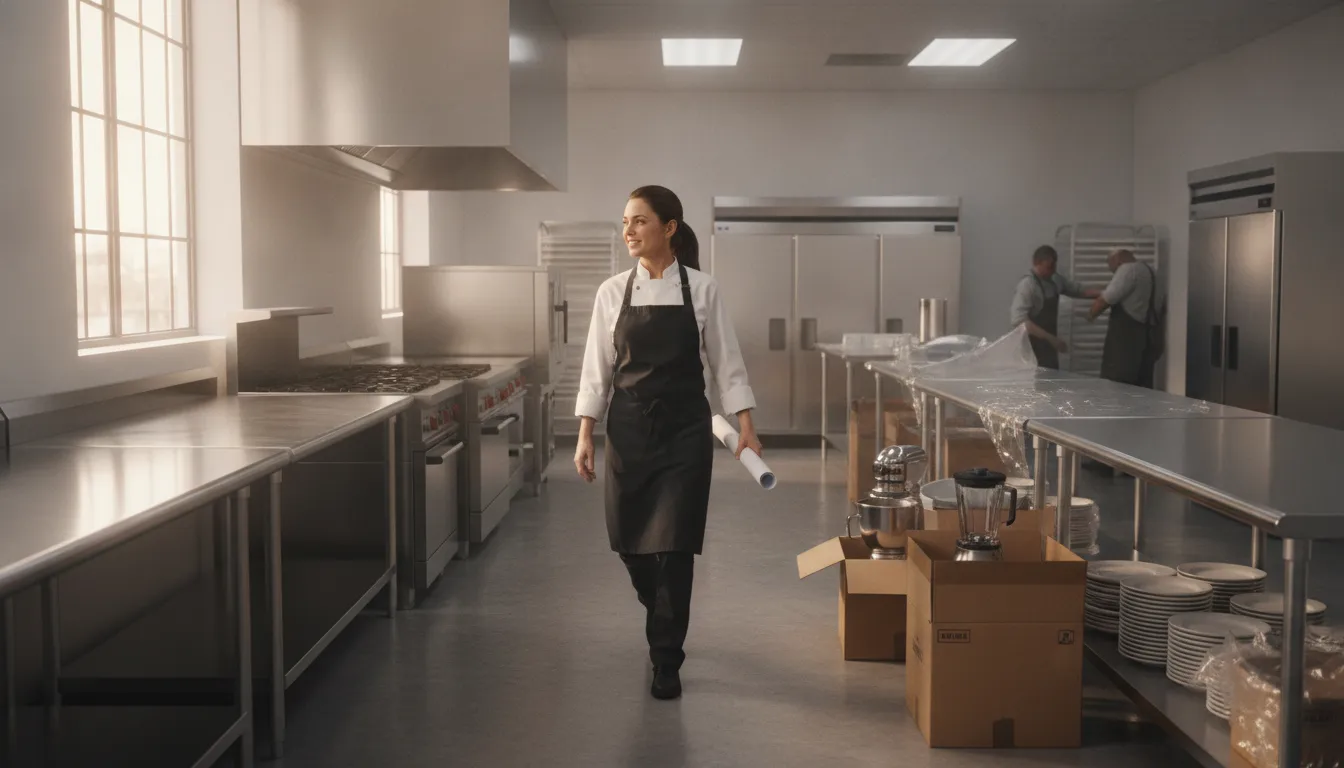
Opening a restaurant in Rochester takes more than a strong menu and a promising location. Your lease, kitchen workflow, equipment package, permits, and health-code plans all affect one another, so decisions made too late can force expensive changes before opening day.
To open a restaurant in Rochester NY, start by defining your menu and service model, then plan the commercial kitchen around the equipment and workflow they require. Before construction or equipment installation begins, coordinate the layout with Monroe County health requirements and confirm the state and local permits that apply to your operation.
A practical startup plan keeps those decisions connected from the beginning. The first step is to test whether the space can support safe, efficient movement between receiving, storage, preparation, cooking, dishwashing, and service. That layout decision will guide the equipment list and help you evaluate a lease before you commit.
Your Rochester Restaurant Startup Plan
Plan Your Commercial Kitchen Layout Before You Sign a Lease
A promising restaurant space can become an expensive problem if the kitchen cannot support your menu, staff movement, storage needs, or required plumbing and ventilation. Before you commit to a lease, sketch the work that must happen in the space and identify the equipment that work requires. This equipment-first approach gives you a practical way to test the site before construction begins, rather than discovering after signing that major renovation is necessary.
Start with workflow zones
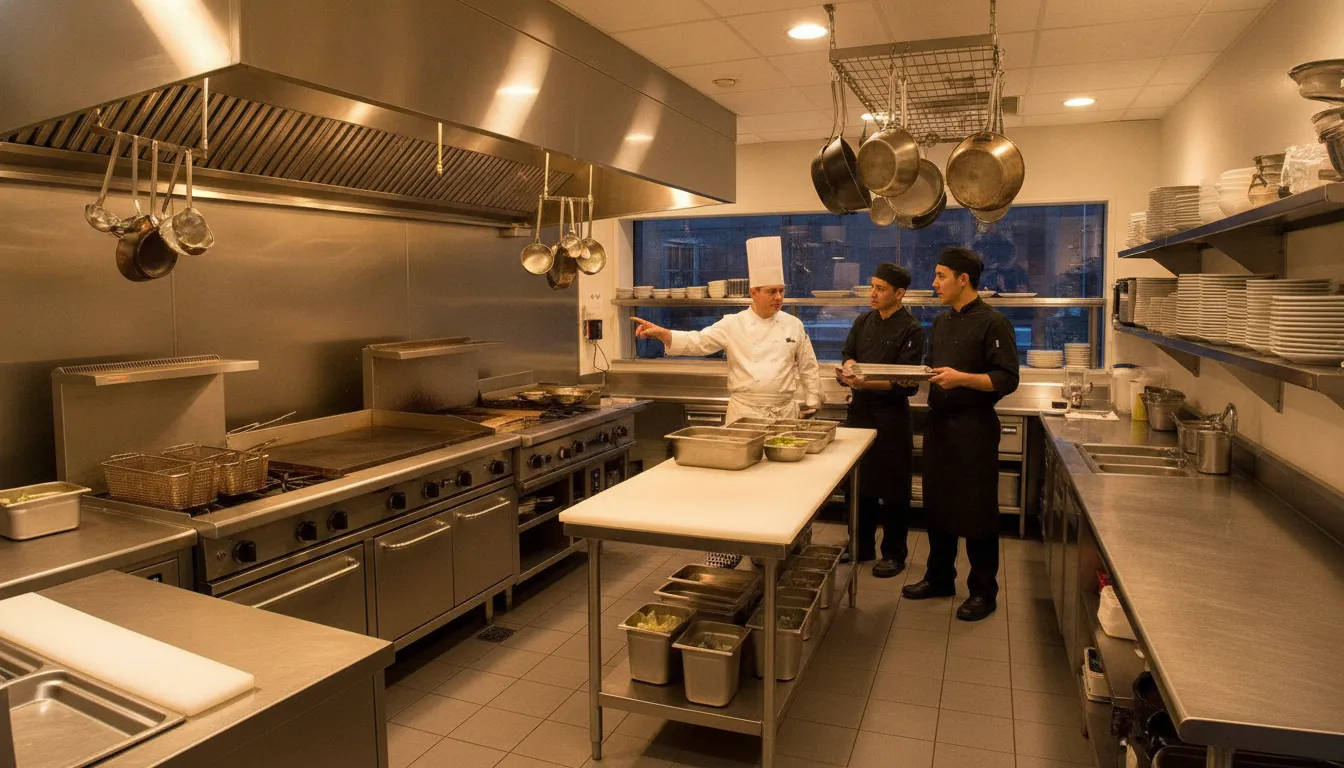
Divide the kitchen into clear workflow zones: receiving and storage, preparation, cooking, plating or service, dishwashing, and waste handling. Then map how ingredients and people move between them. A cook should not need to cross the dishwashing area to reach a prep refrigerator, and clean equipment should have a logical path away from dirty dishes. These decisions affect speed, safety, staff visibility, and the amount of cross-traffic during a busy service.
Next, place the actual equipment into the plan. Account for the footprint of ranges, ovens, refrigeration, prep tables, sinks, shelving, and any specialty equipment your menu depends on. Include clearance for doors, aisles, maintenance access, and employee movement. Henrietta Restaurant Supply recommends planning around workflow and equipment needs first because resolving those decisions early can reduce renovation costs later. You can review the company's restaurant kitchen design and renovation services for help evaluating the space.
Layout is also a health-code decision, not only an efficiency decision. Monroe County requires plans for new or remodeled food service establishments to be approved before construction or equipment installation begins. The county's health guidance also means compliance needs to be considered during the layout-planning stage, when changes are still practical. Confirm requirements for food protection, handwashing, dishwashing, surfaces, plumbing, and equipment placement with the appropriate reviewers before work starts. See the Monroe County plan approval requirements for the official process.
Do not rely on a floor plan that shows only walls and counters. Compare the proposed layout with the menu, expected volume, staffing model, delivery access, and utility requirements. Henrietta's restaurant kitchen project gallery can also help you see how different food-service spaces have been approached. A layout review before you sign the lease gives you leverage: you can negotiate changes, revise the concept, or walk away before an unsuitable space consumes your budget.
Choose the Right Commercial Kitchen Equipment for Your Menu
Equipment decisions should follow the food you plan to serve, the volume you expect, and the workflow your team will use during a busy service. A first-time Rochester operator can avoid expensive substitutions by defining the menu and production process before ordering major appliances. A compact cafe, high-volume breakfast concept, and full-service restaurant may all need a range, refrigeration, and prep space, but the capacity, configuration, and ventilation requirements will differ.
Match Equipment to Your Menu
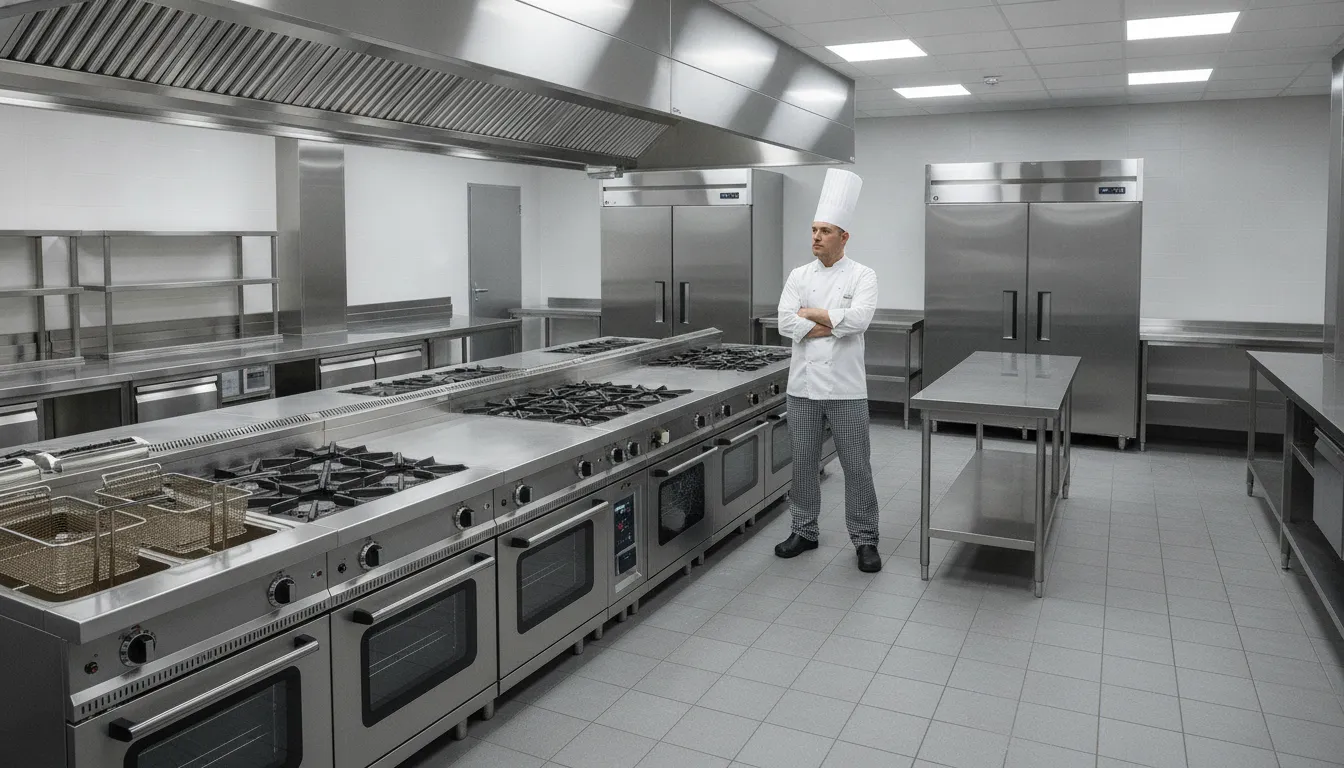
Start by translating each menu item into a production task. Identify what must be cooked, chilled, mixed, portioned, held, washed, or stored, then group those tasks by station. Your core categories will usually include:
- Cooking: Ranges, ovens, griddles, fryers, steam equipment, or other appliances that match your cooking methods and anticipated ticket volume.
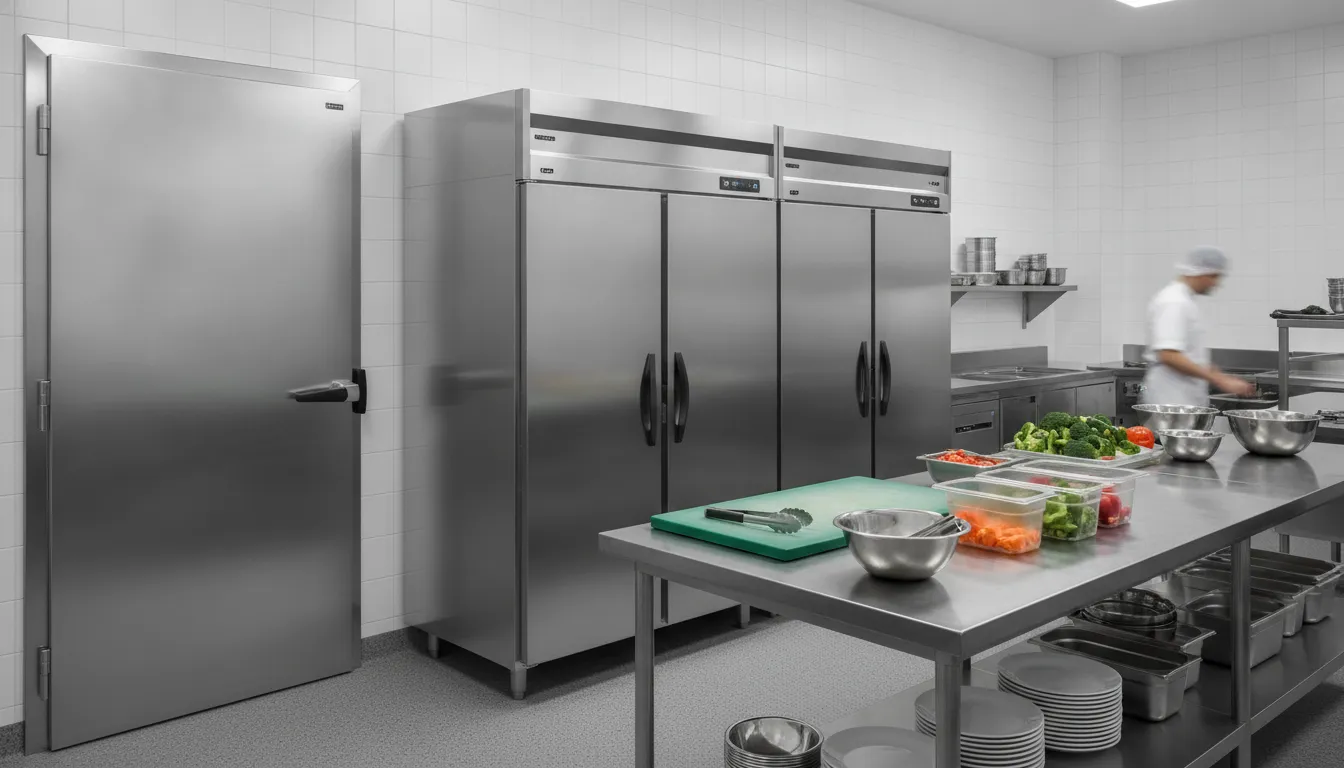
- Refrigeration: Reach-in or undercounter units, prep tables, freezers, and cold storage sized around your ingredients, prep schedule, and delivery cadence.
- Food preparation: Worktables, mixers, slicers, food processors, sinks, and smallwares that help staff prep consistently and safely.
- Storage: Shelving, dunnage racks, dry-storage systems, and containers that keep ingredients organized while protecting clear paths and sanitation zones.
Then map the movement from receiving to storage, prep, cooking, service, and dishwashing. This equipment-first approach helps expose bottlenecks before they become renovation changes. It also keeps the selection connected to Monroe County health-code considerations, rather than treating compliance as a correction after installation.
Buy Once, Spec Right
Do not choose equipment by sticker price alone. Compare capacity, dimensions, utility requirements, service access, warranty support, and how easily the unit can be cleaned between shifts. A lower-cost appliance that cannot keep pace with your menu can create labor problems and force a replacement during your first year. Conversely, oversized equipment consumes capital and valuable kitchen space without improving the guest experience.
Henrietta Restaurant Supply is a Rochester-based commercial kitchen equipment and supply retailer serving restaurant startups, caterers, and food-service operators. HRS maintains more than 40 manufacturer partnerships, which supports specific sourcing instead of limiting an operator to one product line. Review the options for commercial kitchen equipment with your menu, floor plan, and utility information in hand. For ongoing replenishment and operational needs, HRS also provides restaurant supply and delivery.
What Permits and Licenses Do You Need to Open a Restaurant in Rochester NY?
Permitting is easier to manage when you treat it as a sequence rather than one application. Start with the business entity, then handle tax registration and city requirements before moving into health department review and any alcohol licensing. New York notes that restaurant owners work with both state and local agencies, so a complete opening plan needs both layers of approval. See New York State's business startup guidance for the full process.
Set Up the Business and Tax Registrations First
Choose the structure that fits your ownership and tax situation, such as a sole proprietorship, partnership, corporation, or LLC. Each structure carries different legal and tax requirements, so confirm the choice with your attorney or tax professional before filing. New York's business startup guide explains the main entity options.
After forming the business, obtain a federal Employer Identification Number, or EIN. You may need it to file taxes, open the business bank account, and meet other business requirements. If the restaurant will sell taxable goods or services, apply for a New York State Certificate of Authority through the Department of Taxation and Finance. Guidance on the EIN and Certificate of Authority is in New York State's startup resources.
Apply for the Rochester Business Permit
For a location within the City of Rochester, plan for the city business permit application and its non-refundable $25 fee. When the proposed use complies with applicable codes and no issues are identified, the city states that the permit is typically issued within 30 days of receipt. The permit is valid for one year. It must be renewed when required, provided there has been no change in the business type, location, owners, operators, or partners.
Confirm whether your address is inside the City of Rochester or in another Monroe County municipality. The local permitting path can change with the jurisdiction, even when the restaurant concept stays the same.
Liquor License Considerations
If you plan to sell or serve alcoholic beverages for on-premises consumption, you need an appropriate New York State Liquor Authority license or permit. A restaurant license is intended for an operation serving full entree-style meals, not only snacks such as soups or sandwiches. The New York State Liquor Authority provides the restaurant license quick reference.
Check the proposed address early for the 200 Foot Law. It can prohibit an on-premises liquor license for a location within 200 feet. On the same street, as a building used exclusively as a school or place of worship. New York also applies tied-house restrictions involving direct or indirect interests in manufacturing or wholesale alcohol businesses. Details are in the SLA restaurant license reference.
Coordinate Health Department Approval Before Construction
Food service establishments in Monroe County must obtain a permit from the Monroe County Department of Public Health, which conducts routine inspections. New or remodeled establishments generally need plan approval before construction or equipment installation begins, confirmed by the Monroe County food protection office. Direct-to-public food businesses are generally regulated by Monroe County, while packaged or shelf-stable food production may fall under the New York State Department of Agriculture and Markets, per The Commissary's getting-started guide.
Use the permit checklist to guide your equipment and layout decisions. If you want a second set of eyes before submitting plans, send your concept through the equipment inquiry form so the equipment sales team can help coordinate the practical details.
Monroe County Health Department Requirements and Plan Review
If you are preparing to open a restaurant in Rochester NY, treat Monroe County health approval as an early design milestone, not a final inspection task. Food service establishments must obtain a permit from the Monroe County Department of Public Health. Which also conducts routine inspections to verify compliance with food safety and sanitary requirements. The Monroe County food protection page and NYS DOH permit application document the requirements.
The timing matters just as much as the permit itself. For a new or remodeled food service establishment, Monroe County requires plan approval before construction or equipment installation begins. That means you should not finalize a kitchen buildout, order major equipment, or schedule installation based only on a lease drawing. A change to the plan after work starts can create delays, added costs, or a layout that does not support the required workflow.
What the Plan Review Covers
Plan review connects your menu, equipment, layout, and operating procedures. The health department needs enough information to evaluate how food moves through the space. Where preparation and storage occur, and whether the proposed facility can be operated safely and kept sanitary. Specific requirements depend on the type of food service you plan to provide, so confirm the current requirements with Monroe County before construction.
Build health-code compliance into the layout from the beginning. Rochester startup operators should prioritize Monroe County public health compliance during layout planning, rather than trying to fit sinks, refrigeration, preparation areas, and other required elements into a finished room. An equipment-first approach also helps connect your menu and workflow to the physical plan, so the design supports both safe operation and efficient service.
If your project involves a remodel, bring the health review into the schedule before demolition or equipment delivery. Working with a commercial kitchen renovation team early can help you coordinate layout decisions, equipment specifications, and the plan-approval sequence. The goal is a practical kitchen that can pass review and work well during a busy service, not simply a room filled with equipment.
Build a Realistic Opening Budget and Timeline
Rochester's restaurant market is active, with new concepts and established operators expanding across the metro area. That momentum is encouraging, but it also makes planning discipline essential. Build your budget around approvals, design revisions, equipment, installation, and the time required to resolve questions before opening day.
Use the figures below as planning inputs, not a substitute for confirming requirements for your address and concept. Some costs are fixed, while others depend on the scope of the build-out, menu, occupancy, and whether the site is new or remodeled.
| Category | Known cost or requirement | Planning timeline |
|---|---|---|
| City business permit | The non-refundable application fee is $25 for a compliant application. | It is typically issued within 30 days of receipt when no issues are identified. |
| Permit renewal | Plan for renewal after the permit's validity period. | Rochester business permits are valid for one year when the details remain unchanged. |
| Monroe County health review | A permit is required for a food service establishment. | Submit plans before construction or equipment installation begins. |
| Equipment and installation | Budget by menu, capacity, utilities, ventilation, and site conditions. | Schedule after plan approval and coordinate delivery with the build-out. |
Sequence the commitments, not just the purchases
- Confirm the concept, menu, site constraints, and local permit path before committing to major equipment.
- Develop the kitchen layout and submit required Monroe County plans for approval.
- Wait for plan approval before construction or equipment installation, then finalize equipment orders against the approved layout.
- Coordinate installation, inspections, staff training, and opening inventory with the remaining permit milestones.
This order helps prevent a common and expensive mistake: buying equipment that cannot fit the approved workflow, utility plan, or health-code requirements. An equipment-first kitchen design and renovation plan can connect those decisions before walls, utilities, and delivery dates are locked in.
Assemble Your Team: Design, Install, Deliver, and Beyond
A restaurant opening rarely depends on one decision. Your menu, lease, kitchen layout, equipment package, utility requirements, delivery schedule, and inspection timeline all affect one another. Bringing the right partners together early can prevent a late change from becoming an expensive construction problem.
Start by connecting design decisions to the equipment that will actually support your menu and workflow. Henrietta Restaurant Supply recommends an equipment-first approach, planning the kitchen around the equipment and movement patterns before renovation work begins. That approach can help reduce avoidable renovation costs and keep the layout aligned with how your team will prep, cook, clean, and store food. It also gives your contractor clearer information before rough-ins and installation begin. Commercial kitchen equipment should be evaluated as part of the whole kitchen, not as a series of unrelated purchases.
Working With One Local Partner
For a first-time operator, a single accountable local supplier can simplify coordination. Henrietta Restaurant Supply is Rochester-based and serves restaurant startups, caterers, and other food-service operators from its location at the Genesee Valley Regional Market. The team can help translate a menu and service model into a workable equipment list, then coordinate sourcing and delivery around the project schedule.
That sourcing flexibility matters when a kitchen requires specific sizes, capacities, or performance features. HRS maintains more than 40 manufacturer partnerships, supporting equipment selection across different restaurant concepts and operating needs. Instead of forcing the menu or floor plan around whatever happens to be in stock, you can discuss the requirements first and identify suitable options.
Installation planning should also account for access, receiving, storage, electrical and plumbing connections, and the order in which equipment must arrive. A coordinated restaurant supply and delivery plan helps reduce surprises between the supplier, installer, contractor, and opening team. Reviewing completed work in a restaurant kitchen project gallery can also help you compare practical layouts and clarify what you want to discuss.
As your plans become more specific, gather your menu, floor plan, service style, and opening timeline before contacting the supplier. You can share those details through the equipment inquiry form, or use it to start a focused conversation about the next equipment and design decisions.
Choose a Location and Check Zoning Before You Commit
A restaurant space can look ideal during a walkthrough and still create expensive problems after you sign. Before committing, confirm that the proposed use is allowed, identify the correct permitting authority, and have the building evaluated for the demands of a commercial kitchen. The right location is not simply visible from the street. It must support your menu, service model, deliveries, utilities, and licensing plan.
City of Rochester vs. Monroe County Locations
Start by identifying whether the address is inside the City of Rochester or in another Monroe County municipality. The permit path is not identical everywhere. City operators should review the City of Rochester business permit requirements, including the non-refundable $25 application fee and the typical 30-day issuance window when no issues are identified. A Rochester business permit is valid for one year when the business type, location, ownership, and other listed details remain unchanged.
Outside the city, contact the municipality responsible for the property before assuming a city process applies. You will also need to coordinate with the Monroe County Department of Public Health. Food service establishments must obtain a permit from the local health department, and new or remodeled facilities need plan approval before construction or equipment installation begins. Treat zoning, business permits, building approvals, and health review as connected steps rather than paperwork to handle after the lease is signed.
If you plan to serve alcohol, check the address before you get attached to it. New York's 200 Foot Law can prevent an on-premises liquor license for premises within 200 feet. On the same street, of a building used exclusively as a school or place of worship. Review the New York State Liquor Authority restaurant license guidance early, then confirm how the rule affects the specific property and your licensing plans.
Walk the site with your menu and equipment schedule in hand. Confirm that delivery trucks can reach the receiving area, that there is a practical route from receiving to storage and prep. And that customer and staff parking will work during peak periods. Ask a qualified contractor or utility professional to verify electrical service, gas capacity, ventilation routes, exhaust requirements, and grease-trap feasibility before you price the buildout. Planning around commercial kitchen equipment early can expose infrastructure limits before they become change orders.
Finally, have the lease reviewed for permitted use. It should clearly allow restaurant or food-service operations, not merely generic retail or office use. Confirm who is responsible for permits, utility upgrades, ventilation penetrations, grease-trap work, and restoration obligations. If the landlord will not provide written confirmation that restaurant use is permitted, pause before signing. A favorable rent cannot compensate for a space that cannot legally or practically support your operation.
Frequently Asked Questions
What are the first steps to opening a restaurant in Rochester NY?
Start by defining the menu and service model, then choose a business structure and complete the required state paperwork. Next, evaluate locations, confirm zoning and local permit requirements, and develop a kitchen layout around the menu and workflow. New York advises working with both state and local governments, and an EIN may be needed for taxes or a business bank account. New York's business guidance outlines the initial registrations.
How much does it cost to open a restaurant in New York?
There is no reliable one-size-fits-all figure. Your total depends on the lease condition, construction, menu, seating capacity, labor plan, equipment package, permits, and opening inventory. Build the budget from the actual site and menu rather than using a generic industry average. Include design, utility upgrades, ventilation, refrigeration, cooking equipment, smallwares, inspections, insurance, payroll, and working capital. A Rochester business permit application also carries a non-refundable $25 fee when the proposed use complies with applicable codes, according to the City of Rochester.
What health code requirements apply to Rochester restaurants?
Food service establishments must obtain a permit from the local health department and meet applicable safety and sanitary requirements. For a new or remodeled establishment in Monroe County, submit plans for approval before construction or equipment installation begins. Design details such as workflow, handwashing, dishwashing, food storage, refrigeration, ventilation, and cleanable surfaces should be addressed before equipment is ordered. The Monroe County plan requirements should guide the layout review.
Do I need a Monroe County permit to open a restaurant?
In most cases, yes. Food service establishments operating in the county must obtain a permit from the Monroe County Department of Public Health, which also conducts routine inspections. If the restaurant is inside the City of Rochester, you may also need the city business permit. A compliant city application is typically issued within 30 days of receipt, and the permit is valid for one year under the stated conditions. Confirm the complete permit list for your exact address and operation before signing off on construction.
Ready to Plan Your Rochester Restaurant Startup?
A clear equipment package and kitchen plan can help you move from early ideas to a practical opening checklist. Talk to the Henrietta Restaurant Supply team about your Rochester restaurant startup, kitchen layout, and equipment package. Schedule an equipment consultation today!.