Bakery Boxes for Every Baker at Henrietta Restaurant Supply
Find the Right Bakery Box at Henrietta Restaurant Supply
Safe transport is an essential part of baking. A well-chosen cake box protects the care you’ve put into baking and decorating while making your finished cake easier to carry and present. The right size, height, board fit, and closure work together to keep it supported from pickup to celebration.
Bring your measurements to Henrietta Restaurant Supply in Rochester, and let our baking specialists help you choose from our huge selection of bakery boxes and containers. Shop in person for any quantity, with no membership or minimum purchase required.
Types of bakery boxes for every bake
The best box starts with the finished item, not the pan. Measure the width, depth, and height after decorating. Include the cake board, frosting, topper, liner, or insert in that measurement. A little clearance protects the decoration, while too much empty space lets the item slide.
Standard boxes for cakes
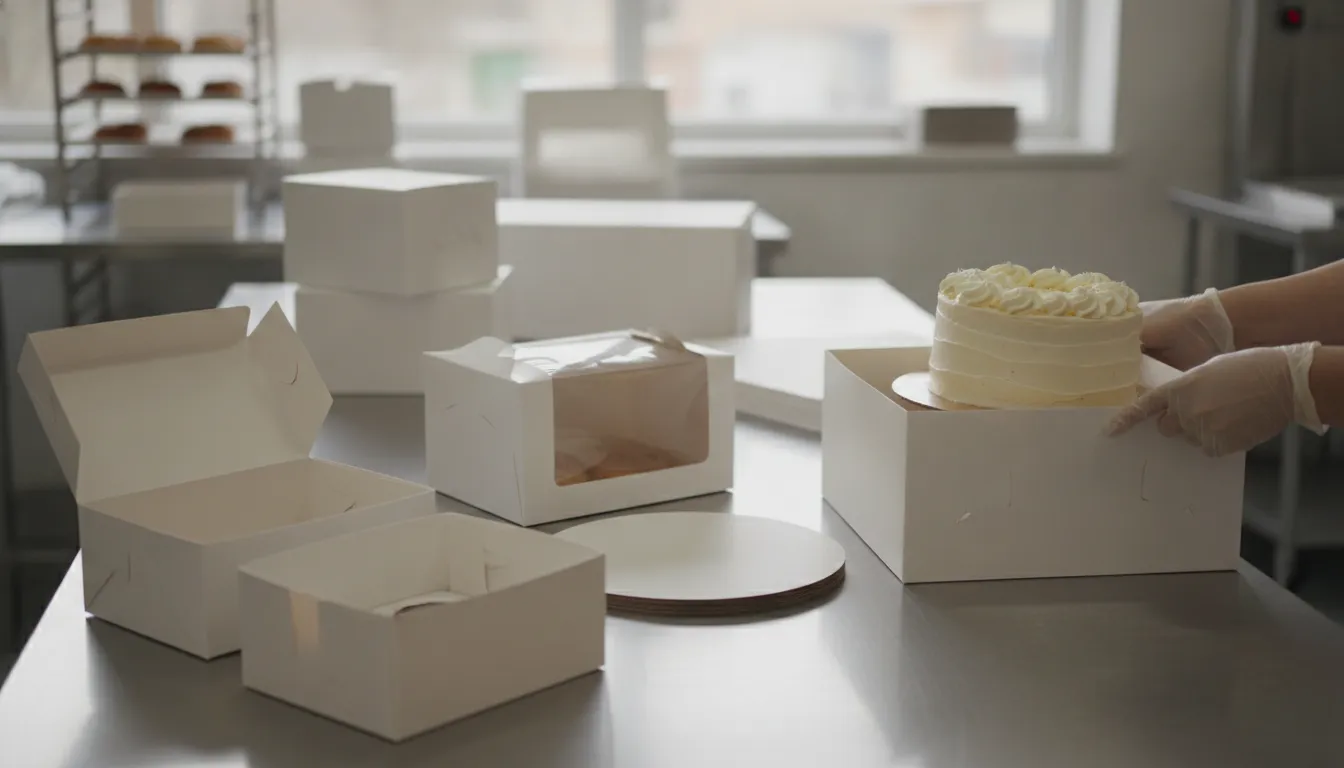
Standard boxes for cakes suit single-layer cakes, sheet cakes, brownies, and other bakes that need a flat, stable base. Match the box floor to the board instead of choosing a carton that is much wider than the cake. A loose cake can slide into a wall during a short car ride.
For a round cake, measure the board across its widest point. For a sheet cake, measure both sides of the rectangle. Then check the height from the board to the tallest decoration. The lid should close without touching the frosting or pressing a garnish into the top.
Cupcake containers and inserts
Cupcake containers use counted cavities or an insert to keep liners upright. Choose a single, half-dozen, or dozen format based on the number of finished cupcakes and the height of the frosting. The insert should grip the liner without squeezing the swirl.
Count the cavities before packing a mixed order. If one flavor has taller frosting, let that height set the box. A box marked for twelve can still damage ten cupcakes when the swirls touch the lid or the tray shifts inside.
Window boxes for cakes
A window box lets a guest see the cake without opening the lid. It works well for a counter display, decorated cookies, pastries, and an order that needs a quick visual check. Treat the window as a viewing panel, not as a support for the decoration.
If the plastic panel is the only thing keeping frosting away from the lid, the box is too short. Move to a taller size and keep the window for presentation. A clear view cannot make up for poor clearance or a base that rocks.
Tall boxes for cakes
Tall boxes for cakes give layered, tiered, and heavily decorated cakes room above the board. Measure from the board to the highest point, including flowers, toppers, and piping. Leave enough clearance that the lid will not mark the decoration if the box moves slightly.
Large or tiered cakes also need a board or drum that stays rigid when lifted. If the base flexes in your hands, it can flex in the box. Match the board and box as one set, and test the fit before the order date.
Donut boxes
Donut boxes keep individual pieces or a grouped assortment from rubbing against a lid. Choose a low format for a single layer, and use a divided or fitted interior when glazes, toppings, or fillings need separation. A snug fit protects the finish without crushing the sides.
For a mixed dozen, place the tallest or most decorated donut first. Check that the lid clears the toppings and that the pieces do not skate when the box is lifted. If the assortment will travel, keep it level and avoid stacking weight on the lid.
Cookie boxes
Cookie boxes are usually lower than cake cartons. They can hold one layer or several layers separated by clean sheets, depending on the cookie shape and finish. Let crisp cookies cool before closing the box so trapped moisture does not soften them.
Filled, iced, or fragile cookies may need a divided space or one layer per box. Test a sample before packing a large order. If a buttery cookie leaves a grease mark or a decorated cookie touches the lid, change the material, size, or arrangement.
| Bake. | Box feature to prioritize. | First fit check. |
|---|---|---|
| Layer or sheet cake. | Correct height and a board that fills the floor. | The lid clears the tallest decoration. |
| Cupcakes. | Counted cavities or a secure insert. | Frosting does not touch the lid. |
| Donuts. | Low profile with enough separation. | Glaze does not rub or slide. |
| Cookies. | Low carton with a liner between layers when needed. | Cookies are cool and stay crisp. |
Bakery box materials and finishes
Once the shape and size fit, choose a material that suits the food, handling, and presentation. The print or color is secondary. A plain box with the right support protects a finished bake better than a decorated carton that is too short or weak for the job.
Cardboard and paper bakery boxes
Cardboard and paper bakery boxes are practical for cakes, cookies, pastries, and everyday counter orders. Look for a carton intended for bakery food and choose a board that resists bending under the item. The base, lid, and closure should work together when staff lift and carry the box.
White board gives celebration cakes a clean presentation. Paperboard cartons can also suit cupcakes, cookies, and pastry assortments when the size matches the product. Before ordering a case, test one box with a finished item and close it the way a guest or driver will carry it.
Kraft bakery boxes
Kraft bakery boxes provide a simple, natural look for cookies, pastries, brownies, and casual cake orders. The kraft appearance does not determine strength, grease resistance, or height. Check the product’s intended use and test the base with the heaviest item you plan to pack.
A kraft carton can be a good presentation choice when the bake itself is the focus. For a decorated cake, spend the first decision on clearance and board support. Add a window only when the guest benefits from seeing the item before opening it.
Corrugated bakery boxes
Corrugated boxes add structure when an order needs more support during handling. They can help with larger cakes, stacked packaging, and deliveries where the outer carton will see more movement. Corrugated material still needs the right board, height, and flat loading surface.
Do not use a stronger outer box to excuse a poor fit. A cake can shift inside a rigid carton, and a cupcake insert can slide if it is not matched to the box. Test the complete combination of product, board, insert, and closure.
Compostable and eco-friendly boxes
Compostable or other eco-friendly packaging can support a lower-waste service goal when it is suitable for the bake and the disposal system available to the customer. Read the package information and confirm that the carton is intended for the food, temperature, moisture, and handling conditions involved.
Do not call a box compostable based only on its color or paper appearance. Keep the claim tied to the packaging information, and confirm local disposal guidance when the claim affects your operation. The box must still protect the product, close securely, and keep the food-contact surface clean.
For any material, choose packaging made for bakery food rather than a random craft or shipping carton. The FDA food packaging overview explains that packaging components that contact food fall under food-contact-substance requirements.
Tips for transporting cakes safely
Transport protection begins before the lid closes. Cool the item, fit the support, confirm the clearance, and keep the finished box level. These steps apply to home bakers, retail orders, bakery teams, school food service, and catering handoffs.
Use inserts, boards, and liners together
A cake board gives the item a stable base. A cupcake insert keeps liners upright. A liner or sheet can separate cookies, pastries, or greasy items from the carton. Each piece solves a different problem, so do not use an empty box as a substitute for the support the bake needs.
Choose a board or drum that fits the box floor without rocking. It should support the weight without bending when someone lifts it. For cupcakes, the insert should hold the liner while leaving the frosting clear. For cookies and pastries, use a clean liner or divider when the surface could stick, smear, or leave grease behind.
Match the box size to the finished product
Measure the item after decorating. Record the product width, board size, and height at the tallest point. Include a topper, piping, or other finish in the height. Then test the actual box by closing the lid and lifting from the bottom.
A box that is tight can damage frosting. A box that is oversized lets the product slide. If the item shifts when you tilt the closed box slightly, change the size or add the correct support. One sample test is cheaper than replacing a ruined order.
Keep the load flat and organized
- Cool the bake until the surface is set before closing it.
- Set it on the board or into the insert, then confirm the lid clears the highest point.
- Close the carton fully and lift from the base, not the lid.
- Load boxes on a flat surface, with heavy items below and no bag resting on a lid.
- Group event orders by drop or pickup time so staff do not move finished boxes repeatedly.
Keep warm and cold bakes in separate closed boxes. Moisture can move between items and soften a crisp finish. Store empty packaging flat, dry, and off the floor so warped boards, dented corners, and curled lids do not create problems at the bench.
Set up the packing station
Keep the sizes you use most near the decorating or finishing bench. Mark a sample with its inside height and floor size so a new staff member can compare a finished cake without unfolding every carton. Stage boards, inserts, liners, and labels before a holiday or event rush.
When a box fails in the field, save it for review. A crushed corner, popped tuck, grease mark, or lid contact points to the next change. Replace the wrong size or material rather than changing the whole routine without evidence.
Shop in person at Henrietta Restaurant Supply
Bring one finished measurement to our Rochester retail store. You can compare bakery boxes and containers in person, check the fit of boards and inserts, and choose the quantity that suits your next order. The store is open to the public, so home bakers and food-service teams can shop the same baking-supply selection without a membership or wholesale minimum.
Our bakery boxes and containers category includes packaging for cakes, cupcakes, cookies, and other baked goods. You can also pair the box with cake decorating tools or professional baking pans so the pan, board, and carton work as one set.
If you need supplies for an operation, ask our team about the available sizes and service options. Wholesale delivery is available for bakery supplies on orders that meet the $150 delivery minimum. For questions about retail bakery packaging, use our retail help team.
Get help choosing bakery boxes
Frequently asked questions (FAQ)
How much space should a cake have under the lid?
Leave a clear gap above the tallest decoration. If the lid touches the frosting when you close it, choose a taller box and retest the fit.
Do cupcakes need an insert?
For travel beyond a handoff at the counter, an insert helps keep liners upright and frosting away from the lid and neighboring cupcakes.
When should I choose a window box?
Choose a window when guests need to see the item before opening it. Choose a solid lid when the decoration is tall or the trip needs more protection from contact.
Are kraft and corrugated boxes the same?
No. Kraft describes a paper appearance or material choice, while corrugated construction adds fluted structure. Check the packaging specifications and test the box with the finished product.
Can I pack warm cookies right away?
Let cookies cool first. Steam trapped in a closed box can soften a crisp finish and make layers stick together.
Where can I compare box sizes in Rochester?
Visit Henrietta Restaurant Supply on Jefferson Road with your finished measurements, or ask our retail help team to match a box, insert, board, or liner to the order.