
Immersion Blender for Restaurant Prep
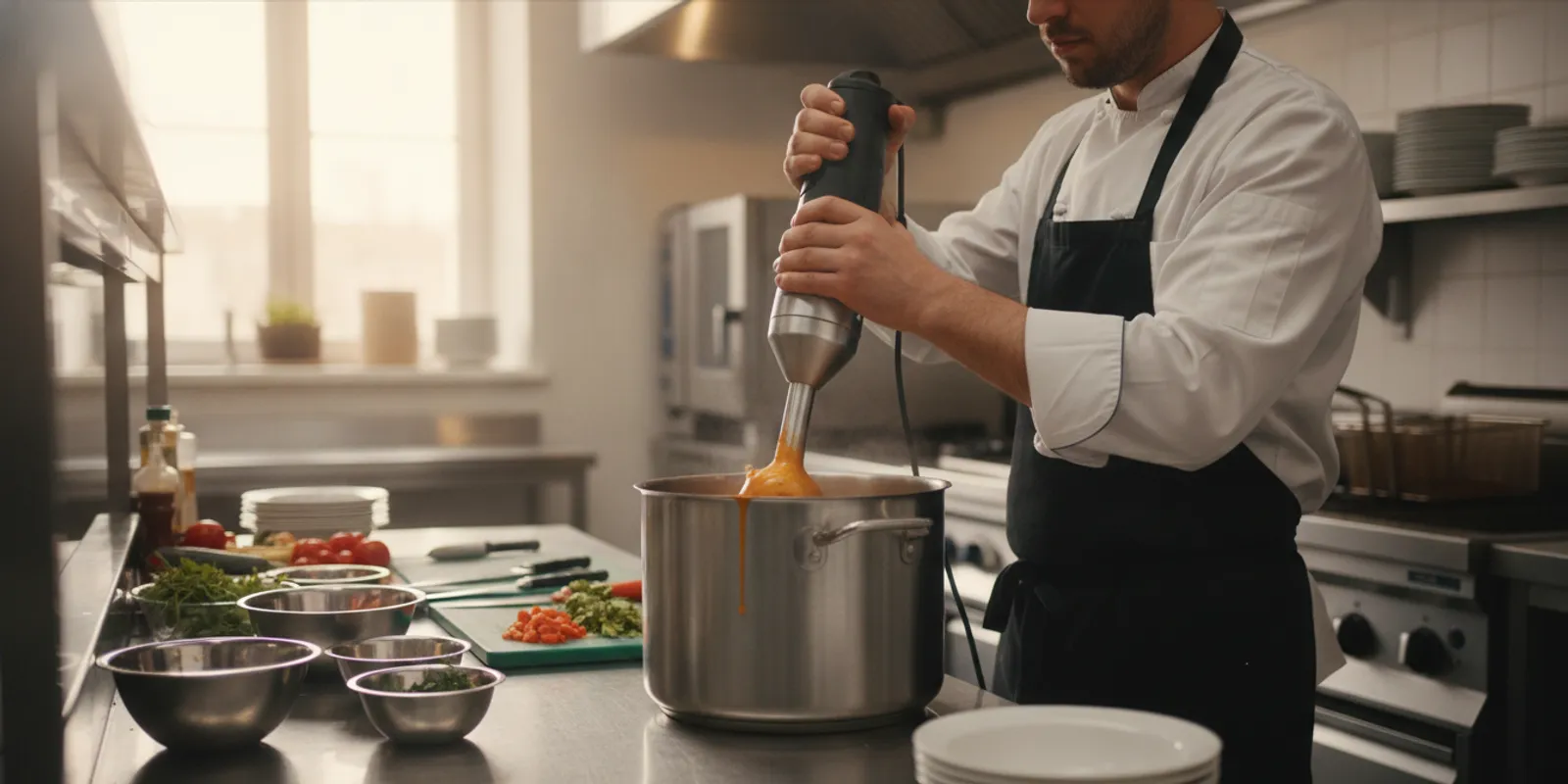
An immersion blender is a handheld kitchen tool that blends soups, sauces, and purees in the pot or container where they are prepared. The motor sits above the food while a guarded blade works below the surface, reducing transfers and cleanup.
For a restaurant, cafe, school kitchen, bakery, caterer, or home cook, an immersion blender can make smooth textures easier to produce in the same vessel.
Understanding the immersion blender for prep
What an immersion blender is and what it does
An immersion blender, also called a stick blender, places the blending head directly into food. The shaft reaches into a stockpot, mixing bowl, food container, or other deep vessel while the guard helps protect the blade and reduce splashing.
It is especially useful for liquid or soft mixtures. Cooks can smooth a soup in its cooking pot, blend a sauce in a pan, or puree vegetables without transferring the food to a countertop jar.
Types of immersion blenders available
Immersion blenders vary in motor strength, shaft length, speed control, and construction. Available models may include compact tools for lighter prep, heavier-duty units for frequent commercial use, and variable-speed models for more control over texture.
- Compact models: Useful for smaller batches, shallow containers, and lighter prep.
- Commercial-duty models: Built for repeated use with soups, sauces, and purees.
- Variable-speed models: Let the cook start gently and increase speed as the mixture comes together.
- Detachable-shaft models: Separate the blending shaft from the motor housing for easier cleaning.
Our Rochester team can explain the differences among available models.
Key features to know
Speed control affects how gently the tool starts and how closely the cook can control texture. A comfortable grip, balanced weight, and easy-to-reach switch matter when a batch takes several minutes to finish.
Look at the usable shaft length rather than the tool’s overall length. The blending head should reach the food while the cook can hold the motor securely above the vessel.
Also review the blade guard, cord or power system, and cleaning instructions. The manufacturer’s directions explain which parts may be immersed, detached, washed, or sanitized.
Materials compared
- Stainless steel shafts: Durable contact surfaces that suit frequent commercial prep and resist many common kitchen ingredients.
- Plastic shafts: Lightweight options that may work well for lighter tasks, depending on the model’s temperature and use instructions.
- Metal blade guards: Strong protection for repeated use in commercial vessels.
- Plastic housings: Often make the motor easier to handle, but they must stay within the maker’s cleaning instructions.
Stainless steel shafts suit frequent prep, while lighter materials may make smaller tools easier to handle.
How different kitchens use immersion blenders
Restaurants use immersion blenders to finish soups, sauces, gravies, and vegetable purees in the pans or pots where those foods are prepared.
Cafes can use a compact model for soups, dressings, sauces, and other small-batch preparations. The tool keeps the work close to the range or prep counter.
Schools can blend large batches of soup or soft food in a kettle or deep container.
Caterers can smooth a sauce or puree in the same vessel used for event preparation. That reduces unnecessary transfers when the food is already in a suitable container.
Bakeries can use an immersion blender for fruit fillings, pastry creams, ganaches, and other soft mixtures when the recipe and tool instructions permit it. Related baking tools can support the rest of the station.
Home cooks can use the same basic design for soups, sauces, smoothies, and purees. Retail smallwares help both home cooks and food-service professionals work with less equipment on the counter.
Benefits of using an immersion blender
- Fewer transfers: Blend in the cooking pot or preparation vessel instead of moving food into a separate jar.
- Less cleanup: A handheld shaft can replace a larger jar and its lid for many soft or liquid mixtures.
- More flexible prep: Use the tool in different pots, pans, bowls, and containers that suit the recipe.
- Consistent texture: Repeatable speed and movement help produce smooth soups, sauces, and purees.
- Easy storage: A compact tool takes less room than many countertop blending setups.
Use the blending head below the surface before starting, keep hands and utensils away from the blade, and follow the tool’s operating instructions. Those simple habits help protect the cook, the food, and the equipment.
Care and cleaning
Switch the blender off and unplug it before removing a shaft or cleaning around the blade. Keep the motor housing away from water unless the manufacturer specifically allows another method.
Wash or sanitize the shaft and guard according to the care instructions. Inspect seams, the guard, and the blade area for food residue before the tool returns to storage.
When the same tool moves between recipes, follow the operation’s allergen and sanitation procedures.
Visit or contact our Rochester team
Visit the Rochester retail store to explore retail smallwares, or contact our team with questions about available immersion blenders.
FAQ
What is an immersion blender used for?
It blends soups, sauces, purees, dressings, and other soft mixtures directly in a pot, pan, bowl, or deep container.
Can an immersion blender replace a countertop blender?
It can handle many liquid and soft mixtures, but a countertop blender may suit closed-jar recipes, ice, or finely measured small batches better.
Are immersion blenders useful in school kitchens?
Yes. Schools can use commercial-duty models for soups and purees in deep kettles and containers.
How should an immersion blender be cleaned?
Unplug the tool, keep the motor dry, and clean the shaft and guard according to the manufacturer’s directions and your kitchen’s sanitation procedures.
Get immersion blender help We can point you to a practical model for soups, sauces, purees, or other soft mixtures.