
Commercial Steam Tables for Food Holding and Service
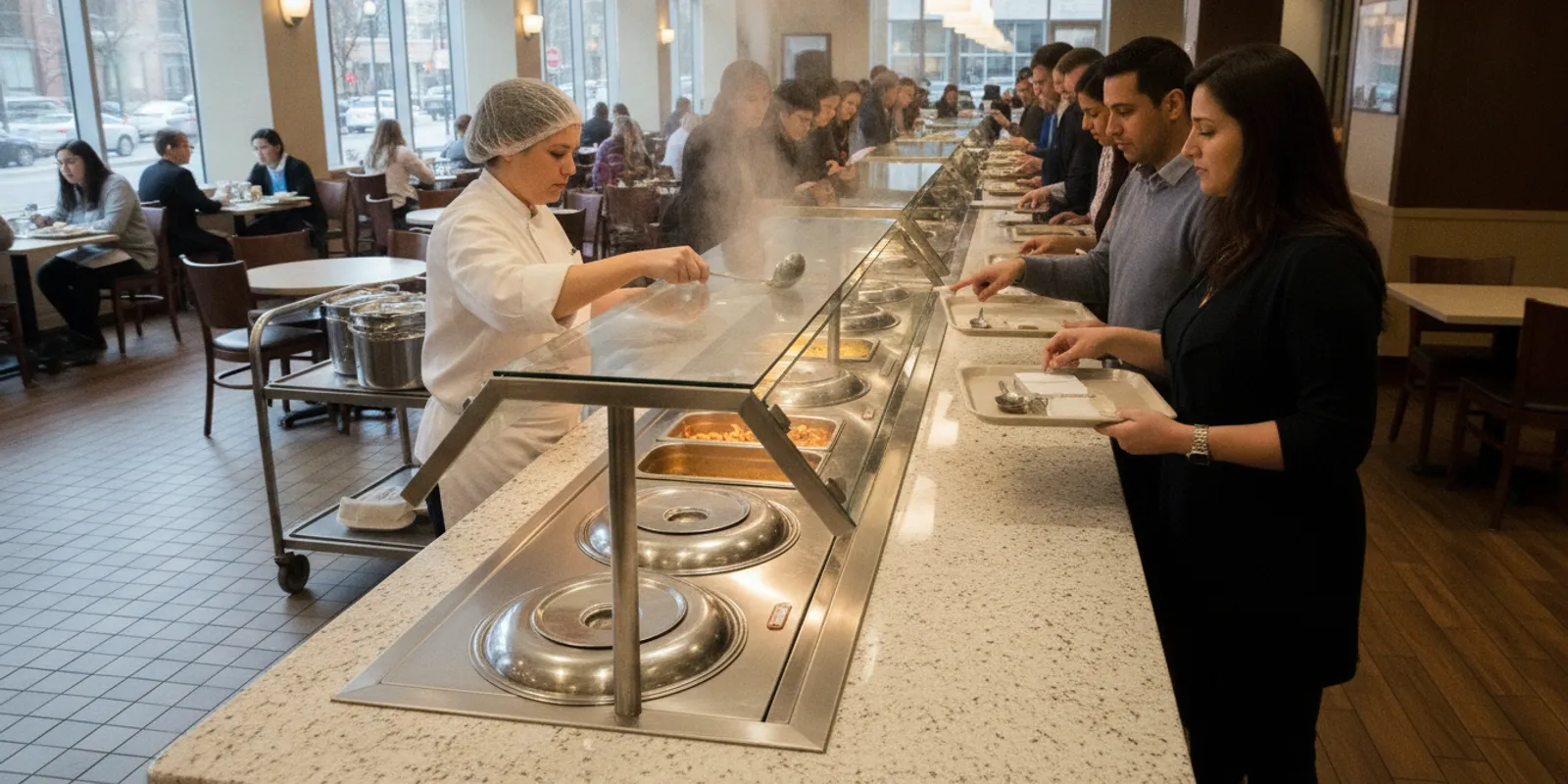
Commercial steam tables hold prepared food at the serving line so staff can present dishes in clean, organized pans. They support service after cooking and before the guest receives the meal.
We carry commercial steam tables that help restaurants, schools, caterers, and hospitality teams present prepared dishes in an organized service area.
Explore commercial steam tables
Understanding commercial steam tables
What a commercial steam table is and what it does
A commercial steam table is an insulated or heated serving station with wells that hold food pans. Depending on the model, heat comes from a water bath or a dry heating element.
Staff transfer prepared food into compatible pans, place the pans in the wells, and monitor the food according to the operation’s procedures. The table keeps dishes available for service without asking the serving team to carry each pan directly from the cooking area.
Types of commercial steam tables
- Wet steam tables: Use heated water around the pans to distribute heat through the wells.
- Dry steam tables: Heat pans without a water bath and can simplify setup when the model is designed for dry operation.
- Drop-in steam tables: Fit into a counter or serving line as part of a built-in station.
- Freestanding steam tables: Provide a complete mobile or standalone holding station.
- Hot and cold combination tables: Hold hot and chilled items in separate zones when the model is designed for both uses.
Models differ in pan configuration, controls, drains, mobility, and temperature features.
Key features to know
Pan wells determine how the table holds food and which pan sizes fit. Adjustable thermostatic controls help staff manage the unit according to the maker’s operating range.
Drains can make wet-table cleanup easier. Casters support movement on some freestanding models, while locking wheels help keep the unit stable during service.
Other useful features may include undershelves, cutting boards, sneeze guards, water-fill controls, and low-water protection. Choose features that support safe, repeatable use rather than adding complexity without a daily benefit.
Steam table materials compared
- Stainless steel: Durable, easy to wipe down, and common for food-contact surfaces and commercial serving equipment.
- Aluminum: Lightweight and useful for some components, though the model’s care directions determine which foods and cleaners are appropriate.
- Polymer and plastic components: May appear in handles, trim, cutting boards, or accessory parts and should be cleaned according to the product care directions.
Material affects durability and cleaning, but construction matters too. Look at seams, pan supports, controls, drains, casters, and the accessibility of areas that staff must clean after service.
How different industries use steam tables
Restaurants use steam tables for buffets, cafeterias, banquet service, and other settings where prepared entrees and sides need an organized holding station.
Schools use them to present meals in a predictable serving line. Staff can keep pans accessible while following the school’s food safety and temperature-monitoring procedures.
Healthcare and senior-living kitchens can use holding tables to keep prepared foods organized for meal service. The operation’s dietary, sanitation, and temperature requirements still guide every step.
Caterers and event teams use freestanding or portable models for buffets and temporary service areas. Mobility and sturdy construction can make the table useful across different event locations.
Hotels and hospitality operations use steam tables for breakfast buffets, banquet service, and other meal periods that present several prepared dishes at once.
Benefits to your operation
- Organized service: Pans give each prepared dish a defined place at the serving line.
- Accessible food: Staff can serve from a consistent station instead of moving individual pans throughout service.
- Flexible presentation: Different pan sizes and configurations support entrees, sides, sauces, and garnishes.
- Less unnecessary handling: Food stays in a suitable pan from the holding stage through service.
- Easier reset: Durable surfaces, drains, and removable components can simplify cleaning after the meal period.
Maintenance and factors to consider
Clean the wells, pans, surfaces, drains, and accessories after use. Wet models need the correct water level during operation and complete draining and cleaning afterward.
Inspect cords, controls, casters, seals, and pan supports as part of routine care. Keep electrical parts dry, follow the maker’s cleaning products and methods, and remove food residue before it hardens.
Use compatible pans and keep serving utensils clean. Monitor food temperatures with your kitchen’s usual process, and confirm local requirements before changing how the unit is used.
Steam tables can differ in power, heat method, pan depth, mobility, and cleaning needs. We can explain those differences alongside related food preparation equipment available for your operation.
Contact our Rochester equipment team
At Henrietta Restaurant Supply, we can help you compare commercial steam tables and understand how each model is intended to work. We can also discuss related commercial equipment when a serving station is part of a larger kitchen project.
FAQ
What is a commercial steam table used for?
It holds prepared food in compatible pans for service. It helps staff present and serve food from an organized station.
Do steam tables cook or reheat food?
They hold prepared food for service. Use separate cooking or reheating equipment for those jobs.
What is the difference between wet and dry steam tables?
Wet models use heated water around the pans, while dry models heat pans without a water bath. The manufacturer’s instructions determine proper operation.
How do you clean a steam table?
Clean pans, wells, surfaces, drains, and accessories according to the manufacturer’s directions. Keep electrical components dry and complete the operation’s sanitation steps.
Get steam table help We can explain wet and dry models, pan configurations, and the care each unit requires.