Commercial Cooking Equipment: A Beginner's Guide
The price tag on a new range or fryer can be intimidating, and it's tempting to look for the cheapest option available. But when it comes to outfitting your kitchen, the initial cost is only one part of the equation. A cheap appliance that constantly breaks down or drives up your utility bills isn't a bargain; it's a liability. True value lies in reliability and long-term performance. That's why choosing the right commercial cooking equipment is one of the most important investments you'll make. This guide will help you look beyond the price, focusing on factors like energy efficiency, durability, and brand reputation to ensure you get the best return on your investment.
What Is Commercial Cooking Equipment?
If you're setting up a professional kitchen or expanding an existing food service operation, you'll quickly find that not all appliances are created equal. Commercial cooking equipment is specifically engineered to withstand the demanding environment of a high-volume kitchen, whether it's a bustling restaurant, a catering business, or a community food service program. These pieces are built with features designed for intense, repeated use, and they're backed by the performance and safety standards a commercial operation depends on. Understanding the distinction is the first step in outfitting your kitchen for success.
Key Takeaways
- Map your equipment to your menu: Select appliances based on the food you serve and your expected production volume, then confirm they fit your kitchen's physical layout and existing utility hookups.
- Prioritize long-term value over upfront cost: A lower price isn't a good deal if it leads to high utility bills or frequent breakdowns; invest in durable, energy-efficient equipment with a solid warranty to reduce operating costs over time.
- Partner with Henrietta Restaurant Supply for better support: As your Rochester-based local supplier, we offer far more than a sale. Our team provides personalized advice, local after-sales service, and hands-on help with warranties — support you simply can't get from a big online store. Contact our equipment experts to get started.
Built for the Commercial Kitchen
Commercial cooking equipment is constructed from durable, heavy-duty materials so it can handle constant use and extreme wear and tear. This robust build means it lasts longer and performs more reliably under pressure, service after service. When you invest in commercial cooking equipment, you're paying for that strength, longevity, and the peace of mind that comes with equipment built for the demands of a food service business.
How the Right Equipment Impacts Your Business
Choosing the right equipment goes far beyond just being able to cook your food. It directly affects your kitchen's efficiency, your staff's safety, and the consistency of your final product. The right gear helps your team work smoothly, producing high-quality dishes time after time. Quality equipment is also often more energy-efficient, which can lower your utility bills over the long run. While the initial cost might be higher, durable, well-made equipment saves you money by requiring fewer repairs and replacements. Our team can even help with kitchen design and renovations to make sure every piece fits perfectly into your workflow.
Breaking Down the Essential Equipment Categories
Walking into a commercial kitchen for the first time can feel overwhelming, but everything has its place and purpose. The key is to think of your kitchen in terms of stations, with each area dedicated to a specific function like cooking, prepping, or cleaning. Understanding these core categories will help you choose the right pieces for your menu and create a workflow that makes sense. Whether you're designing a kitchen from scratch or upgrading a few key items, getting a handle on the essential equipment is the first step toward building an efficient and productive space.
From the fiery heart of the cooking line to the unsung heroes of sanitation, each piece of equipment plays a vital role. You can explore a wide range of products to see how they fit into a professional setup. Let's look at the main categories you'll need to consider for your food service operation.
Ranges, Griddles, and Fryers
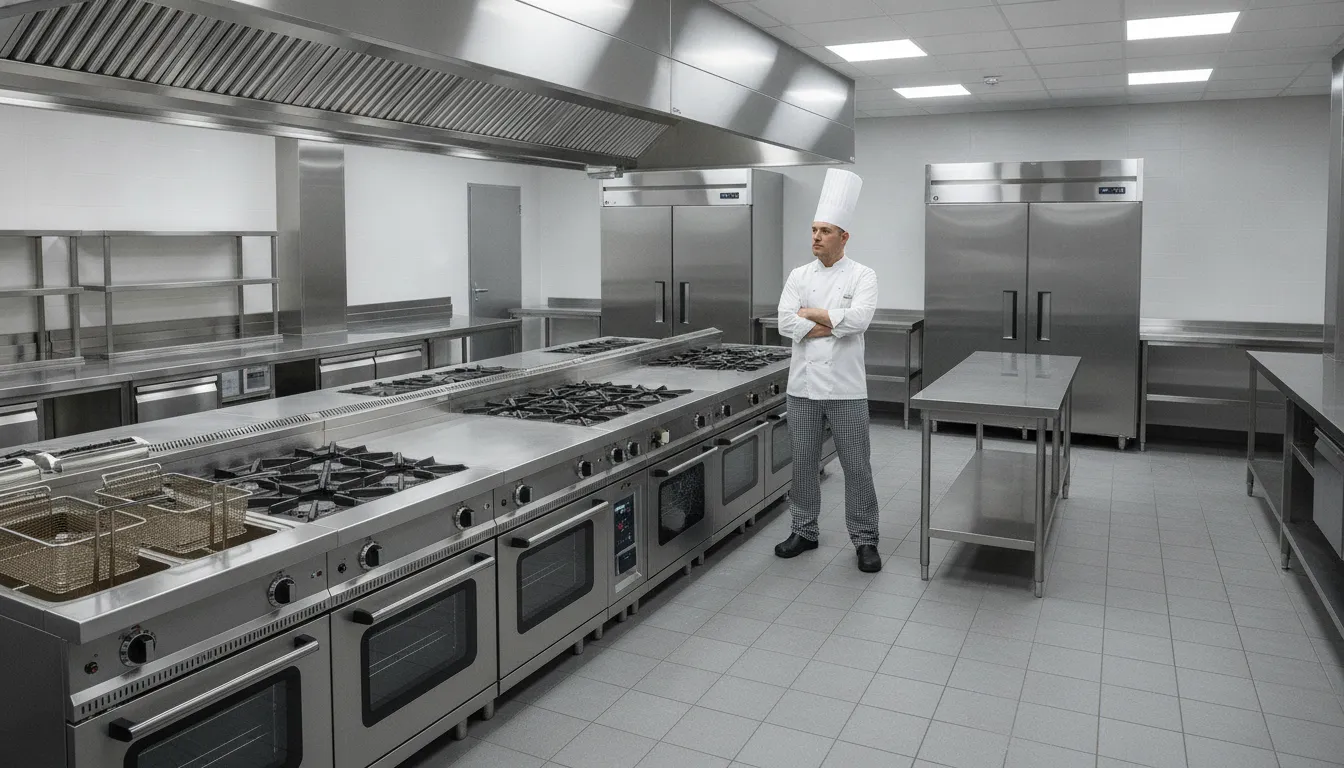
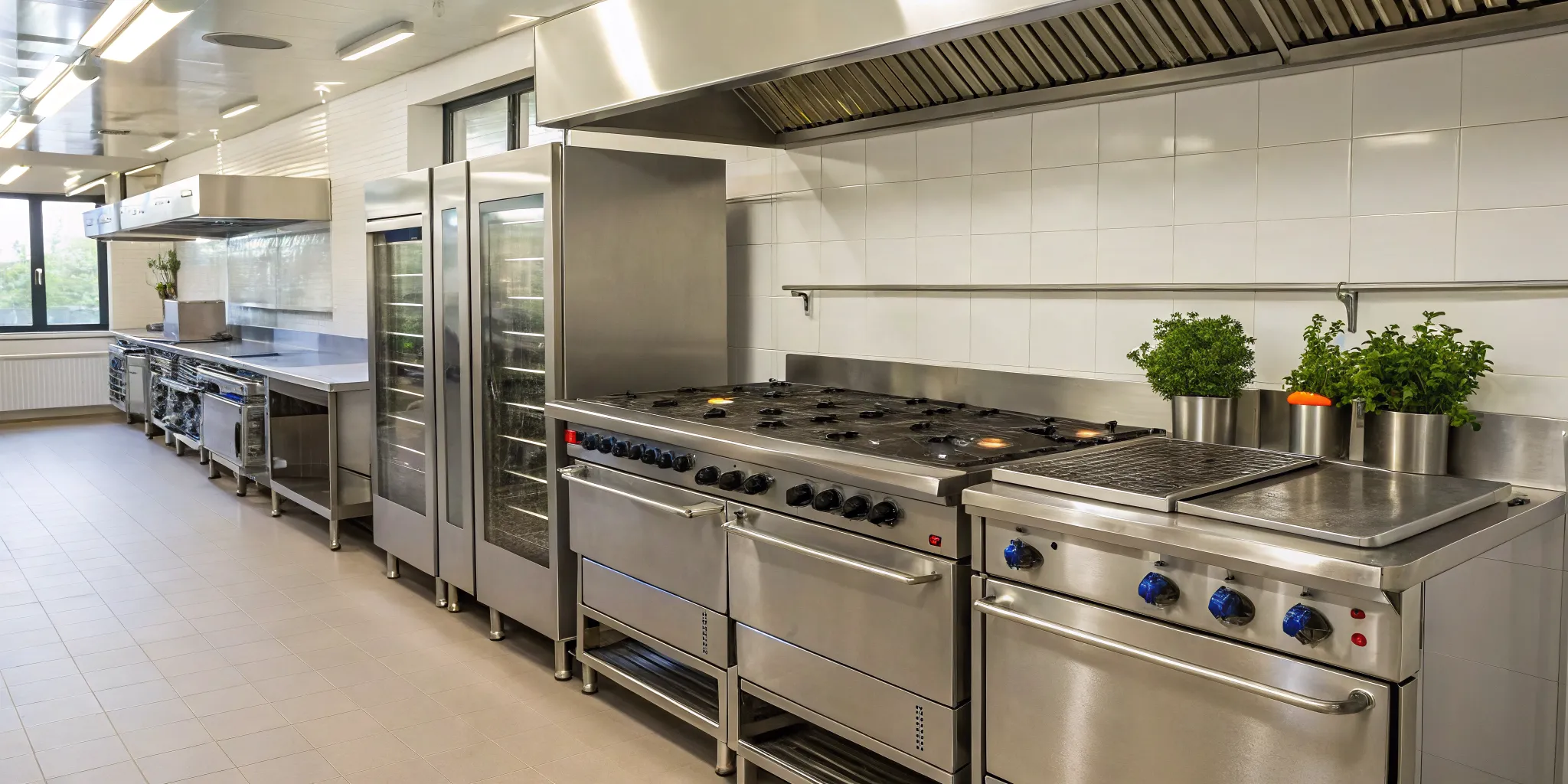
This is the heart of your kitchen, where most of the hot-line action happens. A commercial range is the classic workhorse, combining open burners on top with an oven below, making it incredibly versatile for sautéing, simmering, and baking. Griddles provide a large, flat, heated surface perfect for cooking breakfast items, burgers, and sandwiches. Fryers are a must-have for turning out crispy favorites like french fries, wings, and onion rings.
The right mix of this commercial cooking equipment depends entirely on your menu. A brunch spot might need a large griddle and a multi-burner range, while a bar focused on appetizers will get more use out of a bank of reliable fryers. Choosing the right combination is one of the most important decisions you'll make for your kitchen's efficiency.
Commercial Ovens
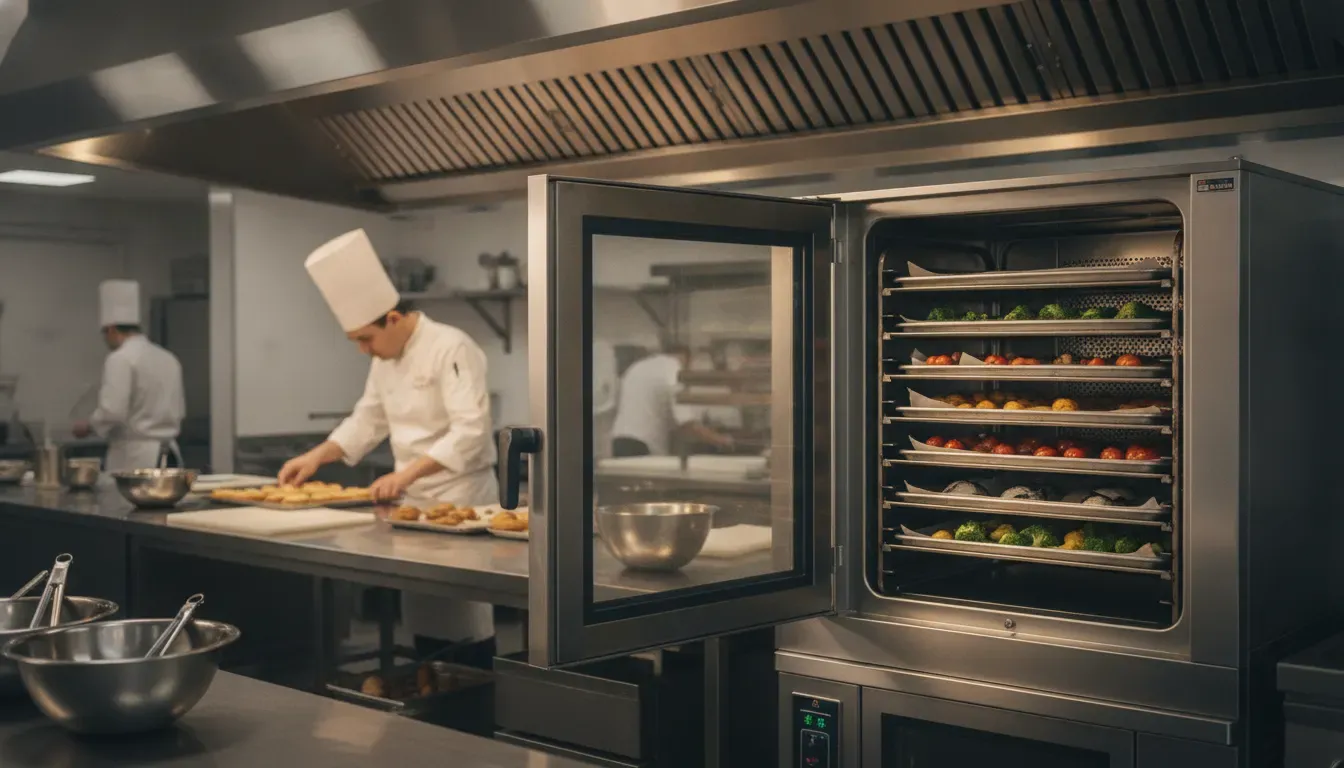
Commercial ovens are built to handle high volumes and deliver consistent results for baking, roasting, and reheating. Convection ovens use internal fans to circulate hot air, which cooks food faster and more evenly, making them great all-rounders for bakeries and restaurants. Deck ovens use conduction to transfer heat directly from a hot surface (the "deck"), creating the perfect crust for pizzas and artisan breads. For high-volume operations, conveyor ovens move food through a heated chamber on a belt, ensuring every item is cooked exactly the same.
Food Prep Equipment
Any chef will tell you that preparation is half the battle. Food prep equipment helps you streamline this process, saving valuable time and labor while ensuring your dishes are consistent. A commercial mixer can whip up huge batches of dough or batter in minutes, while a heavy-duty food processor can chop, purée, and mix ingredients with precision. Meat slicers are essential for delis and restaurants that serve sandwiches, providing perfectly uniform slices every time. These tools do the heavy lifting so your team can focus on cooking and plating, which is why they are essential products for any professional kitchen.
Refrigeration and Food Storage
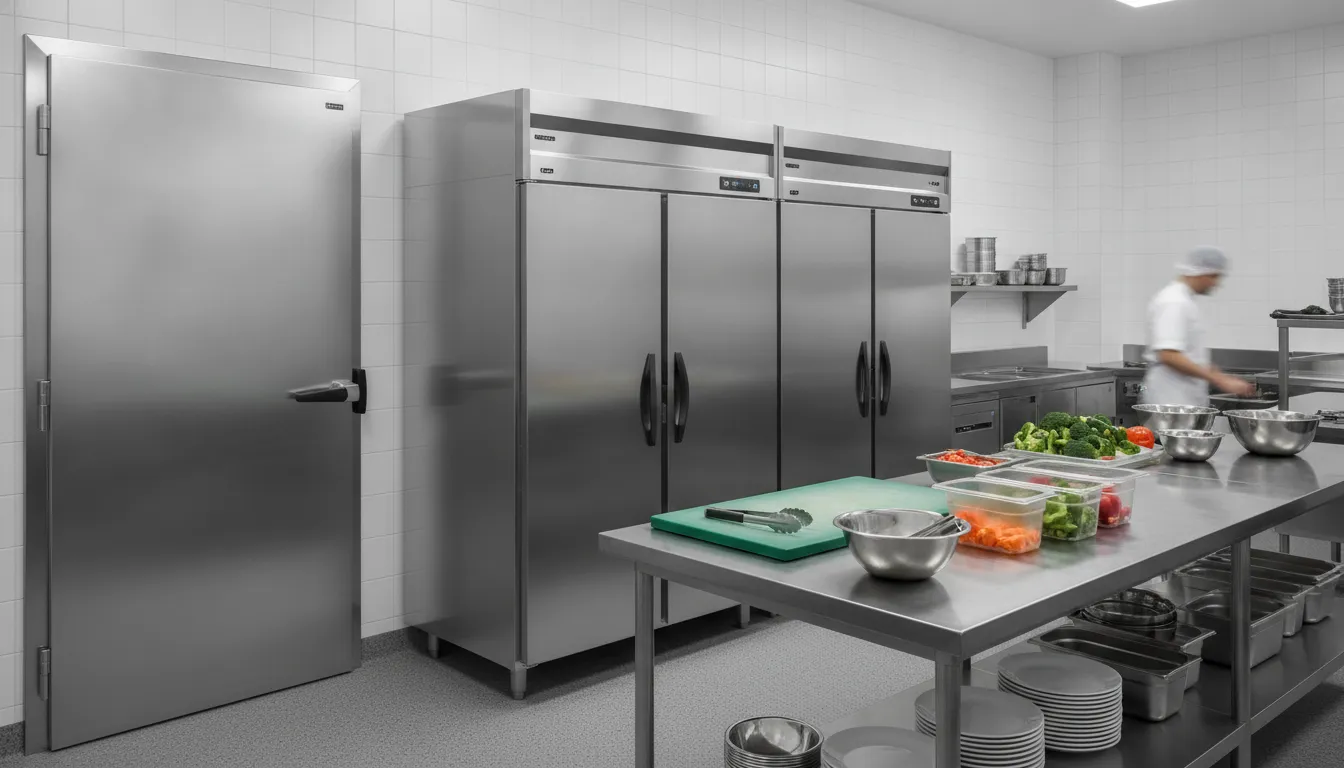
Proper food storage isn't just about organization; it's about safety. Commercial refrigeration is designed to maintain precise temperatures even with frequent door openings, protecting your inventory and your customers. A walk-in cooler is ideal for storing bulk ingredients, while reach-in refrigerators and freezers provide easy access to items needed during service. You'll also find refrigerated prep tables that keep ingredients like salad greens, sandwich toppings, and pizza fixings safely chilled right at the prep station. Investing in the right refrigeration helps you reduce food waste, prevent foodborne illness, and keep your kitchen running smoothly.
Holding, Warming, and Sanitation
Once food is cooked, you need a way to keep it hot and safe until it reaches the customer. Holding and warming equipment, like steam tables, heat lamps, and holding cabinets, maintains food at a safe temperature without overcooking it. This is crucial for managing busy service times, catering events, or running a buffet.
Just as important is your sanitation setup. Health codes require specific equipment for washing and sanitizing dishes and tools. A three-compartment sink is standard for washing, rinsing, and sanitizing, while a high-temperature commercial dishwasher can clean large volumes of dishes quickly and effectively. These systems are non-negotiable for keeping your kitchen clean and compliant, and professional design services can help ensure your layout meets all regulations.
Key Factors to Consider Before You Buy
Choosing new commercial cooking equipment is a major decision that goes far beyond the initial price. The right pieces will become the backbone of your kitchen, supporting your team and defining your efficiency for years to come. Before you make a purchase, it's essential to think through how a new appliance will fit into your operation as a whole. Taking the time to do thorough research now ensures you're selecting tools that truly match your operational needs and will deliver a return on your investment. From your menu to your utility hookups, here are the key factors to weigh before you buy.
Your Menu and Production Volume
The first place to look for answers is your menu. The dishes you create will dictate the type of equipment you need. A bakery specializing in delicate pastries requires different ovens than a pizzeria firing pies all night long. Similarly, a high-volume burger joint will need more griddle space and fryer capacity than a small café. Think about your busiest service. How many customers are you serving? Your production volume determines the size, power, and capacity you'll need. Overbuying can strain your budget, while underbuying can create a bottleneck that slows down your entire kitchen. Mapping your menu to your equipment needs is the most critical first step.
Kitchen Space and Workflow
Next, get out your tape measure. You need to know exactly how much physical space you have available, not just for the equipment itself but also for ventilation and clearance. Consider the entire path from the delivery truck to its final spot in the kitchen; will it fit through your doors and hallways? Beyond just fitting the space, think about how the equipment will impact your kitchen's flow. A well-designed layout allows your team to move efficiently and safely, while a poor one creates traffic jams. Choosing the right commercial cooking equipment is crucial, as it can significantly impact your kitchen layout and workflow. If you need help optimizing your space, our team offers professional kitchen design services to help you create a functional and productive environment.
Gas vs. Electric: Choosing a Fuel Source
Your choice between gas and electric equipment often comes down to two things: cooking style and what's available in your building. Gas equipment provides powerful, responsive heat that many chefs love for its immediate temperature control. Electric equipment, including induction cooktops, offers consistent, even heat that can be ideal for more precise applications. Your decision may be made for you by your kitchen's existing utility hookups. If you don't already have the proper gas lines or electrical voltage, the cost of installation can be a significant factor. It's always best to check your connections before you start shopping.
Energy Efficiency and Long-Term Costs
The sticker price is only part of the total cost of ownership. Your equipment will use energy every day, and those utility bills add up. Investing in energy-efficient models can lead to significant savings over the life of the appliance. According to New York State programs, energy-efficient equipment can offer energy savings of 10% to 70% over standard models. Look for the ENERGY STAR® label, which certifies that a product meets strict energy performance standards set by the EPA. While these models might have a higher upfront cost, the reduction in your monthly gas and electric bills often provides a quick return on your investment.
Durability, Warranties, and Brand Reputation
A commercial kitchen is a demanding environment, and your equipment needs to be able to handle the pressure. Look for appliances built with durable materials like stainless steel that can withstand constant use and rigorous cleaning. Just as important is the support you get after the sale. Choose suppliers known for their quality after-sales service and support. A strong manufacturer's warranty is your protection against defects and malfunctions. When you work with a local partner like us, you have a dedicated team ready to help you with any questions or service needs, giving you peace of mind. Our reputation in the Rochester community is built on that trust.
Safety Standards and NSF Certification
In a professional kitchen, safety is non-negotiable. All commercial cooking equipment should meet established safety standards to protect your staff and your customers. One of the most important marks to look for is the NSF certification. This indicates that the equipment has been tested by a third party to verify that it is designed and constructed in a way that promotes food safety. NSF-certified equipment is typically easier to clean, less likely to harbor bacteria, and is a requirement for most local health departments. When you purchase professional-grade supplies, you can be confident you're meeting these essential safety benchmarks.
How to Compare Commercial Equipment Brands
Once you know what type of equipment you need, the next step is choosing a brand. With so many options on the market, it's easy to feel overwhelmed. But think of it like this: you're not just buying a piece of metal, you're investing in the heart of your kitchen. Taking the time to compare brands based on performance, reliability, and real-world feedback will pay off for years to come. A little research now prevents major headaches later. Let's break down what to look for.
Key Indicators of Quality and Performance
A low price tag can be tempting, but it rarely tells the whole story. True value lies in performance and durability over the long haul. Look for equipment made from robust materials like stainless steel, which can handle the intense heat and constant use of a commercial kitchen. Durable construction means fewer breakdowns and repairs. Another key factor is energy efficiency. Appliances with an ENERGY STAR rating use advanced technology to lower power and water consumption. While they might cost more upfront, the savings on your utility bills add up quickly, reducing your overall operating costs.
Finding Trustworthy Reviews and Ratings
Online reviews can be a great starting point, but it's important to seek out feedback from credible sources. Look for reviews from other restaurant owners, chefs, and kitchen managers who have put the equipment to the test in a real-world setting. Industry publications and supplier websites often feature lists of top-performing brands based on customer satisfaction and reliability. Brands like Vulcan, True Refrigeration, and Robot Coupe consistently receive high marks from professionals. When you browse our commercial equipment, you'll find brands trusted by chefs and operators across the industry for their consistent performance.
Why Talking to Peers and Local Suppliers Helps
Nothing beats a conversation with someone who gets it. Chat with other chefs or business owners in the Rochester area to see what equipment they trust. They can offer honest insights that you won't find in a product description. Building a relationship with a local supplier is just as important. We're here to be more than just a store; we're your partners. Our team can offer personalized advice based on your menu and space. Plus, when you need support with delivery and installation or have a question, you know exactly who to call. You can't get that level of service from a faceless online retailer.
Can You Save Money on Commercial Cooking Equipment?
Outfitting your kitchen is one of the biggest financial steps you'll take, and it's easy to feel overwhelmed by the price tags on essential equipment. After all, your business depends on having reliable tools to get the job done day in and day out. The good news is that making a smart investment doesn't always mean choosing the most expensive option on the market. One of the biggest advantages of working with our team is the wide network of vendor partnerships we've built over the years. That network lets us find a range of products to fit your budget while still getting you the quality, warranty, and support your operation needs. It's all about understanding where to spend and where you can save.
Thinking strategically about your purchases can lead to meaningful savings, both now and in the long run. That means weighing financial incentives, comparing vendor options, and understanding the real value of a local partnership. A cheaper appliance that breaks down frequently or drives up your utility bills isn't a bargain. By exploring these avenues, you can equip your kitchen for success and keep more of your hard-earned money in your pocket. Our team is always ready to help you find the right commercial cooking equipment that meets your operational needs and financial goals.
How Our Vendor Network Fits Your Budget
The range of pricing in commercial cooking equipment can be wide, and it's natural to wonder whether you can find quality without blowing your budget. This is where working with a local supplier pays off. Over years of serving the Rochester food service community, we've built relationships with a broad network of trusted vendors. That means we can shop across many options for you and match a product to your budget, rather than pushing a single brand or a one-size-fits-all price point.
Importantly, finding a price that works for you never means settling for less where it counts. When we source through our vendor network, we make sure the equipment you choose still carries the quality construction, solid warranty, and manufacturer support your operation relies on. Instead of gambling on the cheapest unproven option, you get a balance of cost and long-term value that's right for your kitchen.
Finding Rebates and Incentive Programs
Did you know you can get money back for choosing energy-efficient appliances? Many utility companies and state programs offer rebates to businesses that invest in equipment designed to save energy. These incentives are meant to encourage sustainability, and they can make a higher-quality, energy-saving model much more affordable. Depending on the appliance, energy-efficient equipment can reduce your utility usage by 10% to 70% over standard models.
Before you buy, check with your local energy provider to see what commercial kitchen rebates are available here in New York State. The initial price might be slightly higher, but the combination of a rebate and long-term energy savings often makes it the most cost-effective choice over the life of the equipment.
Making the Most of Promotions
It's smart to ask about bundled packages or promotions when you're buying multiple items. Suppliers can often provide a better price when you purchase several pieces at once, which is a great way to save when outfitting a new kitchen or upgrading your existing setup. Don't be shy; always ask your sales team if there are any deals available.
The Smart Reason to Shop Local
Choosing a local supplier is more than just supporting your community; it's a strategic move for your business. When you buy from a national chain online, you might get a good price, but what happens when your new oven breaks down mid-service? A local partner can provide prompt, reliable after-sales service and support that a distant company simply can't match. This includes handling warranty claims, arranging for repairs, and offering quick delivery.
Building a relationship with a local supplier means you have an expert in your corner who understands your needs. We invite you to visit our retail location to see our equipment firsthand and talk with our team. We're here to offer personalized advice and ensure you have a reliable partner for the long haul.
Equip Your Kitchen for Success
Setting up your kitchen is about more than just buying appliances; it's about building a foundation for efficiency, safety, and consistently great food. The choices you make here will echo in your daily operations for years to come. As you select your core pieces, think about how each one contributes to a smooth workflow. For instance, a well-chosen commercial range can become the true workhorse of your kitchen, streamlining your cooking process and directly impacting the quality of every dish you serve.
Investing in energy-efficient commercial cooking equipment is another smart move that pays off over time. Appliances with an ENERGY STAR rating can significantly lower your utility bills, freeing up capital that can be reinvested elsewhere in your business. It's also essential to ensure every piece of equipment you purchase complies with local health and safety regulations to keep your staff protected and your business running without a hitch.
Finally, don't underestimate the value of a great partnership. Working with a reliable local supplier means you have a team to lean on for more than just the initial sale. A good partner provides expert guidance during setup and can offer ongoing professional services like installation, maintenance, and urgent repairs. Having that support system in place gives you peace of mind, ensuring your kitchen can handle the pressure and continue to operate smoothly day in and day out.
Related Articles
- In-Stock Commercial Cooking Equipment | Rochester, NY
- Commercial Food Prep Equipment | Rochester, NY
- Commercial Kitchen Equipment & Solutions | Rochester, NY
- Commercial Food Storage, Tables & Sinks | Rochester, NY
- Commercial Kitchen Design & Renovations | Rochester, NY
Frequently Asked Questions
Can I put commercial equipment in my home kitchen? Almost always, no. Henrietta Restaurant Supply sells commercial equipment for food service businesses, and most commercial equipment is not designed or approved for residential use. Commercial equipment can have different electrical, ventilation, installation, warranty, and insurance requirements, and using it in your home could create unexpected issues. There may be exceptions for certain smaller tabletop equipment, so talk with our team before purchasing to make sure your kitchen upgrade is actually a good fit for your home.
I'm on a tight budget. What's the most essential piece of equipment to invest in first? This really depends on your menu, but for most kitchens, a high-quality commercial range is the best place to start. It's the ultimate multitasker, giving you powerful burners on top for sautéing and simmering, plus an oven below for baking and roasting. By starting with a versatile workhorse like a range, you can handle a wide variety of cooking tasks while you build out the rest of your kitchen over time.
Is NSF certification really a big deal? For any professional food service operation, yes, it is a very big deal. The NSF mark is your proof that the equipment is designed for safe food handling and is easy to properly clean and sanitize. Health inspectors will look for this certification, so it's a key part of staying compliant. More importantly, it helps you protect your customers from foodborne illness and shows you're committed to running a safe, professional kitchen.
How do I decide between gas and electric equipment? The decision usually comes down to cooking preference and kitchen infrastructure. Many chefs prefer gas for its instant heat and precise temperature control, especially on a cooktop. Electric, including induction, can offer very consistent and even heat, which is great for baking and other specific tasks. The most practical factor, however, is what your building is set up for. Check your existing utility connections, because the cost of installing new gas lines or high-voltage electrical wiring can be a major expense.