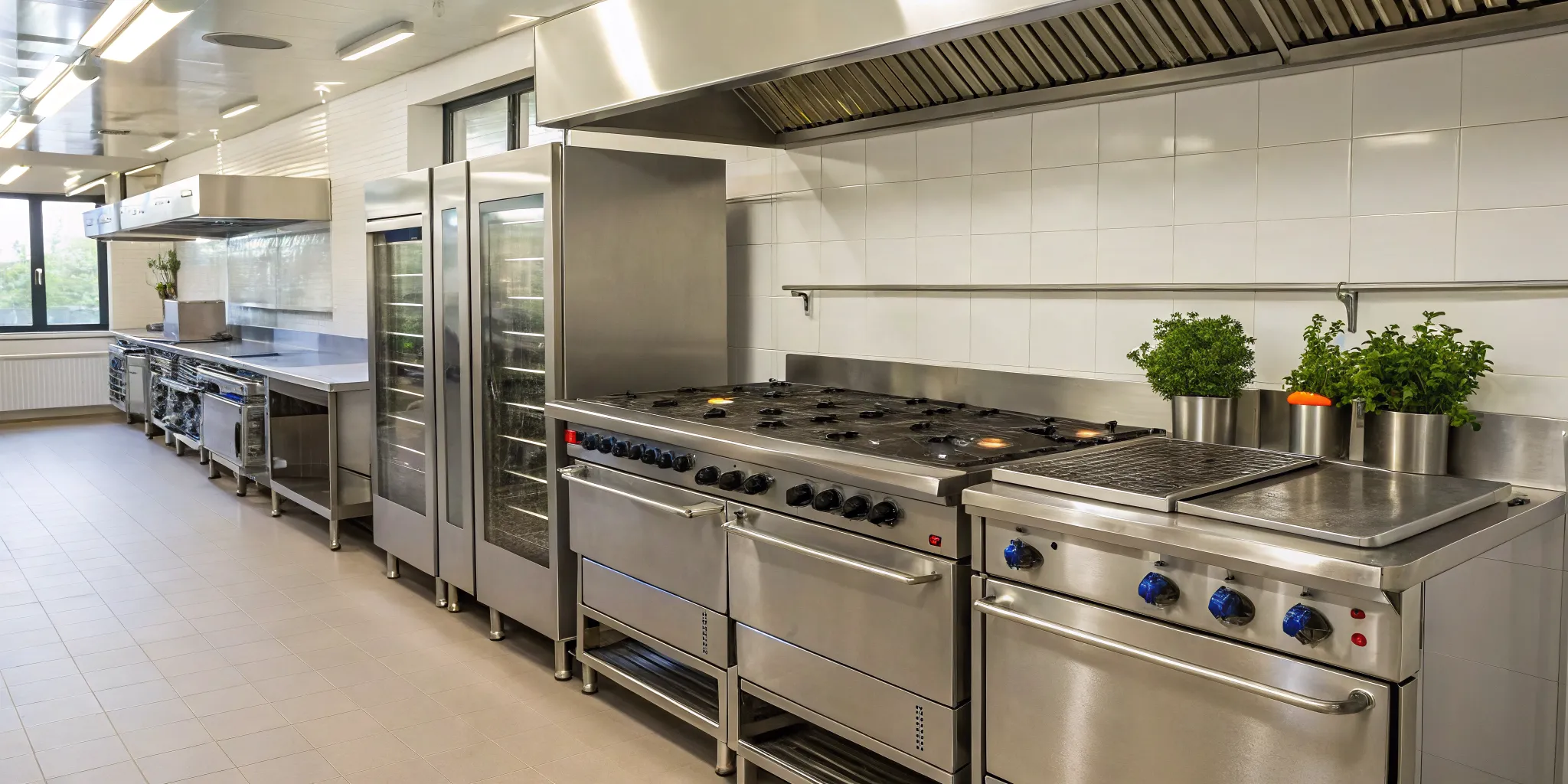
Commercial Combi Oven: Does Your Restaurant Need One?
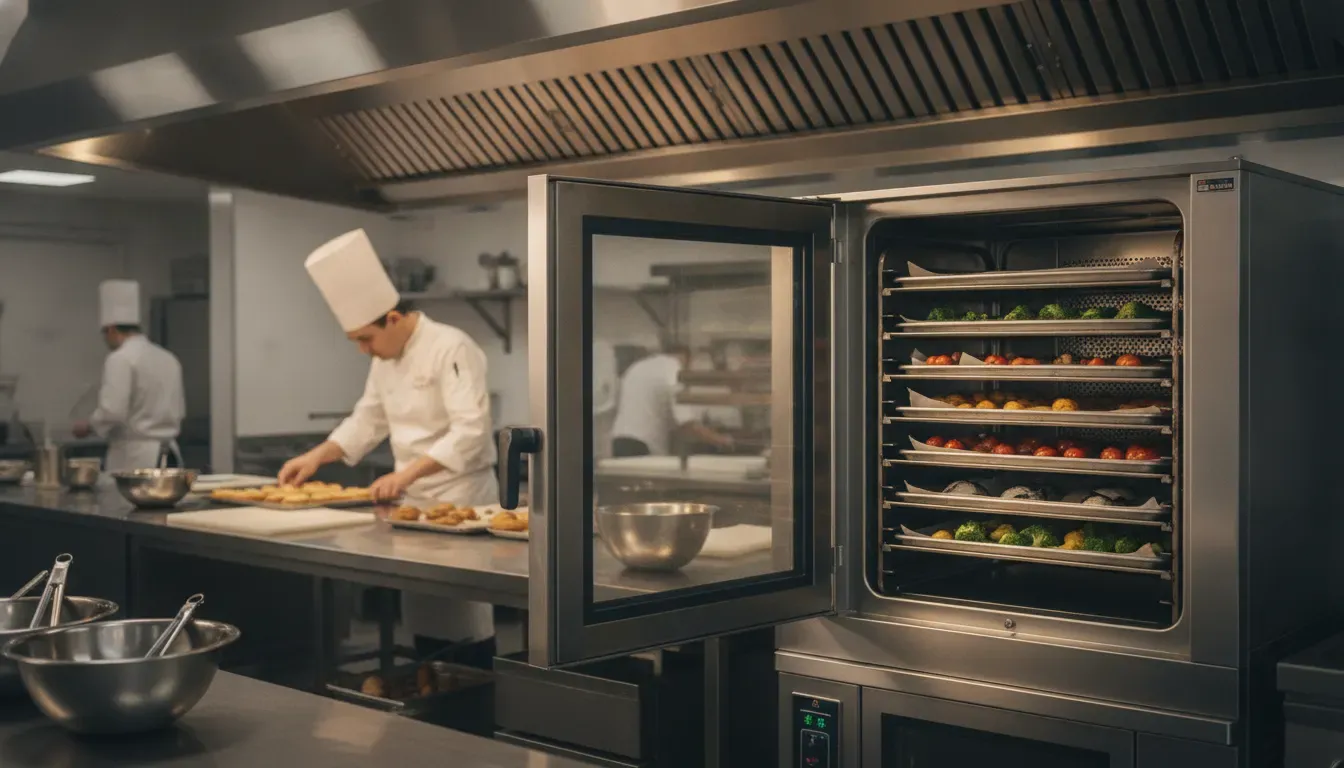
A commercial combi oven combines dry convection heat and steam in one foodservice appliance. That means an operator can roast, bake, steam, reheat, and use combination cooking without sending every menu item to a separate piece of equipment. Whether your restaurant needs one depends on your menu, production volume, kitchen space, utilities, cleaning plan, and willingness to train the team on a more capable cooking system.
Talk with HRS about a commercial combi oven for your kitchen plan.
This article explains how the three cooking modes work, which operations benefit most, how to think about the total investment without relying on an unsupported price, and what to verify before ordering. It is part of HRS's broader commercial kitchen equipment buying guidance, but it focuses on the steam-and-convection decision rather than every equipment category.
What Is a Commercial Combi Oven?
A commercial combi oven, also called a combi-steam oven, is a foodservice oven that can produce hot, dry air, steam, or both together. The combination of heat and moisture gives cooks more control over browning, tenderness, yield, and reheating than dry heat alone. The exact controls and capabilities vary by model, so use the manufacturer's specifications for final operating limits.
RATIONAL's explanation of combi ovens describes three core modes: steam, hot air, and combi-steam. In hot-air mode, the oven behaves more like a convection oven. In steam mode, the cooking cavity uses moist heat. In combination mode, the oven balances both. That distinction matters because the oven is not simply a convection oven with a water connection. It is a multi-purpose cooking system that changes how a kitchen plans recipes, batches, cleaning, and staff training.
|
Mode |
What it does |
Useful applications |
|---|---|---|
|
Steam |
Uses moist heat for gentle, even cooking. |
Vegetables, grains, seafood, proteins, and reheating where moisture matters. |
|
Hot air |
Circulates dry heat in the cooking cavity. |
Baking, roasting, browning, and other convection-style work. |
|
Combi-steam |
Combines hot air and steam to manage moisture and browning. |
Roasted proteins, baked goods, braises, production cooking, and controlled reheating. |
Steam does not make every dish better, and more modes do not automatically mean better results. The value comes from using the right mode for the food, batch, and service plan. Operators should also account for water quality, drainage, cleaning chemicals or systems, and employee training before treating a combi oven as a simple replacement for a standard oven.
For additional energy-planning context, the U.S. Department of Energy's Federal Energy Management Program includes electric and gas combination ovens in its commercial oven purchasing guidance. The agency recommends reviewing efficiency requirements and lifecycle considerations instead of looking only at the purchase specification.
Which Restaurant Types Benefit Most from Combi Ovens?
Combi ovens tend to make the most sense when an operation needs repeatable cooking across several methods and has enough production volume to use the appliance throughout the day. They can be especially useful when the kitchen has limited floor space but a varied menu, or when the team needs to cook moist and dry products in predictable batches.
- Full-service restaurants: A combi can support roasted proteins, vegetables, sides, baked items, and controlled reheating across lunch and dinner service.
- Bakeries and cafes: The combination of dry heat and humidity can help teams move between baking and other production work, provided the selected cavity and pan format match the menu.
- Caterers: Batch cooking and regeneration can be valuable when an operation prepares food ahead of an event and needs consistent results across a large production window.
- Hotels, institutions, and schools: A combi may support repeatable production for changing menus, scheduled meal periods, and teams that need documented cooking procedures.
- Growing kitchens: An operation adding menu variety may use one flexible appliance to expand capability without immediately adding several dedicated units.
A combi oven may be a poor fit when the menu depends on one narrow cooking method, the team lacks time to learn the controls, or the building cannot support the required water, drain, electrical, gas, ventilation, or service conditions. It can also be a poor fit when the unit would sit idle for most of the day. A versatile appliance only creates value when the kitchen has a clear plan for using it.
Map the decision to the workflow described in HRS's commercial cooking equipment selection. The important question is not whether a combi oven can perform a task. It is whether that task occurs often enough, at the required volume, to justify the space and operating requirements.
How Much Does a Commercial Combi Oven Cost?
There is no responsible single price for a commercial combi oven. The total investment depends on the cavity size, pan capacity, controls, cleaning features, fuel or electrical configuration, water treatment, drainage, ventilation, delivery route, installation, staff training, and service plan. Two units that look similar in a catalog can create very different project requirements once the kitchen is measured.
Build the budget around the complete equipment project rather than the oven alone. Ask for a model-specific quote that separates the equipment, accessories, installation responsibilities, utility work, delivery or rigging, and startup support. A useful planning conversation should answer:
- What pan format and capacity does the menu require during the busiest production window?
- Does the building have the required electrical or gas service at the proposed location?
- Will the installation require water treatment, a floor drain, a condensate connection, or other plumbing work?
- Does the current ventilation plan support the selected unit and local requirements?
- What cleaning system, chemicals, filters, racks, probes, or other accessories are required?
- Who receives, places, connects, commissions, and trains staff on the equipment?
- What service access and maintenance schedule should be included in the operating plan?
Operating cost deserves the same attention as acquisition cost. Review energy use, water use, cleaning requirements, idle periods, labor, and expected production. The Department of Energy's commercial oven guidance is a useful reminder to evaluate efficiency and lifecycle cost as part of a responsible equipment purchase. Do not assume that the most feature-rich model or the lowest quote is the best value for every operation.
Combi Oven vs. Convection Oven: Is the Premium Worth It?
A convection oven uses a fan to circulate dry heated air. A combi oven can do that, but it also adds steam and combination cooking. The better choice depends on the work the kitchen needs to repeat, not on which appliance has the longer feature list.
|
Decision factor |
Convection oven may fit when... |
Combi oven may fit when... |
|---|---|---|
|
Menu |
The core work is baking, roasting, or dry-heat finishing. |
The menu regularly needs steam, humidity control, and dry heat. |
|
Production |
A focused cooking process fills most of the oven's schedule. |
Several cooking methods share one production station each day. |
|
Space |
A straightforward oven setup meets the menu and workflow. |
One flexible unit could replace or reduce several separate cooking steps. |
|
Training |
The team benefits from simple controls and a narrow process. |
The operation can document recipes and train staff on modes and cleaning. |
A combi oven can be worth the additional complexity when it improves several high-frequency workflows at once. For example, a kitchen that roasts proteins, steams vegetables, bakes bread, and reheats prepared food may gain more from one flexible system than from adding separate equipment for each task. A bakery focused on one dry-heat process may get better value from a properly sized convection oven.
Compare the two options against real production data. List the menu items, batch sizes, peak service windows, pan formats, staff skill levels, and cleaning routines. Then ask whether steam will improve a meaningful share of the work. This approach is more reliable than choosing based on the word "premium" or assuming that combination capability is always necessary.
What Should You Look For When Buying a Commercial Combi Oven?
Start with the kitchen's operating requirements, then confirm the exact model specifications with the equipment team and qualified installers. The following checklist keeps a flexible appliance grounded in practical decisions.
Capacity and pan format
Record the pans, trays, racks, and containers your staff already use. Match the cavity and rack spacing to those formats, then estimate the number of batches needed during the busiest window. Leave enough space for airflow, loading, unloading, cleaning, and safe employee movement. The largest available cavity is not automatically the best choice if the kitchen cannot use it efficiently.
Utilities, water, and drainage
Confirm voltage, phase, amperage, gas input when applicable, water quality, filtration, water pressure, drainage, and any required floor or condensate connections. A combi oven's water system is part of its cooking and cleaning plan, not an accessory to consider after the purchase. Have qualified tradespeople verify the building conditions and the manufacturer's installation requirements.
Ventilation and placement
Review the exact ventilation requirements for the selected unit, menu, building, and local code. Measure the door swing, loading height, side and rear clearances, overhead conditions, and route from receiving to the final position. Include service access so a technician can work on the unit without dismantling the kitchen line.
Controls and repeatability
Choose controls that match the team's experience and the recipes that need to be repeated. Programmable cycles, probes, humidity controls, data records, and automatic features can support consistency, but they also require setup and training. Ask how recipes are created, protected, updated, and recovered after service or a power interruption.
Cleaning and preventive care
Review every daily and weekly cleaning step before committing to the oven. Ask which parts staff must remove, which chemicals or cartridges are needed, how hard-water conditions affect maintenance, and how often qualified service is recommended. A cleaning system only helps when the team can use it correctly and consistently.
Service, warranty, and training
Confirm who handles startup, commissioning, warranty questions, parts, preventive service, and operator training. Ask what the team should do if the oven produces an error, loses water supply, or needs a repair during service. A local equipment partner can help organize the selection and project conversation, while the manufacturer and qualified tradespeople should confirm model-specific technical and code requirements.
HRS can help operators compare a commercial combi oven with other commercial kitchen equipment and coordinate the questions that shape a workable package. Bring the menu, floor plan, pan dimensions, utility information, peak production goals, and receiving measurements to the conversation.
Frequently Asked Questions About Commercial Combi Ovens
What does a commercial combi oven do?
A commercial combi oven cooks with steam, dry convection heat, or a combination of both. It can support steaming, roasting, baking, reheating, and other foodservice processes in one appliance, depending on the model and its approved operating capabilities.
Does every restaurant need a combi oven?
No. A combi oven is most useful when the menu regularly needs multiple cooking methods, repeatable batch production, and controlled moisture. A focused operation with mostly dry-heat work may be better served by a properly sized convection oven or another specialized appliance.
Is a combi oven better than a convection oven?
Neither is automatically better. A convection oven may be the more practical choice for dry-heat baking and roasting. A combi oven may be the better fit when steam, humidity control, and multi-method production are important. Compare the equipment against the menu, volume, space, utilities, training plan, and cleaning routine.
What utilities does a commercial combi oven need?
Requirements vary by model and configuration. Common planning items include electrical or gas service, water supply, water treatment, drainage, ventilation, clearances, and service access. Use the manufacturer's installation documentation and a qualified site review before ordering.
How do you size a commercial combi oven?
Start with pan format, batch size, peak production volume, and the number of items that must be ready during the busiest window. Then confirm cavity capacity, rack spacing, utilities, floor space, door swing, receiving access, and room for cleaning and service. Size for the real workflow, not an idealized maximum load.
Plan Your Commercial Oven Purchase With HRS
A commercial combi oven can give a foodservice operation more control over steam, dry heat, batch production, and menu flexibility. It earns its place when the kitchen has a clear use case and a verified plan for capacity, utilities, water, drainage, ventilation, cleaning, training, and service. Henrietta Restaurant Supply helps Rochester and Western New York operators compare commercial cooking equipment and build a practical path from menu requirements to installation.
Contact HRS for help planning a commercial combi oven and the equipment around it.
Sources: RATIONAL's combi oven definition and mode overview; U.S. Department of Energy commercial oven purchasing guidance.