Every piece of equipment in a restaurant kitchen affects the next order, from how safely ingredients are stored to how quickly a busy line can recover during service. The right buying plan starts with your menu, expected volume, available space, utilities, and budget, not with a catalog of products.
A practical commercial kitchen equipment plan matches each purchase to your operation's workflow, capacity, safety needs, and long-term operating costs. Rochester operators can compare refrigeration, cooking, prep, and dishwashing options with Henrietta Restaurant Supply, which serves restaurants and foodservice operations throughout Rochester and Western New York.
Browse Our Commercial Kitchen Equipment Selection →
Henrietta Restaurant Supply offers professional consultation, layout planning, equipment packages, and sourcing through more than 40 manufacturer partnerships. Begin with the equipment category that protects your inventory and shapes the rest of the kitchen: refrigeration.
How Do You Choose the Right Commercial Refrigeration for Your Rochester Kitchen?
Refrigeration affects food safety, prep speed, inventory control, and the amount of usable space in a Rochester kitchen. The right setup depends on more than the footprint of each unit. Consider your daily kitchen volume, storage needs, menu, delivery schedule, and available power before choosing equipment.
Match the unit to your workflow
Reach-in refrigerators and freezers are a practical starting point for many restaurants. They keep frequently used ingredients close to prep and cooking areas, while separate refrigerator and freezer sections help organize proteins, produce, dairy, and frozen items. Choose a capacity that supports your busiest service without forcing staff to overfill shelves or block air circulation.
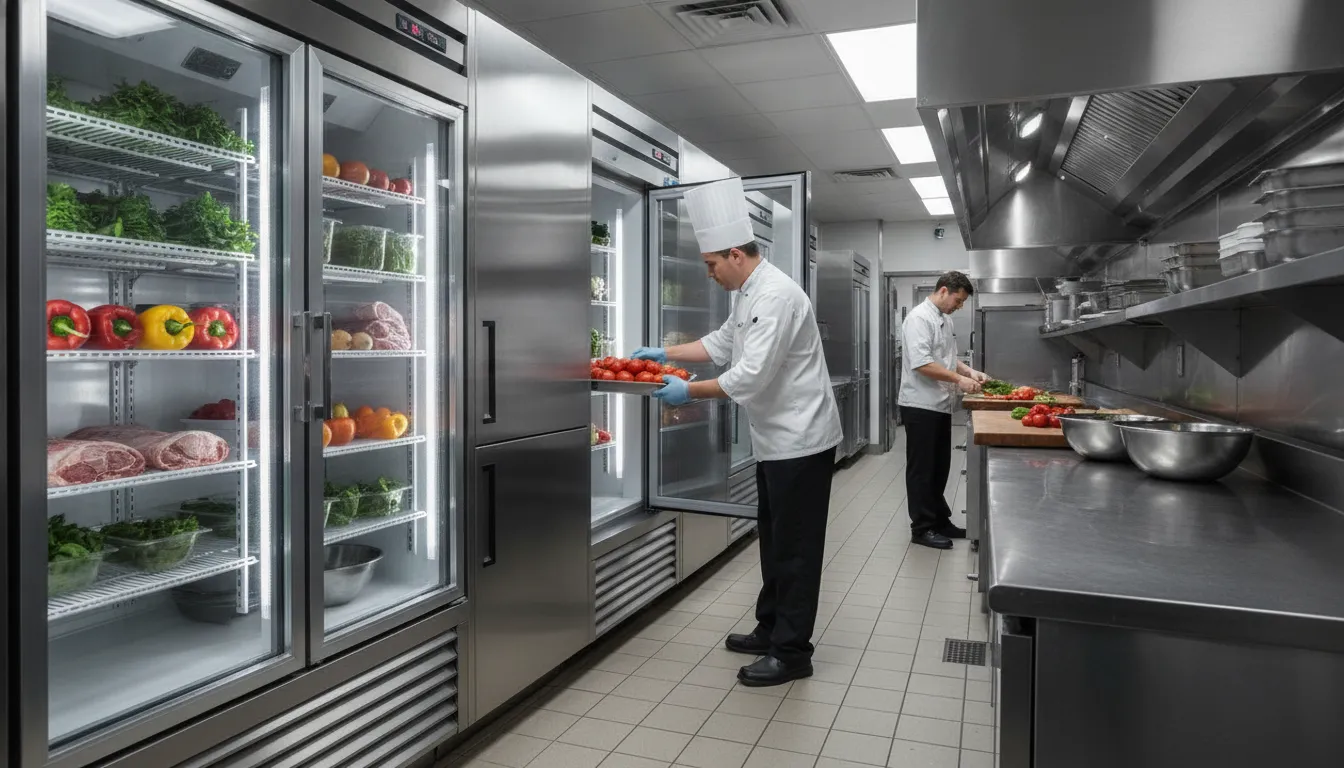
Undercounter refrigeration works well where every step matters. These units fit below prep counters, bar stations, or serving lines, giving cooks immediate access to ingredients without adding another walk across the kitchen. They are especially useful for sandwich, pizza, beverage, and garde manger stations where speed and compact storage are priorities.
Walk-in coolers make more sense when your operation receives large deliveries, stores high volumes of fresh product, or needs room for prepared foods and ingredients. Before selecting one, review the available floor area, door placement, shelving plan, and traffic flow. A walk-in should support inventory organization rather than become a crowded holding room. For dry goods and pantry storage, explore HRS's food storage and handling equipment to complement your cold-storage setup.
Size refrigeration around menu demand
A high-volume operation with a broad menu may need a combination of walk-in storage, reach-ins, and undercounter units. A smaller kitchen with a focused menu may be better served by strategically placed reach-ins and one compact freezer. Menu type matters too. Fresh produce, dairy, seafood, meat, frozen foods, and batch-prepared items each require dedicated space and a dependable rotation system.
- Full-service restaurants: Walk-in cooler and freezer for bulk deliveries, reach-ins near each cooking station, undercounter units for prep and bar areas.
- Fast-casual and quick-service: Reach-in combination units for ingredients and packaged goods, undercounter refrigeration near the assembly line.
- Bakeries and cafes: Reach-in refrigerators for dairy and prepared items, undercounter units for pastry prep, dedicated freezer for bulk dough storage.
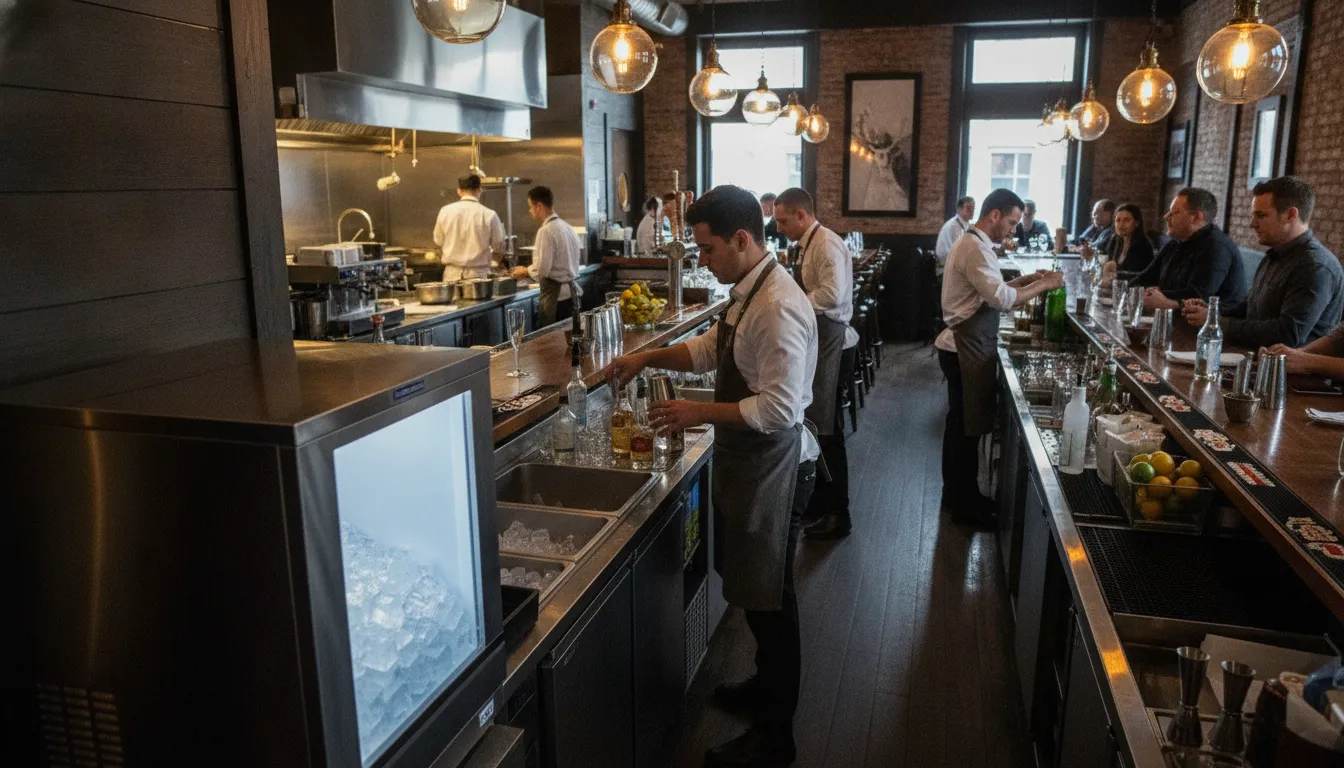
- Bars and taverns: Undercounter refrigeration below the bar top, back-bar reach-ins for bottled beverages, dedicated ice machine near the service well.
Energy-efficient models can help control operating costs over the life of the equipment. Compare insulation, compressor performance, door design, temperature controls, and expected usage instead of choosing by purchase price alone. HRS stocks refrigeration options from Migali and other manufacturers, with solutions for different kitchen sizes and operating demands.
Plan ice production with service volume
Ice machines should be sized around beverage sales, food presentation, peak service, and delivery timing. Hoshizaki ice machines are available for operations that need dependable production and consistent ice storage. Allow space for ventilation, filtration, cleaning access, and a connected bin that can meet demand during the busiest part of the day.
Refrigeration is one part of a complete kitchen plan. Pair the cold-storage layout with your commercial cooking equipment so staff movement, utilities, and service flow work together. Henrietta Restaurant Supply helps Rochester and Western New York operators compare refrigeration and ice machine options and plan a practical equipment package.
How to Select Commercial Cooking Equipment: Ranges, Ovens, and Fryers
Your cooking line should support the menu you serve today while leaving enough capacity for a busy lunch rush, dinner service, or catering order. Start by listing the dishes that drive volume, then identify the equipment each station needs. A Rochester restaurant with high-volume frying has different priorities from a bakery, pizzeria, diner, or full-service kitchen.
Choose gas or electric based on the kitchen, not habit
Gas cooking provides responsive flame control and is often a strong fit for ranges, charbroilers, and high-output kitchens. Electric equipment can offer consistent heat and may be easier to place where gas service or ventilation capacity is limited. Your decision should account for available utility connections, hood requirements, installation cost, ventilation, energy use, and the cooking techniques your staff relies on. Confirm utility capacity and local installation requirements before ordering, especially when replacing several units at once.
Match output to menu volume
Burner output is one useful starting point, but the highest rating is not automatically the best choice. A burner rated at 20,000 BTU or more can provide the power needed for stockpots. Saute pans, and fast-paced cooking, while lower-output burners may be practical for sauces, simmering, or lighter service. Compare burner layout, oven capacity, recovery time, fryer oil capacity, and the number of cooks who will work at the line simultaneously.
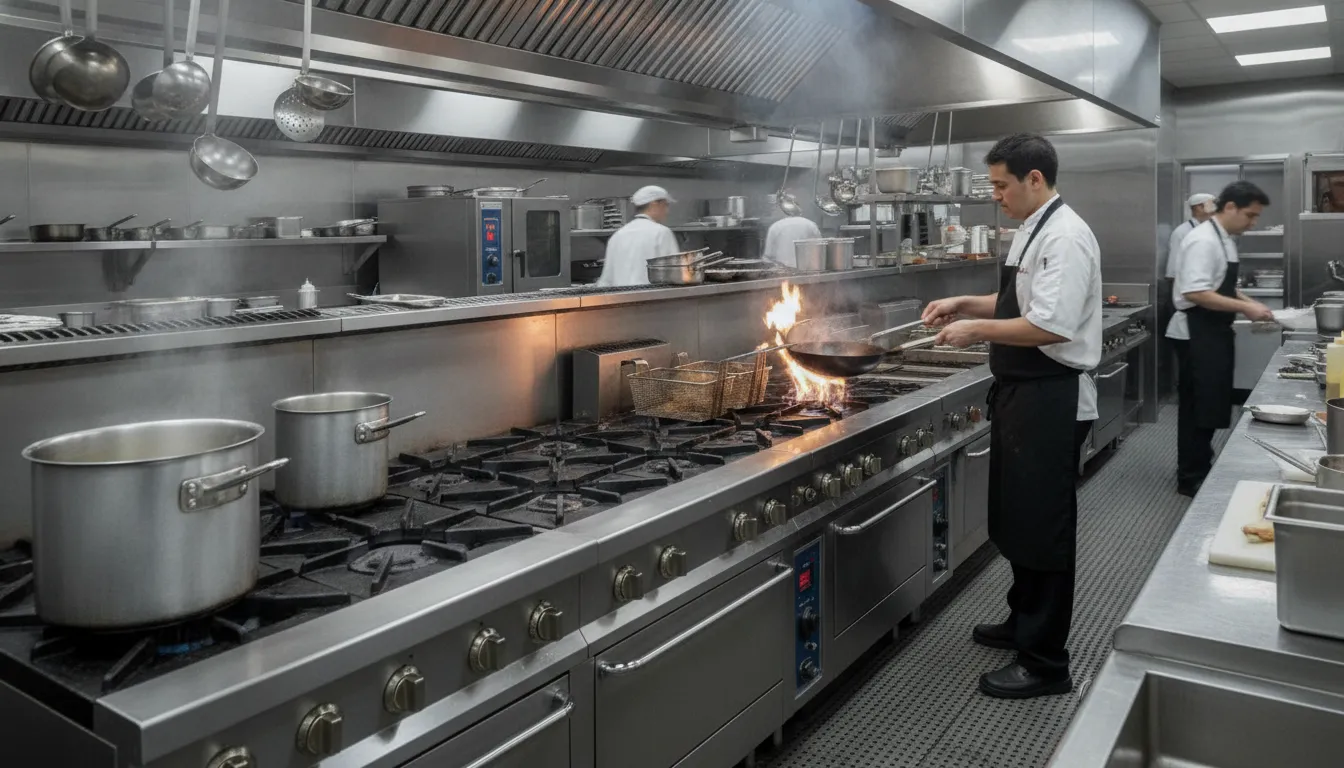
Ranges and ovens should reflect your menu mix. A standard oven may cover basic roasting and baking, while a convection or specialty oven can improve consistency for products that depend on airflow or precise temperature control. Fryers should be sized around peak demand, not average sales. Adding a second fryer or selecting separate oil and temperature zones may be more useful than choosing one oversized unit. Consider a combi oven for operations that need both steam and dry heat cooking in a single appliance.
Plan the line around workflow
Place equipment in the order food moves through the kitchen, with refrigeration, prep, cooking, holding, and plating areas close enough to reduce unnecessary steps. Leave service and maintenance access around each unit, and make sure doors, handles, and landing surfaces do not interfere with adjacent stations. A well-planned line improves speed and safety without requiring a larger footprint.
Henrietta Restaurant Supply helps Rochester and Western New York operators compare commercial cooking equipment from more than 40 manufacturers, including Cleveland and Vulcan. Explore our commercial cooking equipment selection, or ask HRS for guidance matching ranges, ovens, fryers, and grills to your menu, volume, utilities, and available layout.
Food Preparation Equipment: Slicers, Mixers, and Work Surfaces
Preparation equipment shapes how quickly and consistently a Rochester kitchen can turn ingredients into finished dishes. The right choices depend on your menu, daily volume, available space, and the number of employees using each station. A small cafe may need a compact slicer and countertop mixer, while a high-volume restaurant, bakery, school, or healthcare kitchen may need heavier equipment built for continuous production.
Choose slicers around your menu and volume
Commercial slicers can support sandwich programs, delis, catering operations, and kitchens that prepare large quantities of meats, cheeses, or vegetables. Start by identifying what you slice most often, how much product moves through the station, and whether employees need adjustable thickness for different menu items. A slicer should fit the workflow, not create a bottleneck. Position it where staff can move product from storage or prep to assembly without crossing busy cooking or service paths.
Cleaning and storage matter as much as cutting capacity. Select a model that your team can safely clean after use, and plan a dedicated location that keeps the equipment accessible without taking over valuable counter space.
Match the mixer to production demands
Countertop mixers are a practical choice when the kitchen makes smaller batches of sauces, batters, doughs, whipped products, or other preparations. They use less floor space and can be moved or stored when the station needs to serve another purpose. They are often a good fit for cafes, bakeries with limited output, and restaurants with a focused prep list.
Floor mixers make more sense when production is frequent, batch sizes are larger, or the kitchen needs a dedicated mixing station. Their added capacity and stability can support demanding bakery, commissary, institutional, and restaurant workflows. Before choosing one, account for the mixer footprint, bowl clearance, electrical requirements, delivery route, and space needed for loading and cleaning.
Build productive prep tables and work surfaces
Prep tables give staff a defined place to portion, assemble, and stage ingredients. Stainless steel work surfaces are useful in commercial kitchens because they provide a durable, cleanable workspace, but the best configuration depends on the task. Consider undershelves, drawers, backsplash options, cutting-board space, and compatibility with nearby refrigeration or storage.
Map the movement of ingredients before ordering. The goal is to keep frequently used tools and products within reach while leaving enough room for safe employee movement. Henrietta Restaurant Supply serves Rochester and Western New York with commercial food prep equipment and can help match slicers, mixers, tables, and other equipment to your kitchen plan.
What Type of Commercial Dishwasher Does Your Restaurant Need?
The right dishwasher should keep clean plates moving without creating a bottleneck at the end of service. For a Rochester restaurant, start with your busiest hour, not your average day. Review the number of covers you serve, the mix of plates, pans, glassware, and utensils, and how quickly your team needs them back on the line.
Match the dishwasher to your volume and layout
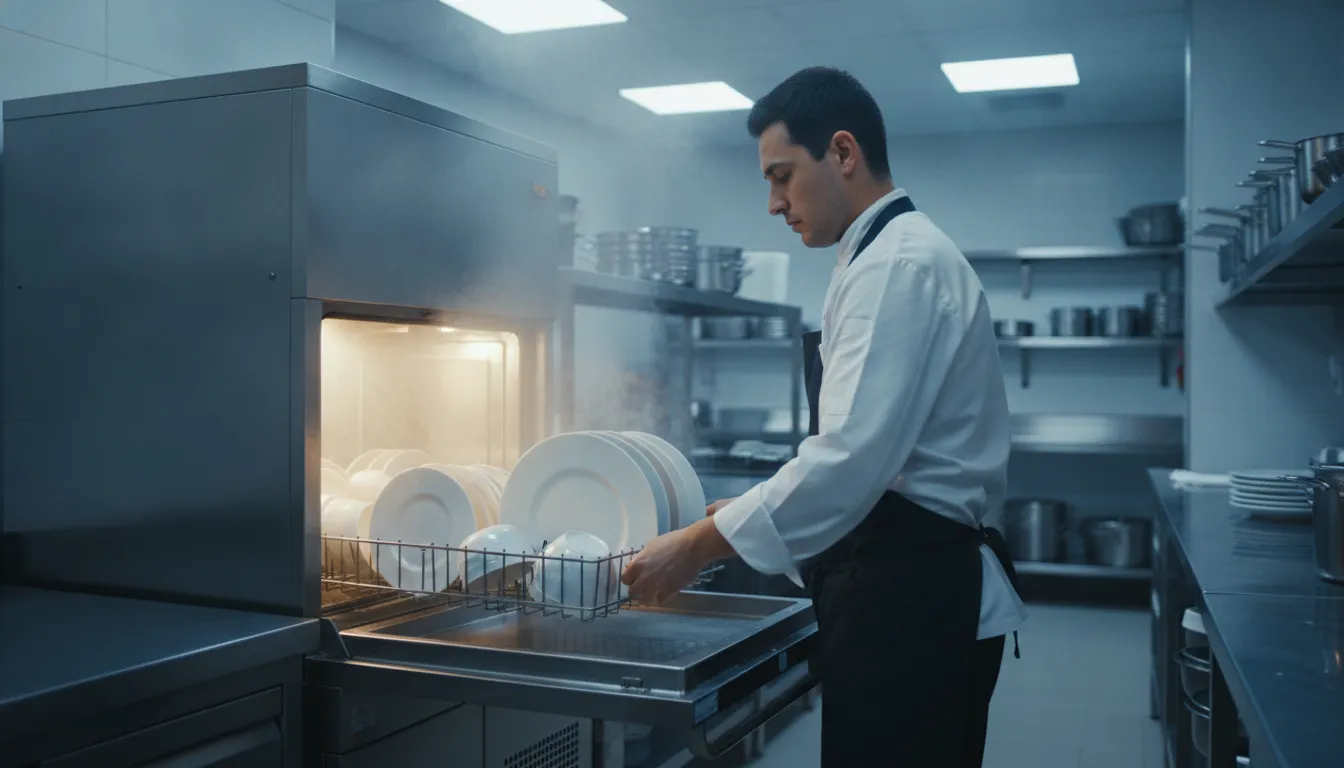
Undercounter dishwashers are a practical fit for smaller kitchens, bars, cafes, and dining rooms with moderate rack demand. They use less floor space and can sit close to the dish return area. Their capacity is often described in racks per hour, so compare that figure with your busiest service period and allow room for loading, unloading, and staff breaks.
High-volume restaurants may need a pass-through or conveyor-style rack dishwasher. These models support a steady flow of racks and are better suited to operations with heavy dish turnover, dedicated dish staff, or limited time between seating waves. They require more space for tables, landing areas, and utility connections, so include the full dishwashing path in your kitchen plan rather than measuring only the machine.
- Fast-casual restaurants: Prioritize quick turnaround, compact workflow, and enough capacity for a concentrated rush. An undercounter model with 30-40 racks per hour is often sufficient.
- Fine-dining restaurants: Account for larger plate sizes, delicate glassware, multiple courses, and slower but more varied rack loading. A pass-through model allows front-of-house and back-of-house staff to load from separate sides.
- High-volume operations: Calculate peak racks per hour and consider a conveyor system with dedicated pre-rinse and landing space. These kitchens may also need a separate glasswasher for barware.
Choose heat or chemical sanitizing
High-temperature machines sanitize with heated final-rinse water and may require the right booster heater, ventilation, and utility capacity. Chemical-sanitizing models use a sanitizing solution at a lower final-rinse temperature, which can help with utility requirements but adds chemical management and testing responsibilities. Local code, available utilities, ventilation, water conditions, and the equipment manufacturer's requirements should guide the decision.
When comparing commercial kitchen equipment, ask how each option fits your menu volume, staffing, available space, and service style. Henrietta Restaurant Supply helps Rochester and Western New York operators evaluate dishwasher capacity and plan a workable equipment layout. Professional guidance is available whether you are outfitting a new kitchen or replacing an older machine.
Commercial Convection Ovens and Combi Ovens: Expanding Your Cooking Capability
Beyond standard ranges and fryers, many Rochester kitchens benefit from specialty ovens that expand menu variety and production efficiency. Convection ovens and combi ovens are two additions worth evaluating during the equipment planning process.
Convection ovens for consistent volume baking and roasting
Convection ovens circulate hot air through the cooking cavity, which can reduce cook times and improve temperature consistency across multiple racks. They are a practical addition for kitchens that bake bread, roast proteins in quantity, or need even heat distribution without rotating pans manually. A convection oven can serve as a primary oven in a bakery or a supplementary cooking appliance in a busy restaurant kitchen.
Combi ovens for steam-and-heat versatility
Combi ovens combine convection, steam, and combination cooking in a single unit. They can steam vegetables, roast meats, bake bread, reheat prepared items, and hold finished dishes at serving temperature. For Rochester operators with limited kitchen space, a combi oven may replace several dedicated appliances while adding cooking options that would otherwise require separate equipment.
When evaluating specialty ovens, compare the cavity size, available cooking modes, humidity control, cleaning system, and utility requirements against your menu and volume. Henrietta Restaurant Supply can help you find commercial ovens and cooking equipment that fit your kitchen plan.
Budgeting for Commercial Kitchen Equipment: What Rochester Operators Should Know
A practical equipment budget starts with the menu, expected volume, available space, and installation requirements. Rochester operators should price the full project, not just the equipment tag. Delivery, electrical or gas work, ventilation, plumbing, accessories, and staff workflow can all affect the final investment.
Build the budget by equipment category
Cost ranges vary widely because a compact undercounter unit and a high-capacity production system serve very different operations. As a planning framework, refrigeration may range from a few thousand dollars for a single reach-in or undercounter unit to substantially more for multiple units or a walk-in. Cooking lines also vary, from a focused setup with a range and oven to a larger line that includes fryers, grills, and specialty cooking equipment. Dishwashing costs depend on whether an operation needs an undercounter machine or a higher-throughput conveyor system, along with plumbing, ventilation, and sanitizing requirements.
| Category | Common Types | Price Range | Installation Factors |
|---|---|---|---|
| Refrigeration | Reach-in, undercounter, walk-in, ice machines | $1,500 - $15,000+ | Floor space, ventilation, electrical, drainage |
| Cooking | Ranges, ovens, fryers, grills, broilers, combi ovens | $2,000 - $20,000+ | Gas/electrical, hood ventilation, fire suppression |
| Dishwashing | Undercounter, pass-through, conveyor | $3,000 - $15,000+ | Plumbing, booster heater, ventilation, landing space |
| Food Prep | Slicers, mixers, prep tables, work surfaces | $500 - $8,000+ | Counter space, electrical, storage access |
| Specialty Ovens | Convection ovens, combi ovens, deck ovens | $3,000 - $18,000+ | Electrical, ventilation, floor loading, clearance |
These are useful planning categories, but a reliable quote requires reviewing the specific models, dimensions, utility needs, and delivery conditions. Henrietta Restaurant Supply can help Rochester and Western New York operators compare options and assemble a package around the actual kitchen plan.
Use financing and package pricing strategically
Buying a coordinated package can simplify sourcing and help keep the equipment mix aligned with the menu and layout. HRS offers full kitchen equipment packages through relationships with more than 40 manufacturers, which can make it easier to compare professional-grade options across categories. Ask about commercial equipment financing when preserving working capital matters, especially during a new opening, renovation, or expansion.
HRS also provides delivery within 40 miles of Rochester. That local service can help reduce coordination between separate vendors, although delivery conditions and installation requirements should be confirmed during planning. No membership or business license is required to purchase from HRS, so restaurant owners. Food entrepreneurs, schools, healthcare facilities, and event venues can request equipment guidance without unnecessary barriers.
Expert Services: Kitchen Design, Installation, and Local Delivery
Selecting equipment is only one part of building a productive restaurant kitchen. Henrietta Restaurant Supply helps Rochester and Western New York operators connect equipment choices to the way their teams cook, prep, store, and serve. A personalized consultation can clarify priorities, identify workflow constraints, and shape an equipment combination that fits the menu, available space, and operating goals.
Plan the layout before you purchase
Kitchen design and layout planning should account for movement, storage, utilities, ventilation, and the handoffs between stations. HRS can help you think through an equipment-first design strategy, whether you are opening a new kitchen, replacing aging units, or renovating an existing space. The goal is a practical layout that supports staff efficiency instead of forcing employees to work around disconnected equipment.
For a renovation or new build, explore Rochester commercial kitchen design services to plan the project around your operation. HRS can also help assemble a coordinated package rather than treating each range, refrigerator, ice machine, or prep station as an isolated purchase.
Source the right combination of equipment
With partnerships across more than 40 manufacturers, HRS can help restaurant operators compare options from established names such as Migali, Hoshizaki, Cleveland, and Vulcan. That range makes it easier to balance capacity, durability, footprint, and budget while keeping the full kitchen system in view. You do not need a membership or special business credentials to purchase professional-grade commercial kitchen equipment.
HRS provides commercial kitchen equipment and solutions for restaurant operators, schools, healthcare facilities, event venues, and other foodservice environments. Personalized guidance is especially useful when several pieces must work together, such as refrigeration, cooking, ventilation, preparation, and warewashing equipment.
Coordinate installation and local delivery
Once the plan is set, equipment installation support helps move the project from a purchase list toward a functioning kitchen. HRS also offers local delivery within 40 miles of Rochester, helping operators coordinate equipment arrival with renovation schedules, contractors, and opening timelines. Discuss the delivery area, site conditions, access points, and installation requirements early so the final plan reflects the realities of your location.
Visit our Henrietta Restaurant Supply showroom or website to discuss your equipment plan with a local team member who understands Rochester commercial kitchens.
Fire Safety and Preventive Maintenance for Commercial Kitchens
Safe operation does not end when commercial kitchen equipment is installed. Rochester restaurant owners should build fire protection and preventive maintenance into the daily operating plan, then document inspections, cleaning, and repairs. A consistent schedule helps protect employees, reduce equipment downtime, and support fire code compliance.
Keep the right extinguisher within reach
Commercial cooking areas should have a K-class portable fire extinguisher positioned within 30 feet of the cooking equipment. Keep the path to the extinguisher clear and make sure employees know its location and basic operating procedure. An extinguisher is one part of a broader safety plan, not a substitute for staff training, proper ventilation, or a maintained suppression system.
Inspect suppression systems twice a year
Commercial kitchen fire suppression systems should be inspected, tested, serviced, and maintained at least every six months by a licensed contractor. The service should cover the system components, activation controls, nozzles, and any connected fuel or electrical shutoffs. Maintain written service records and address any deficiencies the inspection identifies before the next service date.
Preventive maintenance extends equipment life
Each piece of commercial kitchen equipment should have a written cleaning and maintenance schedule. Refrigeration coils and door gaskets, cooking equipment burners, exhaust hood filters, dishwasher spray arms and drains, and ice machine water lines all require regular attention. Keep spare parts on hand when possible, such as gaskets, heating elements, thermostats, and belts for critical equipment. Train staff to report unusual noise, temperature changes, slow drainage, and mechanical issues before they become service emergencies.
Henrietta Restaurant Supply can help you plan a commercial kitchen equipment maintenance approach that keeps your kitchen running. Restaurant owners, caterers, institutions, food trucks, and other operators can select individual items or complete equipment packages based on their operation. Ask about delivery, installation, financing options, and local consultation so the purchase supports your opening schedule and long-term workflow.
Frequently Asked Questions About Commercial Kitchen Equipment
How much does it cost to equip a commercial kitchen?
The cost depends on the menu, volume, and kitchen size. A small fast-casual kitchen may require $15,000 to $30,000 for essential refrigeration, cooking, and prep equipment. A full-service restaurant with a walk-in cooler, multiple cooking stations, and a conveyor dishwasher can range from $50,000 to $100,000 or more. Henrietta Restaurant Supply offers financing options and can help you build a package around your budget.
What commercial kitchen equipment do I need to open a restaurant?
Every restaurant needs refrigeration, cooking equipment, food preparation surfaces, and warewashing. Most kitchens start with a reach-in refrigerator, a range or cooktop, a commercial oven, a prep table, a three-compartment sink, and a dishwasher sized to their volume. An ice machine is also standard for most beverage programs. The exact combination depends on your menu and expected daily covers.
Does Henrietta Restaurant Supply offer commercial kitchen equipment financing?
Yes. HRS offers commercial equipment financing to help preserve working capital during a new opening, renovation, or equipment replacement. Financing options can be discussed during the consultation phase so the payment structure aligns with your launch timeline and cash flow.
Do I need a membership or business license to buy from Henrietta Restaurant Supply?
No. HRS serves restaurant owners, caterers, food trucks, schools, healthcare facilities, event venues, and other foodservice operators without requiring a membership or business license. You can purchase individual items or complete equipment packages directly.
Does HRS deliver commercial kitchen equipment in Rochester?
Yes. HRS provides local delivery within 40 miles of Rochester, helping operators coordinate equipment arrival with renovation schedules and opening timelines. Discuss delivery conditions, site access, and installation requirements during planning.
Ready to Plan Your Rochester Commercial Kitchen?
The right commercial kitchen equipment can help you build a practical workflow around your menu, available space, and service needs. Henrietta Restaurant Supply can help you compare options and plan the next step with a knowledgeable local team. View our recent equipment installations and renovations for inspiration, or contact our equipment sales team to discuss your project and schedule a consultation.