How to Choose Disposable Food Containers for Restaurants
Your takeout container is the last impression you make on a customer. Long after they've left your restaurant, that box on their counter is a physical representation of your brand. Does it feel flimsy and cheap, or does it feel sturdy and thoughtful? Does it protect the food, or does it create a frustrating, messy experience? The right packaging continues the quality experience you provide within your four walls. Selecting the best disposable food containers for restaurants is a powerful branding opportunity. This article will show you how to choose packaging that not only performs well but also reflects the high standards of your business and keeps customers ordering again.
Key Takeaways
- Match the container to your menu: Protect your food's quality by choosing a container based on its material, temperature compatibility, and specific features like leak-resistance to ensure every dish arrives as intended.
- Balance cost with overall value: The cheapest option can lead to spills and a poor brand image, so weigh the price against the container's performance, durability, and how well it represents your restaurant's quality.
- Test samples before buying in bulk: Always test potential containers with your actual menu items to confirm they perform as expected. This simple step prevents expensive mistakes and ensures a great customer experience.
What Are the Different Types of Disposable Food Containers?
Choosing the right disposable container can feel overwhelming, but it doesn't have to be. Different food service operations need different packaging solutions based on their menu, service style, and volume. Understanding the main categories helps you stock the supplies that match your actual needs.
| Container Type | Best For | Key Features |
|---|---|---|
| Take-Out Boxes & Clamshells | Burgers, fries, salads, sandwiches | Hinged-lid design, prevents crushing, various materials |
| Cups, Lids & Portion Cups | Hot/iced drinks, sauces, sides | Insulated options, tight-fitting lids, separate packaging |
| Plates, Bowls & Trays | Food trucks, quick-service, events | Hygienic, no dishwashing, various sizes |
| Catering & Bulk Containers | Large events, buffets, platters | Aluminum steam pans, oven-to-serving-line |
Take-Out Boxes and Clamshells
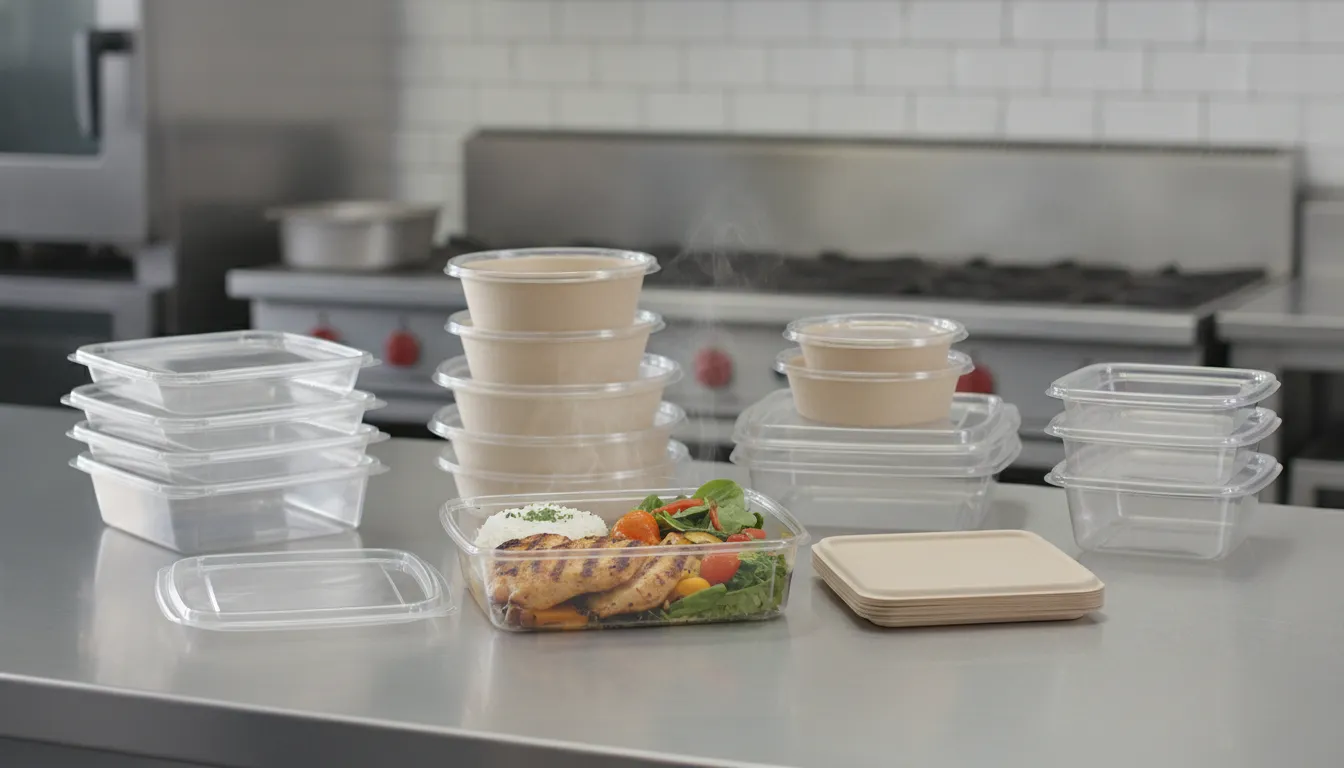
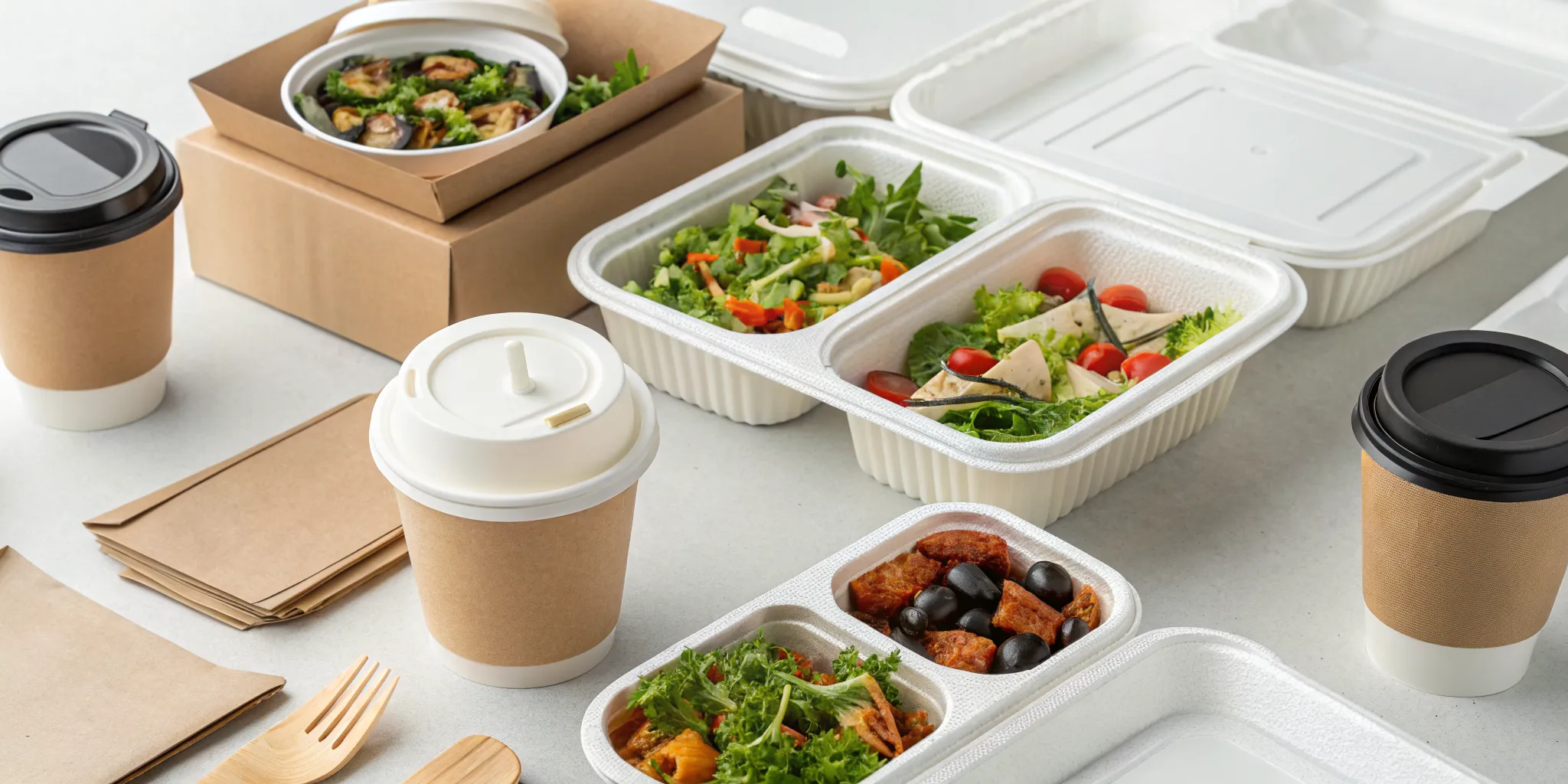
Take-out boxes and clamshells are the workhorses of the to-go world. Clamshell containers are especially popular because their hinged-lid design provides a secure way to transport food while maintaining its quality. They're perfect for everything from burgers and fries to salads and sandwiches, preventing items from getting crushed or spilling during delivery. These containers come in various materials, including plastic, foam, and eco-friendly plant fibers.
Cups, Lids, and Portion Cups
A great to-go experience includes getting the details right, and that's where cups, lids, and portion cups come in. This category covers everything from insulated paper cups for hot coffee to clear plastic cups for iced tea and smoothies. Finding a compatible, tight-fitting lid is just as important as the cup itself to prevent leaks and spills. Don't forget about portion cups — these small containers are essential for packaging sauces, dressings, and sides separately.
Plates, Bowls, and Trays
Disposable plates, bowls, and trays are essential for food trucks, quick-service restaurants, and catered events. They offer a convenient and hygienic way to serve food without worrying about washing dishes. Bowls are ideal for soups, salads, and pasta, while plates come in various sizes for everything from appetizers to full entrees. When choosing, consider the food you're serving. A sturdy, grease-resistant plate is necessary for heavier or saucier dishes.
Catering and Bulk Containers
When you're serving a crowd, you need containers that can handle the volume. Catering and bulk containers are designed specifically for preparing, transporting, and serving large quantities of food. Aluminum steam table pans, available in half and full sizes, are a go-to for caterers because they can go from the oven to the serving line. For businesses that offer large-format catering services, having a reliable stock of these bulk containers is essential for executing events smoothly.
What Materials Are Used for Disposable Food Containers?
Choosing the right material for your disposable containers is a big decision. The material affects everything from how well the container holds your food to its cost and environmental footprint. Here are the most common options you'll find.
Plastic
Plastic is one of the most common materials for a reason. It's incredibly versatile and reliable for keeping food fresh during transport. You'll find a huge variety of options, from clear clamshells that show off a beautiful salad to sturdy black-bottom containers perfect for saucy entrees. Many plastic containers are designed to be leak-resistant and come with secure-fitting lids, giving you peace of mind during delivery.
Foam (Polystyrene)
When you need to keep hot foods hot and cold foods cold, foam is an excellent insulator. These lightweight containers are a budget-friendly choice, making them popular for everything from hot soup to ice cream. While foam often gets a bad rap environmentally, it remains a practical option if your top priorities are temperature control and keeping costs low. Just be sure to check your local regulations, as some areas have restrictions on polystyrene use.
Aluminum
Think of aluminum for your heartiest dishes. These containers are tough, lightweight, and can handle high heat, making them ideal for takeout and catering. They are a fantastic choice for foods that might be reheated in an oven, like lasagna, enchiladas, or roasted vegetables. Aluminum pans and containers provide a sturdy structure that won't bend or leak, even with heavy or saucy foods. Plus, aluminum is widely recyclable.
Paper and Cardboard
Paper and cardboard are classic choices for food packaging, and they've come a long way. You'll see them used for bakery boxes, pizza boxes, and handled takeout containers. Most modern paper containers are treated with a special coating to make them grease- and moisture-resistant. This material is often a favorite for businesses wanting to highlight their commitment to sustainability, as many paper products are biodegradable, compostable, or made from recycled content.
Plant-Based and Bagasse Materials
If sustainability is at the core of your brand, plant-based containers are the way to go. These are often made from renewable resources like bagasse (sugarcane fiber), cornstarch (PLA), or bamboo. Bagasse containers are particularly popular because they are sturdy, microwave-safe, and great for both hot and cold foods. These materials are typically certified compostable, meaning they break down into soil in a commercial composting facility.
Are Eco-Friendly Disposables Worth It?
Switching to eco-friendly disposables is a hot topic for good reason. More and more customers are looking to support businesses that share their environmental values. But as a restaurant owner or manager, you know the decision isn't that simple. You're juggling performance, price, and practicality. Will that compostable container hold up to your signature saucy dish? And can you make the switch without wrecking your budget?
Compostable vs. Biodegradable: What's the Difference?
"Biodegradable" is a broad term that simply means a product can be broken down by microorganisms over time. The problem is, that "time" isn't defined. A plastic bottle is technically biodegradable, but it might take 450 years.
"Compostable," on the other hand, is much more specific. A compostable product will break down into nutrient-rich soil within a specific timeframe, but only under the right conditions found in a commercial composting facility. If your customers toss these containers in the trash, they'll likely end up in a landfill where they won't break down properly.
Which Sustainable Materials Are Best for Restaurants?
| Material | Source | Best For |
|---|---|---|
| Bagasse | Sugarcane fiber | Hot and cold foods — sturdy, grease-resistant, microwave-safe |
| PLA | Cornstarch | Cold applications like cups and salad containers |
| Molded Fiber | Recycled paper | Wide range of meals — compostable and versatile |
The best material for your restaurant depends entirely on your menu. That hot, hearty soup needs a different container than a crisp, cold salad or a greasy burger.
How to Balance Cost and Environmental Impact
Let's be honest: eco-friendly disposables can sometimes come with a higher price tag. But focusing only on the per-unit cost can be misleading. To get a true picture, consider the total value.
- Buy in bulk — Purchasing by the case dramatically lowers your per-unit cost.
- Test samples first — Choosing the wrong size leads to food waste and higher costs.
- Consider marketing value — Highlighting sustainability attracts new customers and builds loyalty.
- Use rewards programs — Programs like our Chef+ Rewards Program earn points on every purchase.
Common Myths About Eco-Friendly Packaging
As sustainable packaging becomes more popular, so do the myths surrounding it.
- Myth: Switching to compostable containers reduces litter. Litter is a behavioral issue, not a material one.
- Myth: Single-use items are always more hygienic. Properly washed reusable containers are perfectly safe.
- Myth: All eco-friendly options are too expensive. Many sustainable products are now competitively priced.
The key is to look past marketing claims and focus on what works for your operations. Look for certified products and make informed choices based on performance and end-of-life options.
What to Look for in Disposable Food Containers
Once you have a general idea of the material and type you need, it's time to get into the details. The right features can make all the difference between a happy customer and a frustrating mess.
Leak Resistance and Secure Seals
There's nothing worse than a customer receiving a bag with a puddle of soup or sauce at the bottom. A secure, leak-resistant seal is non-negotiable, especially for liquids, curries, and saucy dishes. Pay close attention to the lid design — does it snap on securely? Does it create a tight seal around the entire rim? Test a few samples with your menu items to ensure they hold up.
Temperature Compatibility
Think about how your customers will eat your food. Many people expect to-go containers to be microwave-safe, so choosing one that can handle the heat is a huge plus. Similarly, if you sell pre-packaged or frozen meals, freezer-safe containers are a must to prevent cracking and freezer burn. Always check the product specifications for temperature ratings.
Ventilation and Moisture Control
Not all foods should be sealed in an airtight container. Crispy items like french fries and fried chicken need to breathe, or they'll turn soggy from trapped steam. For these dishes, look for containers with built-in vents. On the other hand, you want to trap moisture for items like salads and fresh cakes to keep them from drying out.
Tamper-Evident Designs
Customers want to know their meal is safe from the moment it leaves your kitchen. Tamper-evident containers provide that peace of mind with a plastic strip or seal that must be broken to open the container. This is especially important if you use third-party delivery services.
Grease Resistance and Food Safety
If your menu includes greasy or oily foods like burgers or fried chicken, grease-resistant containers are essential. Without this feature, the container can become saturated with oil, leading to a weak, soggy box. Look for paper or cardboard containers with a special coating that prevents grease from soaking through.
Stackability for Easy Storage
Kitchen space is always at a premium, so don't overlook how your containers will be stored. Look for containers that nest and stack neatly to maximize shelf space. Good stackability also applies to filled containers, ensuring they sit securely in a takeout bag without tipping over.
How to Choose the Right Disposable Containers for Your Business
Choosing the right disposable containers is about more than just finding something to hold food. It's about protecting your product, representing your brand, and ensuring your customers have a great experience.
Match the Container to Your Menu
The first and most important step is to match the container to the food you're serving. Think about your menu items: are they hot or cold? Soupy or solid? Greasy or dry? A hearty stew needs a leak-proof bowl with a secure lid, while a crispy salad requires a container with enough room to prevent wilting.
Consider Portion Sizes
One of the most common mistakes is picking the wrong size. If a container is too large, it can make your portions look small. If it's too small, you risk overfilling it, which can cause leaks. Measure your standard portions and match them to specific container volumes. This helps control food costs, reduces waste, and ensures consistent presentation.
Factor in Presentation and Branding
Your takeout container is often the last touchpoint a customer has with your brand. A container with a clear lid can show off a beautifully arranged dish, while a sturdy, well-designed box can make your food feel more premium. Choosing containers that reflect your branding leaves a lasting positive impression.
Meet Regulatory and Safety Standards
Food safety should always be a top priority. Ensure your containers meet all regulatory standards for food packaging. Look for materials certified as food-grade and appropriate for your intended use. If customers are likely to reheat their food, choose containers that are explicitly labeled as microwave-safe.
Always Test a Sample First
Before you commit to a bulk order, always test a sample. Fill containers with your actual menu items, let them sit, and simulate transport. Visiting our retail location allows you to see and feel the containers firsthand before buying.
Common Mistakes to Avoid When Choosing Disposable Containers
| Mistake | Why It's a Problem | How to Avoid It |
|---|---|---|
| Focusing on price over performance | The cheapest option is often the flimsiest, leading to leaks | Consider overall value, not just upfront cost |
| Picking the wrong size | Too large = wasted space; too small = crushed food | Match containers to your menu items precisely |
| Overlooking temperature needs | Wrong container causes melting, warping, or leaks | Check material specifications for temperature ratings |
| Ignoring sustainability | Makes your brand seem out of touch | Explore modern compostable and recycled options |
How Much Do Disposable Food Containers Cost?
The cost of disposable food containers directly impacts your bottom line. Understanding what drives the cost helps you make smarter purchasing decisions.
How Material and Type Affect Price
The material of a disposable container is the biggest factor in its price. Simple foam or basic plastic containers are the most affordable options. Sturdy, microwavable plastic containers designed for hot entrees cost more than a simple sandwich clamshell. Compostable options like bagasse or PLA often come at a premium due to their manufacturing process.
Reduce Costs by Buying in Bulk
Purchasing by the case instead of by the sleeve dramatically lowers your per-unit cost. If you have adequate storage space, bulk purchasing is a simple strategy to protect your profit margins without sacrificing quality. Many suppliers also offer loyalty programs that provide additional savings.
What Makes a Supplier Reliable?
A reliable supplier offers more than just low prices. Look for:
- Deep inventory — A wide selection so you can find the perfect container for every menu item.
- Consistent stock — Your preferred containers are available when you need to reorder.
- Physical location — The ability to inspect products before buying eliminates guesswork.
- Expertise — Staff who understand the demands of a professional kitchen.
Being able to visit a retail location to see and feel containers before you buy helps you make confident decisions.
What Are the Latest Trends in Disposable Food Containers?
The world of takeout and delivery is constantly evolving, and your packaging needs to keep pace. Today, customers expect more, from sustainability to convenience. Staying on top of the latest trends ensures your food travels well and your brand stays relevant.
The Shift to Sustainable Packaging
More than ever, customers are paying attention to a business's environmental footprint. Many sustainable products now come with features like being grease-resistant, freezer-safe, and leak-proof, ensuring they perform just as well as traditional counterparts.
The Rise of Innovative Materials
The move toward sustainability has sparked innovation in packaging materials. For hot foods, polypropylene (PP) is durable and microwave-safe. For eco-conscious options, materials like molded fiber (bagasse) are compostable and work for a wide range of meals.
Opportunities for Customization and Branding
Your takeout container is a mini-billboard for your business. Customization can be as simple as choosing a unique shape or color, or you can go further with custom-printed logos. Even your choice of material sends a message about your brand's values.
Designs Focused on Convenience
New container designs focus on leak-proof lids, vented tops for crispy foods, and stackable shapes. The goal is to protect the integrity of your food and ensure it arrives looking and tasting as intended.
Where to Buy Disposable Food Containers for Your Restaurant
Once you know what you need, the next step is finding a reliable supplier. For most food businesses, suppliers fall into a few main categories.
Local Restaurant Supply Stores
There's nothing quite like being able to walk into a store, hold a container in your hand, and know for sure it's the right one. Local suppliers like Henrietta Restaurant Supply offer the advantage of a physical retail location where you can inspect products firsthand. This eliminates guesswork about size, material quality, and lid fit. Buying local also means no waiting for shipping, so you can restock on the fly.
Online-Only Wholesalers
Online suppliers offer a vast catalog of options. While the selection can be impressive, you can't physically assess the product quality before buying, and you'll need to factor in shipping times and costs. A case of containers that looked perfect online might arrive too flimsy, leaving you in a bind.
Big-Box and Club Stores
These can be a decent option for grabbing a small quantity in a pinch. However, their selection is often limited to basic consumer-grade products with inconsistent inventory. For a professional operation, a dedicated restaurant supplier is almost always the more dependable choice.
Related Articles
- Disposable & Eco-Friendly Take-Out Containers
- Disposable Paper & Plastic Food Supplies
- Disposable Dinnerware & Serving Supplies
- Cake Boxes & Bakery Containers Rochester | Shop Pro Supplies
- Pro Kitchen Prep & Food Storage Supplies
Frequently Asked Questions
I'm worried about my food getting soggy or leaking during delivery. What's the best way to prevent this? This usually comes down to two things: a poor seal or trapped steam. For saucy dishes, use a container with a secure, tight-fitting lid. For crispy foods, look for containers with small vents that allow moisture to escape.
Eco-friendly containers seem expensive. Is there a way to be sustainable without hurting my budget? Yes. Buying in bulk lowers per-unit costs, and using premium eco-friendly containers can be a marketing tool that attracts customers who share those values. Choosing the right size also prevents food waste.
What's the real difference between buying from a local store versus a big online wholesaler? The biggest difference is confidence. A local store lets you hold the product, test the lid, and see if it's the right fit before you buy a whole case. This eliminates the risk of ordering something that doesn't work.
How do I know which containers are safe for the microwave? Check the product's specifications, usually printed on the bottom of the container or on the case packaging. Polypropylene (marked with #5 or "PP") is typically a great choice for reheating.
Do I really need to test samples? Think of it as a small investment that prevents major headaches. A container might look great, but you won't know how it performs until you fill it with your actual food. Testing catches lid issues or grease problems before you buy in bulk.