Beverage Equipment for High-Volume Food Service Operations
Planning beverage equipment for busy food service operations starts with the rush, not with a catalog. Your station needs to support the drinks on your menu, the busiest service window, the way employees move, and the cleaning work that happens between shifts.
Contact our team about your beverage station before the next rush.
Start by watching the work. Note which drinks arrive together, where employees wait, what they restock, and which steps send them away from the station. Then match the commercial beverage equipment to that real service pattern and confirm the space and utilities before ordering.
How to Build a Beverage Setup That Survives the Rush
Daily averages can hide a bottleneck. A station that feels comfortable during a quiet hour may fall behind during breakfast, a dinner rush, or a catered event when several orders arrive at once.
Walk through the station with the person who works the busiest shift. Ask where they reach, turn, wait, cross paths, and leave the line to restock. A few minutes of observation can reveal a workflow problem before you spend money on a larger machine.
- List the drinks that drive work. Group the menu into hot, cold, carbonated, blended, draft, and specialty drinks. Mark which ones need ice, refrigeration, brewing, blending, garnishes, or specific glassware.
- Choose the busiest realistic window. Look at when orders arrive together, not just the total number of drinks served in a day.
- Map simultaneous tasks. Identify which drinks can be prepared at the same time and which shared step makes employees wait.
- Give restocking a home. Keep ice, coffee supplies, ingredients, glassware, and clean service pieces close without placing them in the active pickup path.
- Plan for a service interruption. Decide what happens if a brewer needs cleaning, an ice supply runs low, or one dispenser is unavailable.
Capacity is only one part of the decision. Footprint, utility access, cleaning space, storage, staff training, and service handoffs determine whether the station works when the line is full.
Match the station to how your team serves drinks
A cafe, sports bar, full-service restaurant, and catered operation can all serve beverages at high volume, but they do not need the same setup. Start with the handoff your staff performs most often and build around it.
| Operation | Prioritize | Watch for |
|---|---|---|
| Busy cafe | Brewers, servers, refrigeration, pickup storage, and a clear order-to-pickup path | Brewing, finishing, and handoff competing for one counter |
| Busy bar | Ice access, refrigeration, glassware, tools, garnish space, and fast finishing | Employees crossing the station for supplies or ice |
| Full-service restaurant | Bar production, server pickup, drinkware storage, and replenishment zones | Bar traffic colliding with food pickup or guest circulation |
| Catered or institutional service | Batch brewing, holding, dispensing, transport, and backup supplies | One failed item stopping a wave of service |
Use these priorities to organize your conversation, then measure your own room. If you want help turning them into a workable station, review our bar and beverage options and bring your measurements to the conversation.
Map each drink from order to pickup
A fast drink still depends on the support around it. Instead of choosing every possible product category, follow a typical order from start to finish and identify what the employee touches at each step.
Prepare and hold
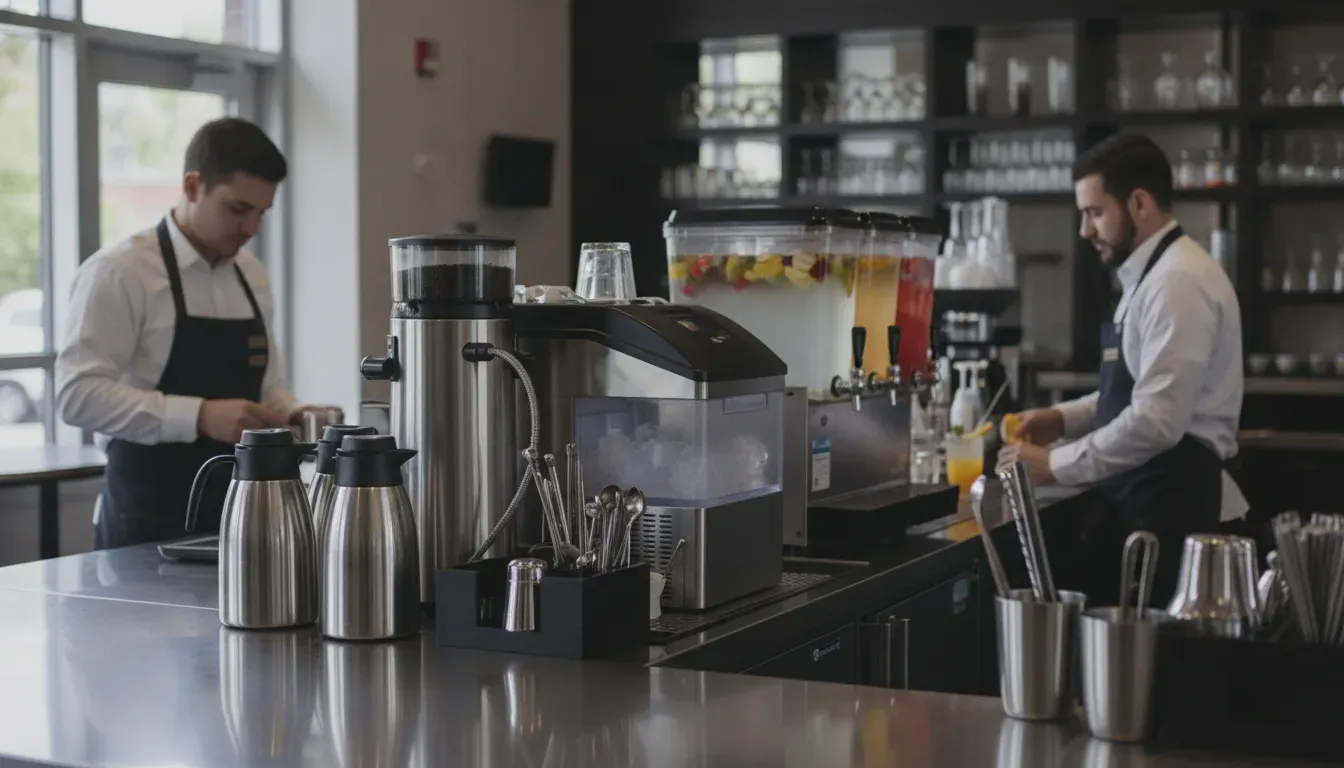
Brewers, servers, thermal carafes, and airpots support hot-drink production and holding. Place them so one employee can prepare a batch while another serves it, or so a completed batch can move to pickup without crossing active production.
Chill, dispense, and add ice
Cold drink dispensers and ice systems should sit where employees or guests can reach them without blocking the rest of the station. Plan how ice and cold ingredients move during a shift, not just where the machine fits on a drawing. Our commercial equipment options include the broader categories operators consider when planning this work.
Finish and hand off
Bar tools, garnish trays, glassware, mugs, tumblers, pitchers, and drink carriers belong near the finishing and pickup steps. Keep the most-used items within reach of the primary station worker, with backup stock nearby but outside the active work zone.
Clean and reset
Cleaning is part of the workflow, not an afterthought. Leave room to wipe surfaces, empty containers, access drains, wash tools, and restock without stopping every other task. Include the cleaning routine when you compare coffee service supplies.
Reduce steps in the beverage-station layout
A useful station follows the order of work: storage, preparation, chilling or ice, finishing, pickup, and cleaning. It does not need to be a straight line, but the sequence should be obvious when several orders arrive together.
Keep high-frequency items close to the employee who uses them most. A coffee server should not live across the kitchen, and glassware should have a clear path from storage to filling to pickup. If two employees share the station, define where their work overlaps so they are not reaching across each other.
Give replenishment its own zone. Staff should be able to replace coffee supplies, glassware, ice, or drink ingredients without blocking the order path. When the beverage station is part of a new build or renovation, coordinate it with food preparation, refrigeration, plumbing, electrical work, and guest circulation. Ask our kitchen design team about the planning details that affect the whole room.
Confirm the station before ordering
Turn the plan into a short written equipment brief. It gives you and your supplier the same reference point and can expose conflicts before delivery or installation.
- Footprint: Measure counters, undercounter space, storage, service areas, door swings, access paths, and cleaning space.
- Utilities: Confirm electrical requirements and identify water, drainage, filtration, ventilation, or refrigeration needs.
- Workflow: Map preparation, holding, pickup, replenishment, and cleaning in the order your team performs them.
- Compatibility: Check that servers, dispensers, containers, glassware, storage, and supporting equipment work together.
- Access and maintenance: Confirm delivery access, installation coordination, routine cleaning, service access, and what keeps the line moving during maintenance.
- Future flexibility: Leave room for a realistic menu or service change without buying for every hypothetical idea.
Bring this brief to a Rochester commercial equipment conversation. It gives us enough context to discuss options without guessing at your menu, building, or service pattern.
Get a Rochester review of your beverage station
Before you choose individual machines, gather your menu, peak service window, station dimensions, utility information, cleaning expectations, and delivery or installation constraints. We serve Rochester and Western New York foodservice operators with commercial kitchen equipment, bar and beverage supplies, and practical planning support.
Share your requirements for practical commercial equipment guidance.
If you are opening a bar, reworking a cafe counter, replacing a failing brewer. Or adding a second service channel, our Rochester team can help you think through the handoffs before you select individual machines. The goal is a station that keeps your team moving, not a collection of products that merely fits on a counter.
Frequently Asked Questions
What equipment is used in commercial beverage service?
Commercial beverage service may use brewers, servers, airpots, dispensers, ice systems, refrigeration, blenders, bar tools, glassware, and cleaning supplies. The right mix depends on your menu, peak demand, station layout, and service model.
How do I choose a beverage station for a busy restaurant?
Start with the busiest service period and the drinks that create the most work. Then review simultaneous orders, replenishment, footprint, utilities, cleaning, service access, and compatibility. Looking at the full station helps you avoid solving one bottleneck while creating another.
What should a cafe verify before ordering beverage equipment?
A cafe should verify its menu mix, counter space, employee movement, pickup flow, storage, utility access, cleaning routine, delivery access, and the difference between made-to-order and held beverages. The setup should match the cafe's real service pattern.
What should a bar consider when planning peak-demand beverage service?
A bar should map ice access, refrigeration, glassware, tools, garnish space, employee handoffs, and replenishment. Keep high-frequency items within reach and make sure bar traffic does not collide with food pickup or the guest path.
Review your setup with our team before the next rush.