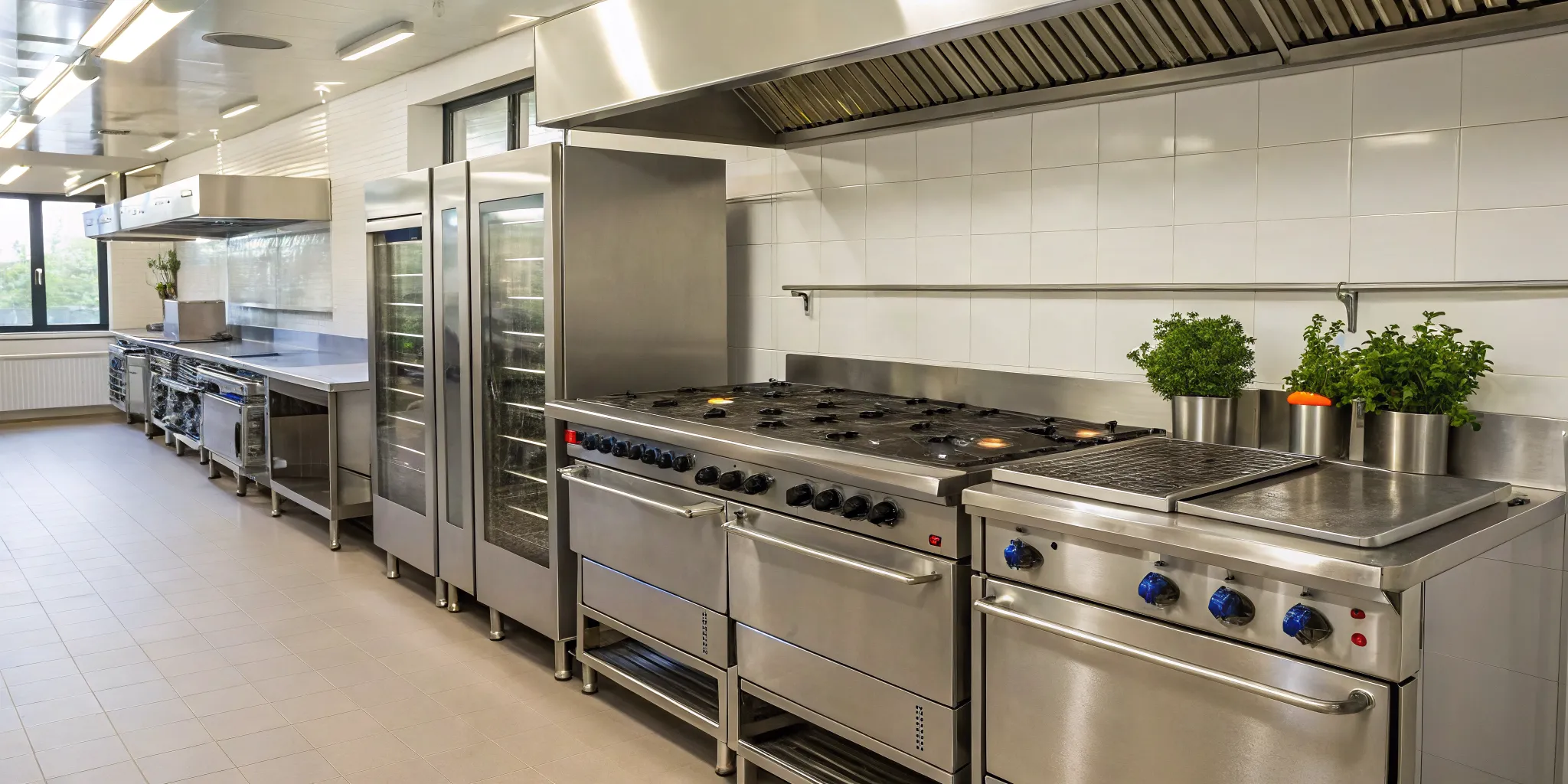

Commercial cookware for professional kitchens has to do more than look durable on a shelf. It must suit the menu, move heat predictably, fit the cooking station, and stay manageable through a full service. The right pans help cooks repeat good results without slowing down the line. Review HRS's commercial cookware selection as you map each pan to a station.
Talk with the HRS equipment team about cookware for your kitchen
Start with the jobs your kitchen performs most often. A breakfast operation may need fast, responsive fry pans and griddles, while a restaurant built around sauces, braises, or large-batch production will place different demands on saute pans, saucepans, and stockpots. Material, shape, capacity, handle design, and care requirements all matter together.
How Do You Choose Commercial Cookware for a Professional Kitchen?
Choose commercial cookware by matching each pan to a specific menu task, service volume, heat source, and storage position. Stainless steel offers durability and broad versatility, aluminum heats quickly and handles well, and seasoned carbon steel or cast iron can support high-heat searing when the team can maintain the surface.
Start with the menu and the busiest station
The best cookware set is not the largest set. It is the one that covers the work your cooks repeat every shift. List the menu items that use pans, then note the pan shape, capacity, heat level, and recovery speed each item needs.
- Fast saute work: Choose pans that are easy to lift, toss, and move from burner to oven when the station requires it.
- Sauces and reductions: Use a shape that gives the cook enough surface area for evaporation and enough depth to control splatter.
- Large-batch cooking: Size stockpots and saucepans for the batch you actually produce, with room for stirring and safe handling.
- High-heat searing: Select pans that can tolerate the intended heat and that the team can clean and maintain consistently.
- Finishing and holding: Keep pan sizes aligned with portioning so food is not spread too thin or crowded during the final step.
Review an average shift and a peak shift separately. A pan that works for a quiet prep period may be too small or too heavy when several tickets arrive at once. If the same pan is constantly being washed, borrowed from another station, or held for a single menu item, that is a useful sign that the station needs a different mix. If the cookware purchase is part of a broader line update, compare it with HRS's commercial kitchen equipment options before finalizing the station plan.
Which cookware material fits the job?
Material affects heat response, weight, durability, cleaning, and the foods a pan handles comfortably. No single material wins every job. A practical kitchen uses a focused mix instead of forcing every recipe into the same pan.
| Material | Useful strengths | Best fit to consider | Watch for |
|---|---|---|---|
| Stainless steel | Durable, versatile, and easy to assess for cleanability | Sauces, saute work, boiling, finishing, and everyday line use | Heat distribution depends on construction and base design |
| Aluminum | Light to handle and responsive to heat changes | Fast sauteing, sauce work, and stations where lifting matters | Choose construction and care instructions that fit the menu |
| Carbon steel | Strong high-heat performance with a seasoned cooking surface | Searing, sauteing, and fast cooking where cooks know the care routine | Seasoning and drying must be consistent |
| Cast iron | Retains heat well for steady high-temperature cooking | Searing and specialty service where weight is manageable | Heavy handling, slow response, and seasoning requirements |
| Coated nonstick | Convenient release for selected delicate foods | Dedicated tasks where gentle release improves consistency | Use the maker's heat, utensil, and cleaning limits |
For any pan that touches food, cleanability and intended food-contact use belong in the purchasing conversation. The FDA Food Code defines food-contact surfaces and emphasizes materials and construction that can be effectively cleaned. Certification or compliance documentation should be reviewed alongside the pan's cooking performance, especially for a new commercial kitchen or a major replacement order.

Which pan shapes belong on the line?
Shape determines how ingredients move, how quickly moisture escapes, and how much food a cook can control. Build the collection around repeatable jobs rather than buying every shape at once.
- Fry pans and skillets: Useful for eggs, sauteed vegetables, proteins, and quick finishing work. Match diameter to burner size and portion volume.
- Saute pans: The straight sides and generous surface can help when a cook needs room for sauce, vegetables, or a larger batch.
- Sauce pans: Choose depth and capacity for the sauces, reductions, and reheating tasks on the menu.
- Stockpots: Measure the full workflow, including lifting, stirring, draining, and storage. A larger pot is not automatically a faster pot.
- Braisers and rondeaus: These can support covered cooking, shallow braising, and batch preparation when the menu justifies the footprint.
Think about lid storage at the same time. A lid without a designated home becomes a safety and organization problem, while a pan that nests poorly takes valuable shelf space. Before ordering, measure the rack, shelf, or pot rack where the cookware will live.
How should cookware match the heat source?
Confirm the cooking surface before buying a large set. Gas, electric, induction, oven, broiler, and mixed cooking lines can place different demands on the base, handles, and temperature limits of a pan. If a pan will move between appliances, verify compatibility instead of relying on appearance or a general product label.
Induction requires cookware with a compatible magnetic base, while a pan used under a broiler needs handles and construction rated for that exposure. On a gas line, a stable base and a diameter that fits the grate help the cook control heat without wasting burner space. The goal is not to make every pan universal. It is to make the right pan predictable at the station where it will be used.
What size, weight, and handle details matter?
Capacity is only useful when a cook can safely move the pan. Compare the filled weight, not just the empty specification. A pan that is technically large enough but awkward to lift can create slower plating, more spills, and unnecessary strain during a busy service.
- Measure the available burner and oven space before choosing diameter.
- Check handle length and clearance from neighboring burners or pass equipment.
- Choose helper handles on larger pans that staff will move while full.
- Keep common pan sizes consistent across stations so lids and storage positions stay organized.
- Allow room for stirring and expansion instead of filling every vessel to the rim.
Handle attachment and balance matter as much as the pan body. Hold the pan in the way your cooks will use it, then check whether the grip stays comfortable, the pan sits level, and the handle clears the next station. These are small checks that become important after hundreds of repetitions.
How do you build a practical first cookware set?
Use a short list tied to production instead of a large assortment that spends most of its time in storage. A focused starting mix may include:
- Two or more everyday fry pans in sizes that match the busiest burners.
- One or two saute pans for vegetables, proteins, and finishing sauces.
- A small and medium saucepan for sauces, reductions, and reheating.
- Stockpots sized for the actual soup, pasta, stock, or batch-cooking program.
- A high-heat pan selected for searing if the menu depends on that technique.
- Lids, helper handles, and storage supports that belong to the selected pieces.
Buy the core set first, then add specialty pans after the team has identified a repeated need. Review the collection after a few weeks of service. Which pans are always in use? Which are too heavy? Which jobs force staff to improvise? Those answers are more useful than a generic list of shapes.
Ask HRS to help match commercial cookware to your menu, stations, and service volume
How can a kitchen protect cookware performance?
Care should be simple enough to happen during a real shift. Give each material a clear routine, and make that routine part of closing work. Follow the manufacturer's instructions for temperature limits, utensils, detergents, seasoning, and storage. Do not use a pan outside its intended construction simply because it is nearby.
- Let cookware cool in a controlled way before cleaning when the care instructions require it.
- Use cleaning tools that remove residue without damaging the cooking surface.
- Dry carbon steel and cast iron thoroughly, then maintain seasoning as directed.
- Store pans so bases and interiors do not rub against sharp edges or heavy equipment.
- Remove cookware from service when it is warped, unstable, badly damaged, or no longer cleanable.
Keep a simple station check for pan condition. A damaged handle, loose rivet, unstable base, or failing coating deserves attention before the next service. Replacing one problem pan is easier than asking a cook to compensate for it every day.
Contact HRS for practical commercial cookware guidance before you order
Frequently asked questions about commercial cookware
Is stainless steel a good all-purpose choice for a professional kitchen?
It is a versatile choice for many sauce, saute, boiling, and finishing tasks. Construction still matters, so compare the base, thickness, balance, handles, and care requirements rather than choosing by material name alone.
When should a kitchen choose aluminum cookware?
Aluminum can be useful when fast heat response and lighter handling matter. Match the pan to the foods, heat source, cleaning routine, and manufacturer instructions used at that station.
Are carbon steel and cast iron interchangeable?
No. Both can support high-heat cooking, but their weight, response, handling, and seasoning routines differ. Choose the one your cooks can use consistently for the intended menu tasks.
How many pans does a new professional kitchen need?
The answer depends on menu mix, batch size, station count, and peak tickets. Begin with the pans required for repeatable daily jobs, then add capacity after observing where the line is constrained.
How do I choose cookware for an induction line?
Verify that the pan has a compatible magnetic base and that its size and base design suit the induction equipment. Confirm the manufacturer's guidance before purchasing a large set.
Where can Rochester-area operators get help choosing cookware?
HRS's equipment team can help review cookware needs alongside the menu, station layout, heat source, capacity, and service plan.