Wine Storage and Displays for Restaurants
Wine storage and displays for restaurants need to do two jobs at once: protect bottles between deliveries and service, and help guests and staff find the right bottle quickly. This practical planning guide covers capacity, placement, temperature, lighting, replenishment, and front-of-house presentation for restaurant and hospitality operators in Rochester and Western New York.
Talk with HRS commercial equipment experts about your restaurant wine storage and display plan.
How should restaurants plan wine storage and displays?
A workable restaurant wine-storage plan starts with service volume and ends with a clear handoff between receiving, storage, sales, and table service. Choose zones that protect bottles from heat and light, keep active inventory close to the people who use it, and leave enough room for safe access, cleaning, replenishment, and future menu changes.
Start with service volume, not bottle count
Begin with your beverage menu and a normal service week. List the wines that move every shift, the bottles reserved for special occasions, and the products that arrive by the case. Then compare that list with your delivery schedule, storage footprint, and available back-bar or dining-room space.
Keep fast-moving bottles in the easiest-to-reach zone. Slower selections can occupy a separate display or reserve area, but staff should still be able to confirm inventory without moving cases through a crowded service station. Leave room for seasonal changes and menu updates instead of filling every shelf on opening day.
- Estimate weekly bottle movement by style and serving format.
- Separate active service stock from reserve inventory.
- Plan a receiving path that does not cross the busiest guest or production route.
- Set a reorder point for high-volume selections before a weekend service.
Choose the right storage zone for each bottle
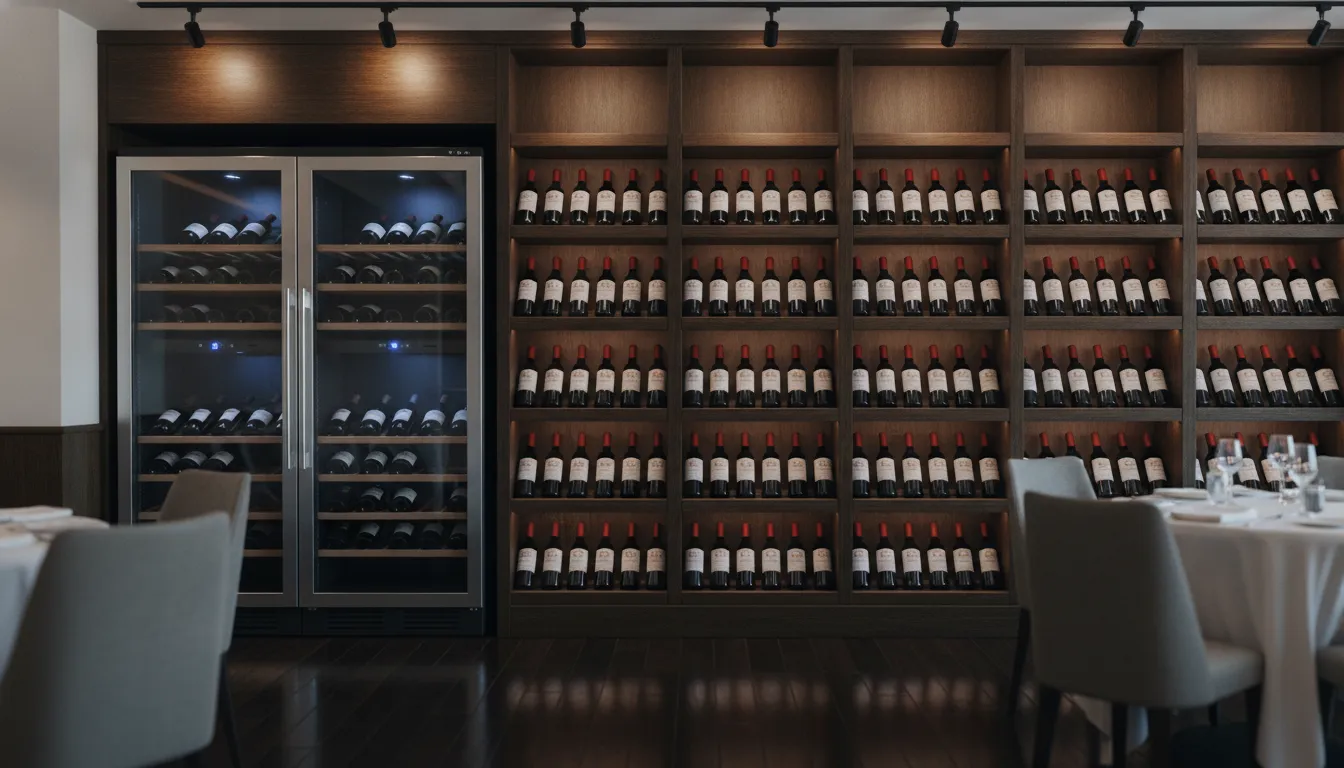
Restaurant wine storage may include a back-bar rack, undercounter storage, a temperature-controlled cabinet, or a dedicated room. The best choice depends on menu size, available floor area, how often staff restocks, and whether the display is intended for browsing or for visual branding.
| Zone | Best use | Planning check |
|---|---|---|
| Back bar | Fast access during beverage service and a visible bottle presentation. | Protect bottles from heat, splashes, direct light, and traffic. |
| Undercounter zone | Small menus, tight footprints, and service points near the dining room. | Confirm ventilation, door swing, clearances, and staff access. |
| Dedicated reserve | Larger programs that need organized backstock away from service. | Plan shelving, security, lighting, cleaning, and an easy receiving route. |
Protect wine from heat, light, and unnecessary handling
Wine quality can suffer when bottles are exposed to repeated heat swings, strong light, or rough handling. Keep storage away from ovens, cooking lines, exterior doors, sunny windows, and equipment that releases heat. Use stable, appropriate storage conditions and follow the storage instructions supplied for the products you carry.
Bottles with cork closures are commonly stored on their sides so the closure does not dry out. Organize shelves so labels remain visible without forcing staff to lift several bottles to reach one selection. If your menu includes bottles with different closures or formats, account for those differences rather than using one storage assumption for every item.
Display lighting should help guests read labels without creating glare or warming the bottles. Low-heat lighting, shaded shelving, and a display location away from direct sun can support both presentation and product care.
Build a replenishment workflow that staff will follow
The storage plan should be easy to use during a busy shift. Label reserve locations, group bottles by menu section or service priority, and give one person or role responsibility for checking low stock. A simple count at close can prevent a server from discovering an empty high-demand selection after the dinner rush begins.
Use first-in, first-out rotation when appropriate for your inventory and keep receiving records with the bottle location. When a display is part of the guest experience, clean shelves and check labels as part of the opening routine. These small steps reduce searching, protect presentation, and make the beverage program easier to manage.
How can a wine display improve the dining-room experience?
A display works best when it supports a decision rather than becoming visual clutter. Group bottles by menu use, region, style, or price tier only when that organization matches how your staff explains the list. Keep featured selections at a comfortable viewing height and leave enough space for a guest or server to read the label safely.
Use the display to reinforce the restaurant's identity, not to replace a clear wine list. Staff should be able to connect the physical bottle with the menu description, serving temperature, glass-pour program, and food pairings your restaurant actually offers. If the display includes premium or limited bottles, include a simple control for access and inventory accuracy.
What should Rochester-area operators confirm before ordering?
Before choosing storage or display hardware, measure the space and document the path from receiving to service. A local project also benefits from an early conversation about utilities, ventilation, clearances, delivery access, installation sequencing, and the rest of the kitchen or bar layout.
- Available width, depth, height, and floor loading limits.
- Power, ventilation, heat clearance, and drainage needs for any powered unit.
- Door, aisle, and service clearances during a full shift.
- Whether the display is staff-only, guest-facing, or both.
- How the plan changes when the menu, volume, or delivery schedule grows.
If the project changes alcohol service, confirm the current requirements with the New York State Liquor Authority and your other local authorities. Equipment planning and licensing are separate decisions, so keep both workstreams documented.
Work with a local restaurant-supply team
Wine storage and displays for restaurants should match the full operation, not just an attractive wall or a single piece of commercial refrigeration. Henrietta Restaurant Supply serves Rochester and Western New York with commercial kitchen equipment, bar and beverage supplies, and kitchen-design support for foodservice operators.
HRS can help you compare the storage zone, service access, display goal, and installation requirements before you commit to a layout. Contact the HRS equipment team for a restaurant wine-storage consultation. If you plan to review options in person, visit the HRS Rochester showroom at 900 Jefferson Road, Building 2, Suite 204, Rochester, NY 14623, or contact the team first for directions and project questions.
Frequently asked questions
How much wine storage does a restaurant need?
Start with weekly bottle movement, delivery frequency, reserve inventory, and the number of active selections. Keep fast-moving stock close to service and size reserve storage for realistic growth rather than filling every shelf at opening.
Should restaurant wine bottles be stored horizontally?
Bottles with cork closures are commonly stored on their sides. Organize the rest of the inventory around the closure type, bottle shape, label visibility, and the access pattern staff will use during service.
Where should a restaurant place a wine display?
Choose a location that is visible enough to support the guest experience but protected from direct sun, cooking heat, spills, and heavy traffic. Confirm clearances and replenishment access before finalizing the display.
Does HRS help plan restaurant wine storage?
Yes. HRS supports Rochester-area foodservice operators with commercial equipment, bar and beverage supplies, and kitchen-design guidance. Start with the equipment inquiry team to discuss your space and service needs.