In-Store vs. Online Restaurant Equipment in Rochester
When a commercial kitchen purchase affects service speed, staff workflow, or an opening timeline, a product page is only part of the decision. The benefits of purchasing restaurant equipment in store vs. online become clearer when Rochester operators can examine a unit. Ask practical questions, and connect the purchase to the space where it will work.
Talk with the HRS commercial equipment team about your next restaurant equipment purchase.
What do Rochester operators gain by buying restaurant equipment in-store?
Buying in person does not mean giving up online research. It gives operators a second layer of confidence before a major purchase: a chance to test the real-world fit. Explain the operation, and make sure the next step matches the kitchen.
1. Verify physical fit to prevent costly installation surprises
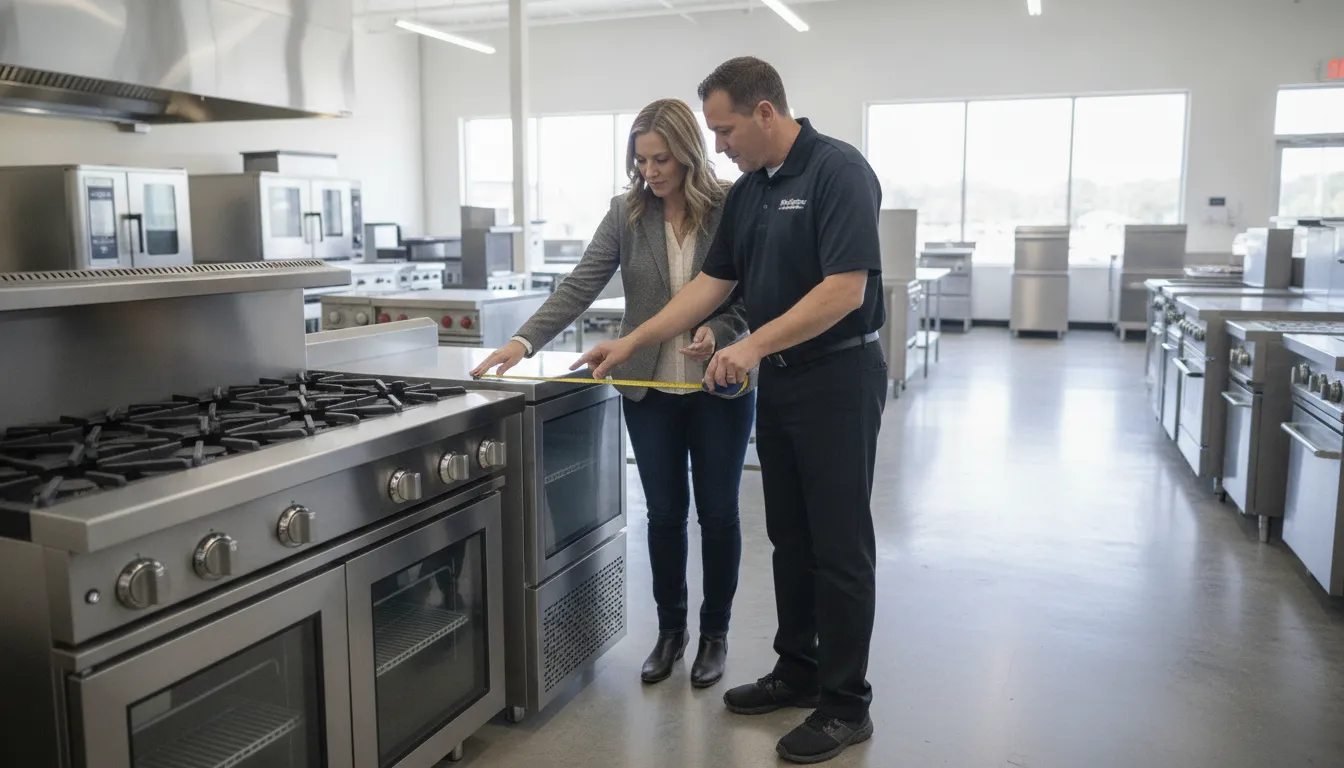
Dimensions on a product page are useful, but they do not answer every fit question. A showroom visit lets you see how a unit feels at working height, where doors and handles open. How controls are positioned, and how much clearance the staff will need around it.
Bring the measurements that matter to your project, including:
- The available width, depth, and height of the equipment location.
- Doorways, turns, stairs, loading areas, and other access points.
- Counter heights and nearby work surfaces.
- Clearance needed for cleaning, service, and staff movement.
- Existing connections or planned locations for power, gas, water, drainage, or ventilation.
That physical review can expose a problem while it is still easy to solve. A unit may fit the footprint but make a prep path awkward. A door may open into a busy aisle. A control panel may be difficult for the person who uses it every shift. These are small observations compared with the disruption of discovering them after delivery.
2. Match the purchase to the menu and workflow
The right commercial equipment is not simply the largest unit or the one with the longest feature list. It needs to support what the kitchen actually cooks, how much it produces, and how the team moves through a shift.
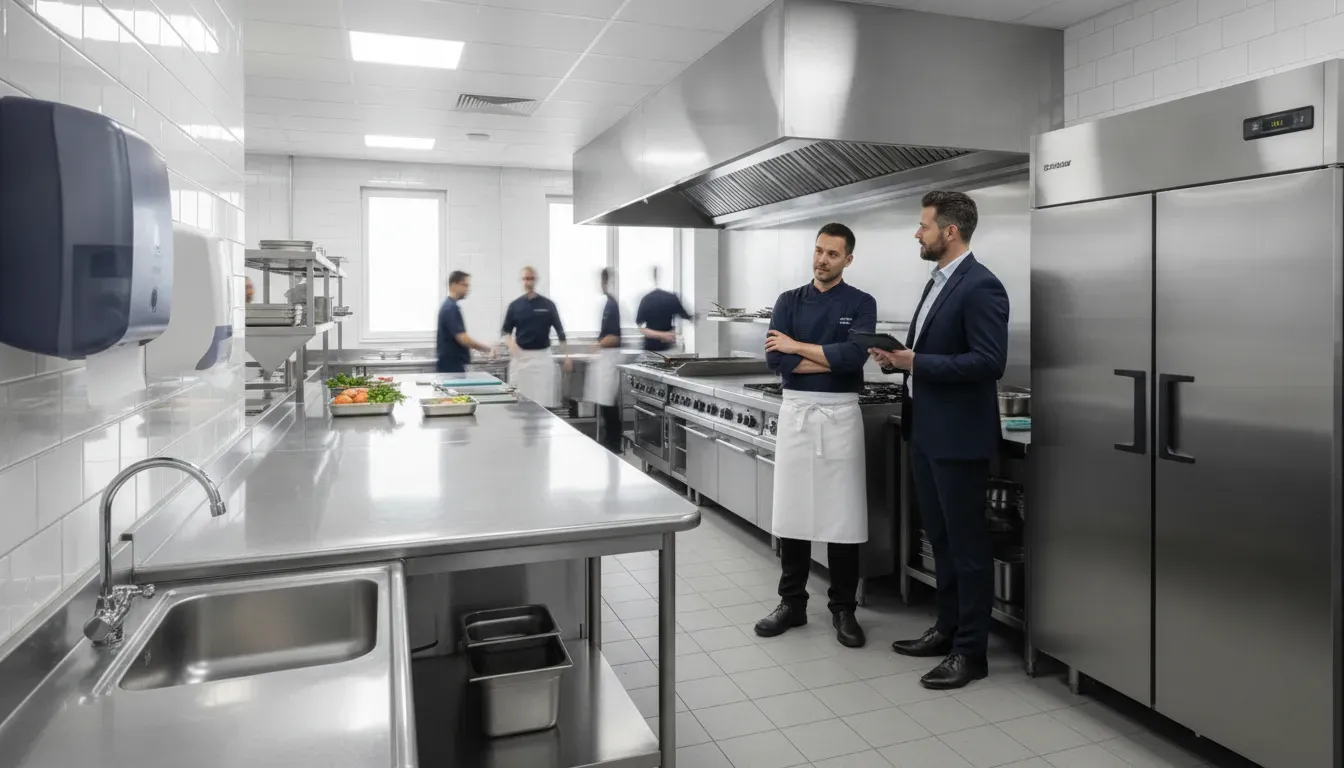
In-store conversations are especially helpful when several options appear similar online. Explain your menu, peak periods, batch sizes, staffing pattern, and service constraints. An experienced equipment specialist can then help you focus the conversation on useful questions:
- Which tasks must this unit handle during the busiest service period?
- Will the capacity support the menu without creating unnecessary waste?
- Can employees load, unload, clean, and monitor it comfortably?
- Does the equipment support the workflow, or will staff have to work around it?
- Would a different configuration make more sense for the operation?
This is one of the strongest advantages of working with a local commercial kitchen partner. You are not evaluating a product in isolation. You are evaluating how it will contribute to a working restaurant, bakery, bar, catering operation, or institutional kitchen.
3. Resolve utility and installation questions earlier
Equipment decisions often affect more than the equipment line on a plan. Power, gas, water, drainage, ventilation, clearances, floor conditions, and delivery access can all influence whether a purchase is ready to move forward. The exact requirements depend on the unit and the site. So operators should confirm them with the equipment team and the appropriate licensed professionals rather than rely on a general online description.
A local discussion can help identify the questions that need answers before an order is placed. It can also connect equipment selection to broader kitchen renovation services when the project involves layout changes, new utilities, or a larger workflow update.
Early coordination matters most when you are opening a new foodservice space, replacing a central piece of equipment, or changing the menu. The earlier constraints are visible, the less likely the project is to stall because the selected unit cannot be installed as planned.
4. Clarify local delivery and project timing
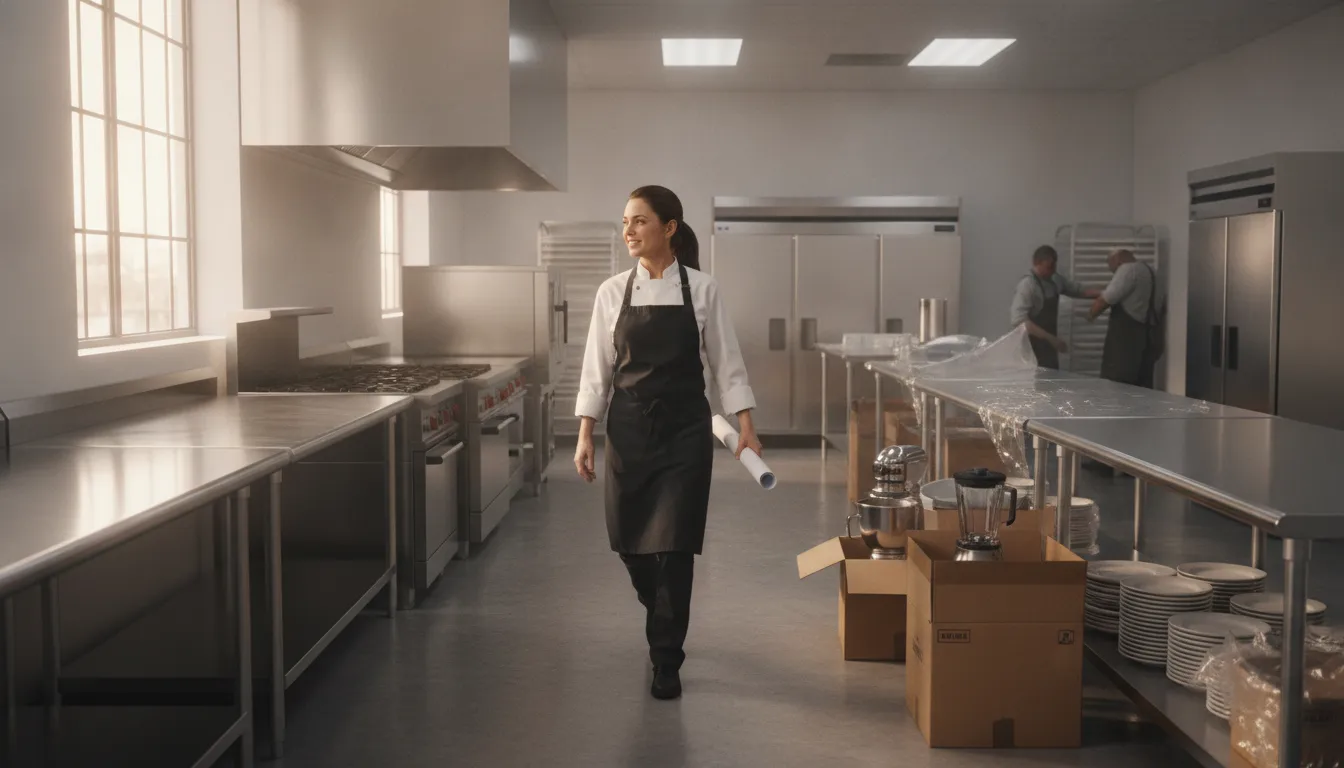
Online ordering can make a purchase look complete as soon as the checkout step is finished. Commercial projects are rarely that simple. Operators also need to think about when equipment can arrive, how it will enter the building. What site preparation must happen first, and who needs to be available when the delivery is scheduled.
A Rochester-area supplier can discuss the practical handoff with you before the purchase is finalized. Ask about:
- Whether the intended unit is currently available or must be sourced.
- What information the team needs to coordinate delivery.
- How the delivery path affects timing and site readiness.
- Which project details should be confirmed with your contractor or installer.
- What to do if the equipment is part of a larger kitchen update.
HRS serves the Rochester and Western New York foodservice community from its local location, giving operators a nearby point of contact for equipment conversations and related supply needs. That proximity does not eliminate every project constraint, but it can make communication more direct when the plan changes.
5. Compare details that are hard to judge on a screen
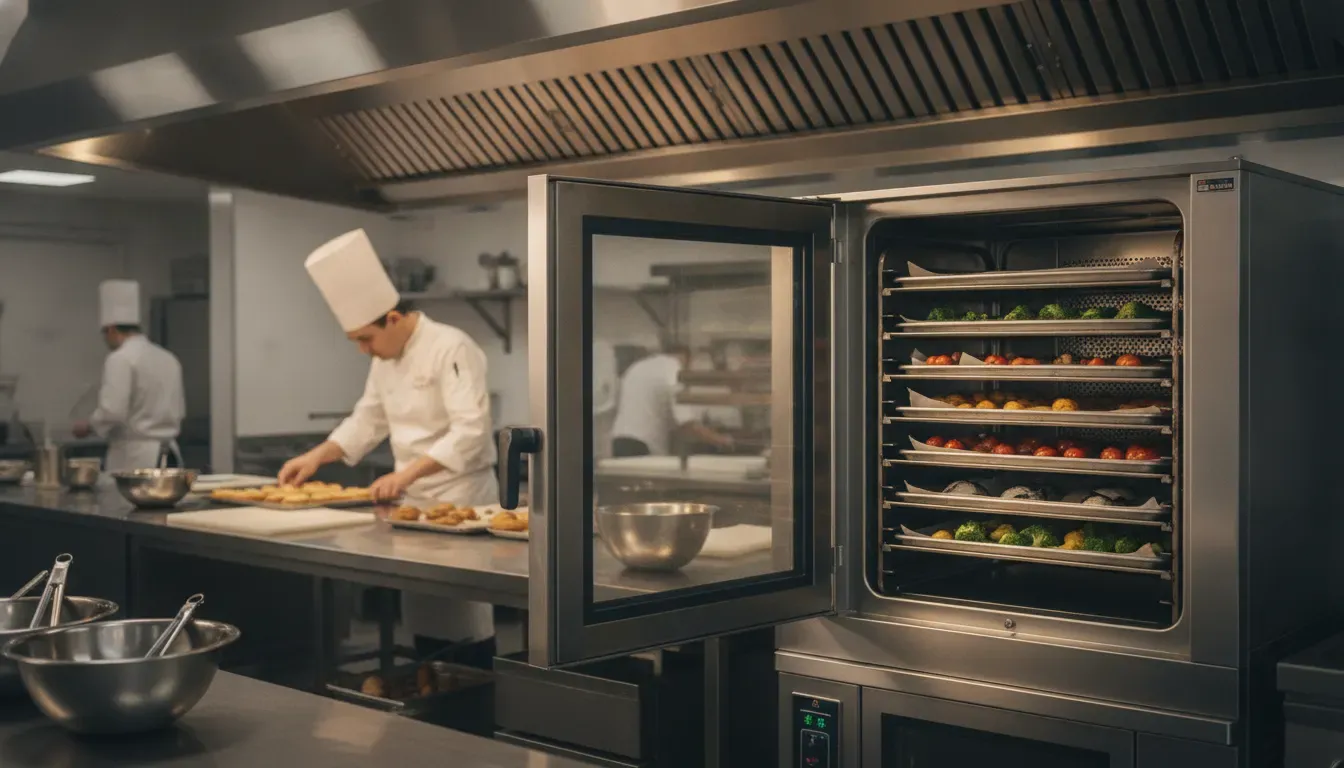
Online research is valuable for building a shortlist. In person, you can compare the details that product photos and specifications do not always communicate well. Look at the reach of the handles, the feel of the doors, the visibility of controls, the height of work surfaces, the construction details, and the cleaning access.
You can also compare two configurations side by side and explain what feels different to the people who will use them. That is especially useful when the equipment will be used for long shifts or by several employees with different levels of experience.
For a broader starting point, review HRS's commercial kitchen equipment selection before your visit. Then use an in-store conversation to narrow the options based on your operation, not just on the first search result.
How should you combine online research with an in-store purchase?
The best process is often hybrid. Online research saves time and helps you learn the language of a product category. An in-store visit adds context before a high-impact decision. Use each channel for the work it handles best.
- Define the job. Write down the menu items, production volume, service pattern, and problem the equipment must solve.
- Build a short list. Use online resources to learn the main configurations and identify the questions you need to ask. Avoid treating a long list of features as a final decision.
- Measure the site. Record the footprint, access path, clearances, utilities, and workflow around the proposed location.
- Visit or contact a local specialist. Bring the measurements and explain how the kitchen operates during its busiest period.
- Confirm the next step. Review the selected configuration, site requirements, delivery coordination, and any open questions before committing.
This sequence keeps online research useful without asking a screen to answer questions that require a real space, a real operator, or a real conversation.
What should you bring to an equipment showroom?
A productive visit starts with a few practical details. You do not need a perfect project packet, but the more context you bring, the more useful the conversation can be.
- A simple sketch or photo of the proposed equipment area.
- Measured doorways, corridors, ceiling heights, and installation clearances.
- Information about available utilities and the location of existing connections.
- Your menu, expected volume, service hours, and busiest periods.
- The staff tasks that currently slow service or create unnecessary movement.
- Your desired timing, including opening, renovation, or replacement deadlines.
- Questions from your contractor, installer, chef, facilities lead, or business partners.
If you need to visit the HRS showroom in Rochester, confirm the current store details and bring the people who will use the equipment whenever possible. A chef, operator, facilities lead, or installer may notice a different fit issue than the person managing the purchase.
When does online purchasing still make sense?
Online research can be the right first step for familiar replacement items, repeat purchases, and early comparison work. It is also convenient when an operator already knows the exact model, dimensions, utility requirements, and delivery conditions. The key is to match the buying method to the risk of getting the decision wrong.
For a low-impact, well-understood purchase, a quick online process may be enough. For equipment that affects production, utilities, layout, staff safety, or an opening schedule, an in-store conversation can add important confidence before the order is final.
That does not make one channel universally better. It means Rochester operators should use online information to prepare and local expertise to validate the purchase when the decision carries operational consequences.
Frequently asked questions
Is buying restaurant equipment in-store always less expensive?
Not necessarily. The value of an in-store purchase is the quality of the decision, not a promise of a lower price. A local conversation can help you avoid a mismatch between the equipment, the menu, the space, and the installation plan. Compare the complete purchase requirements and support needs rather than looking at one number alone.
What type of restaurant equipment should I discuss in person?
Prioritize equipment that affects utilities, workflow, production capacity, access, or the project schedule. If the purchase is difficult to measure, install, clean, or replace, an in-person review is a practical safeguard. Bring your site measurements and operating details so the discussion stays grounded in your kitchen.
Can HRS help with a larger kitchen project?
HRS supports commercial equipment purchases and offers kitchen design and renovation services for projects that require broader planning. Start with the HRS team and company information, then use the equipment inquiry form to explain the project and identify the right next conversation.
What is the practical takeaway for Rochester operators?
Online research can help you find possibilities, but an in-store review can help you make a decision that works in the actual kitchen. Seeing the equipment, explaining the workflow, checking site constraints, and planning the local handoff can reduce uncertainty before a commercial purchase affects your operation.
For Rochester restaurant operators, the strongest approach is usually simple: research first, measure the space, then talk with a local commercial equipment team before you commit.