Merchandising refrigeration displays help increase sales when they make the right products easy to see, understand, and pick up. For Rochester restaurants, cafes, bakeries, delis, and other retail foodservice operators, the case is more than cold storage. It is part of the customer's path from first glance to purchase.
Talk with HRS commercial equipment experts about the display refrigeration setup that fits your menu, space, and service flow.
How Can Merchandising Refrigeration Displays Help Increase Sales?
Commercial merchandising refrigeration supports sales by putting chilled products in a visible, accessible, and well-organized location. The best result comes from matching the case format to the service model, placing it where customers naturally pause, and keeping products cold, full, and easy to compare.
Start with the customer's path
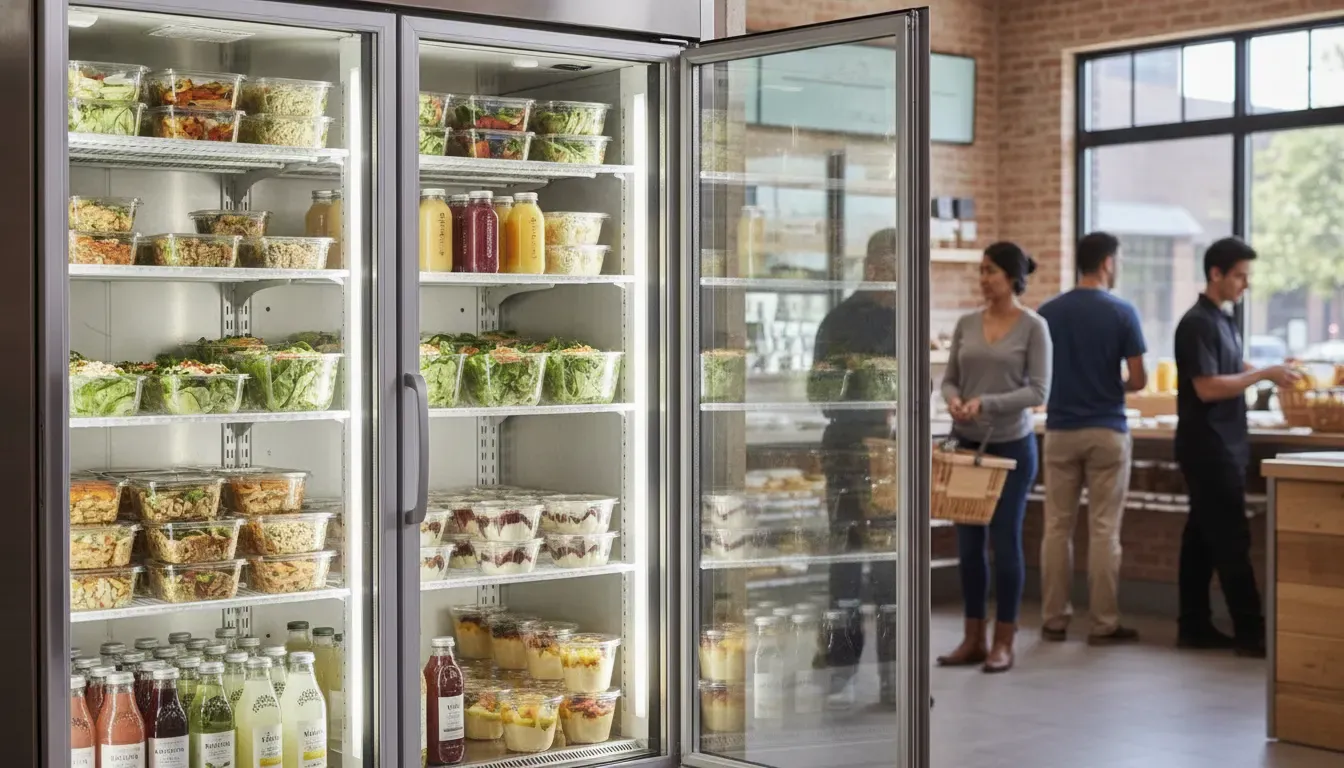
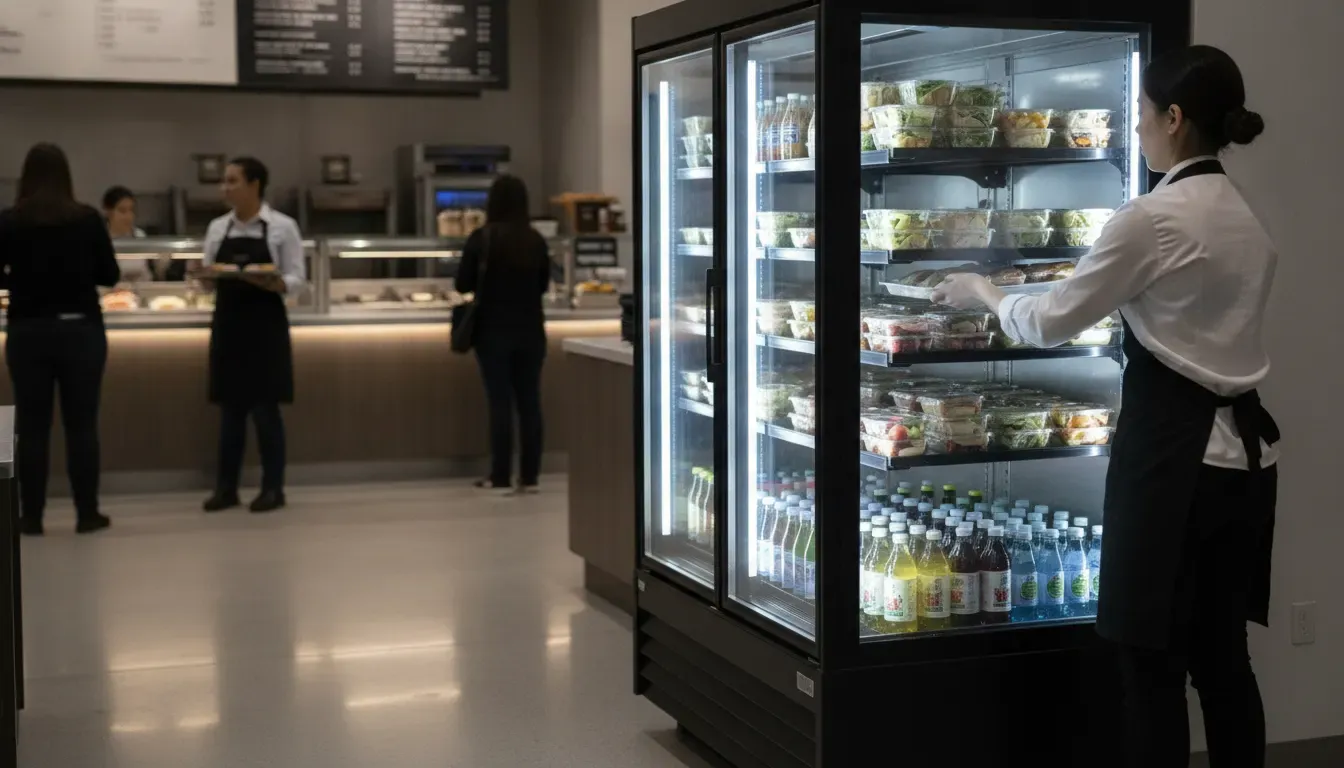
Place the display where it supports a real decision. A grab-and-go case near the ordering or checkout area can make a prepared meal an easy add-on. A beverage merchandiser near the entrance or pickup point can help customers notice a cold drink while they are already waiting. A bakery cafe may use a glass display to make finished desserts visible before the customer reaches the register.
Do not choose a location based only on an empty floor area. Walk the path during a busy service period and note where customers slow down, where staff restock, and whether an open door or aisle would create a bottleneck. The case should be visible without interrupting lines, sanitation routines, or employee access.
Choose a display format that fits the operation
Different commercial refrigerated display cases solve different merchandising problems. The right choice depends on how customers shop, how often employees restock, and whether the product needs a quick self-serve decision or a more deliberate presentation.
| Format | Useful for | Planning question |
|---|---|---|
| Glass-door merchandiser | Packaged meals, beverages, and items that need clear visibility with controlled access. | Will customers open the door, and can staff keep the glass clear? |
| Open-front display case | Fast grab-and-go service where speed and easy access matter. | Can the location support the case's airflow and replenishment needs? |
| Countertop display | Small footprints, specialty items, and displays placed near the point of service. | Will it preserve counter space and leave room for safe service? |
Use a display case for customer-facing presentation, not as a substitute for every reach-in, undercounter, or walk-in refrigeration need. HRS's commercial refrigeration planning resource covers those back-of-house decisions separately.
Make visibility do useful work
Visibility only helps when the case communicates a simple choice. Keep the strongest sellers and highest-priority items in the clearest sightline, then group products by a decision customers already make, such as meal type, service occasion, or beverage pairing.
- Use eye-level space intentionally: Put priority products where customers can identify them without bending or reaching across other items.
- Keep shelves readable: Leave enough space around packages so the display looks full without becoming difficult to shop.
- Use lighting consistently: Bright, even illumination should show color and texture without creating glare on glass.
- Build a complete choice: Pair a main item with a beverage, side, or dessert when the menu and food-safety plan support that arrangement.
Protect temperature and product quality
A display that looks attractive but does not hold food safely is not a successful sales tool. New York's food protection rules address temperature control and refrigeration for potentially hazardous foods, including food displayed for service. Review the current New York temperature and refrigeration requirements with the person responsible for your operation and confirm the final equipment plan with the local authority having jurisdiction.
During planning, ask about the products that will occupy the case, the expected loading pattern, door or air-curtain performance, thermometer placement, cleaning access, and what happens during restocking. Product quality also depends on rotating stock, removing damaged packages, and avoiding an overcrowded shelf that blocks airflow or hides the items customers came to see.
Plan restocking around the shift
A display case should help the team sell without creating extra motion. Assign a clear restocking point, keep reserve product close enough for efficient replenishment, and decide who checks the case during each shift. A simple routine can include checking temperature, wiping glass, facing products, rotating older stock forward, and recording low-stock items.
For operators comparing energy and operating costs, use the product's actual specifications and service requirements rather than assuming every display case performs the same way. ENERGY STAR commercial refrigerator and freezer criteria can help buyers understand eligible equipment classes and energy testing, but the final choice still needs to fit the menu, space, and workflow.
Measure the display, not just the refrigerator
After installation, track whether the display is doing its job. Start with a short baseline and review the same measures at regular intervals:
- Units sold by product group and daypart.
- Waste, markdowns, and out-of-stock events.
- Restocking time and temperature-check completion.
- Customer questions or product groups that receive little attention.
- Sales of items placed beside the display compared with the prior layout.
Use the results to adjust placement, shelf height, assortment, and restocking timing before replacing the entire unit. If the case is consistently empty, hard to access, or poorly placed, a merchandising change may solve more than a larger refrigerator would.
Ask HRS to help plan your commercial display refrigeration around capacity, placement, service flow, and future menu needs before you commit to a unit.
Where can Rochester operators plan a display refrigeration project?
Henrietta Restaurant Supply is a local Rochester-area partner for commercial kitchen equipment, product recommendations, and kitchen planning. When you want to see options in person, get directions to the HRS showroom or contact the equipment team before your visit so the conversation starts with your menu, footprint, and service goals.
HRS can also help connect equipment decisions to broader commercial kitchen design and renovation services when the display is part of a larger project.
Frequently Asked Questions
What is merchandising refrigeration?
Merchandising refrigeration is commercial refrigeration designed to keep food or beverages cold while presenting them to customers through glass, open-front access, lighting, and organized shelving. It supports both product protection and a clearer purchase decision.
Where should a refrigerated display case be placed?
Place the case along a natural customer path, such as near ordering, checkout, pickup, or a high-traffic entrance. Confirm that the location does not block lines, employee movement, cleaning access, or required exits.
How do I keep a display case effective after installation?
Keep products faced and grouped, clean the glass, maintain safe temperatures, rotate stock, and restock before high-demand service periods. Review sales, waste, out-of-stock events, and staff time so the layout can improve over time.
Can HRS help choose commercial refrigerated display equipment?
Yes. Henrietta Restaurant Supply helps Rochester-area foodservice operators plan commercial equipment around product mix, available space, service flow, and project needs. Contact the HRS equipment team to discuss a display refrigeration project.